George Joslyn spent his life building a business and made a fortune in the process. Sarah Joslyn dedicated hers to giving it away. The result is what would become the premier art museum in the state, named in his honor.
The wealthiest people in Nebraska also happened to be some of its most philanthropic. They used that wealth to better not only the people of Omaha but numerous organizations, including the Omaha Community Playhouse, Nebraska Humane Society, Fontenelle Forest, University of Omaha, Fontenelle Home for the Aged, Visiting Nurses Association and Child Saving Institute, among others.
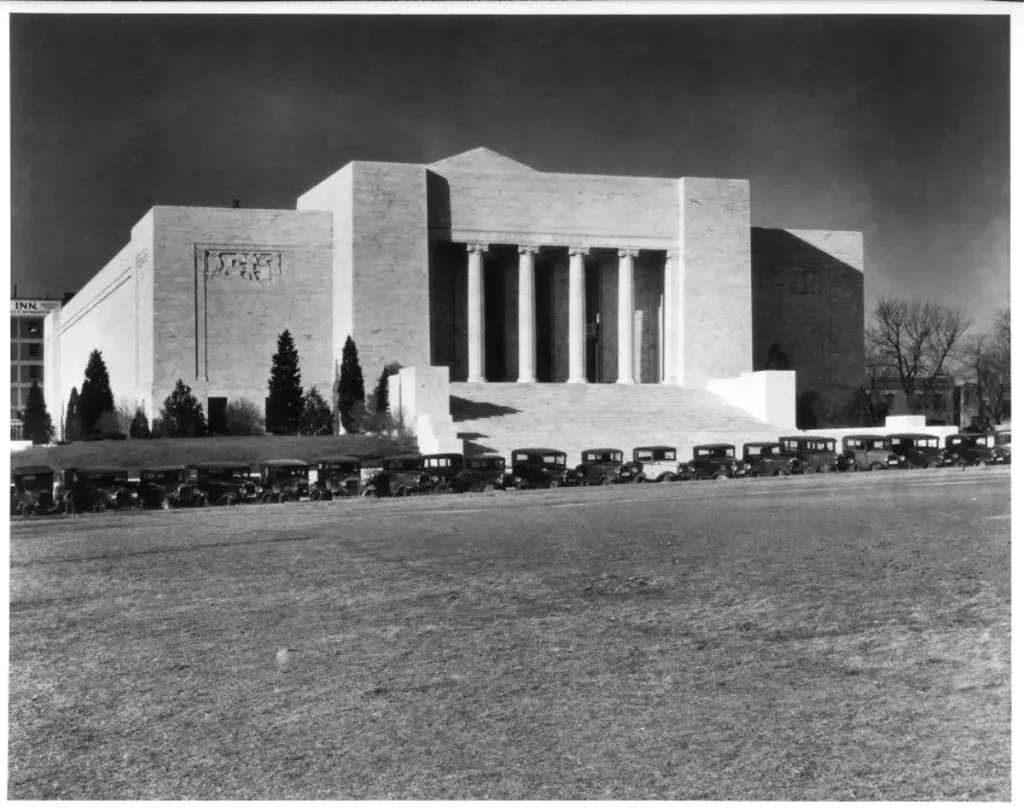
1931 Durham Museum photo of the Joslyn Memorial.
From the Bostwick-Frohardt/KMTV Photograph Collection, permanently housed at The Durham Museum.
It made perfect sense, then, when George passed away and left behind a fortune, Sarah used it to better society and improve the lives of those around her. Her status put her in a position where she received thousands of requests for money. She took those requests to heart and personally responded to many of them.
Sarah looked for ways to both honor George and to offer a gift to the people of Omaha. With that goal in mind, she purchased six lots along Dodge Street between 22nd and 24th streets in 1921. It was on that land that she planned to build the Joslyn Memorial. To do so, she hired the same two architects who built their castle: John and Alan McDonald. The father-son team were long friends of the Joslyns.
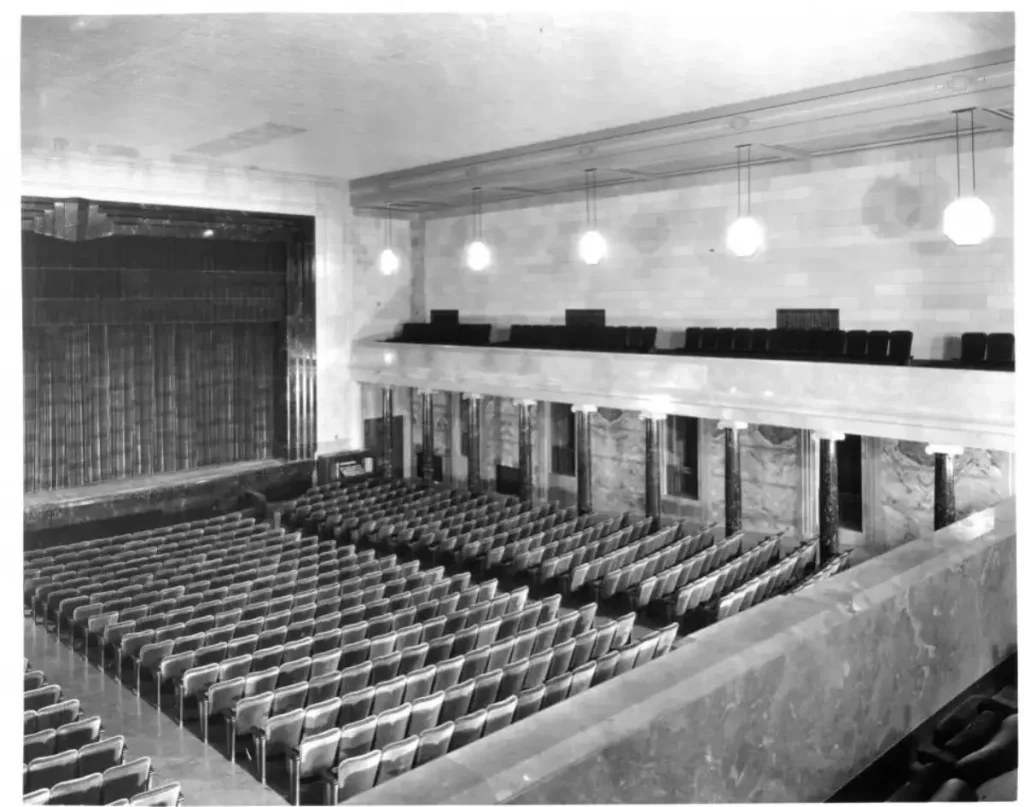
1931 Durham Museum photo of Witherspoon Hall inside the Joslyn Memorial.
From the Bostwick-Frohardt/KMTV Photograph Collection, permanently housed at The Durham Museum.
To fund the memorial at 2200 Dodge Street, she sold her stake in the Western Newspaper Union, the business George built into the largest of its kind. Selling it to the company’s employees for $5 million in 1929, she donated $3 million to build the memorial and to fund the Society of Liberal Arts, which she founded to operate it. The Joslyn Memorial opened its doors to the public in 1931 and put the couple’s love of the arts on full display. It continued to grow and became the premier art institution in not just Omaha but the entire state of Nebraska.
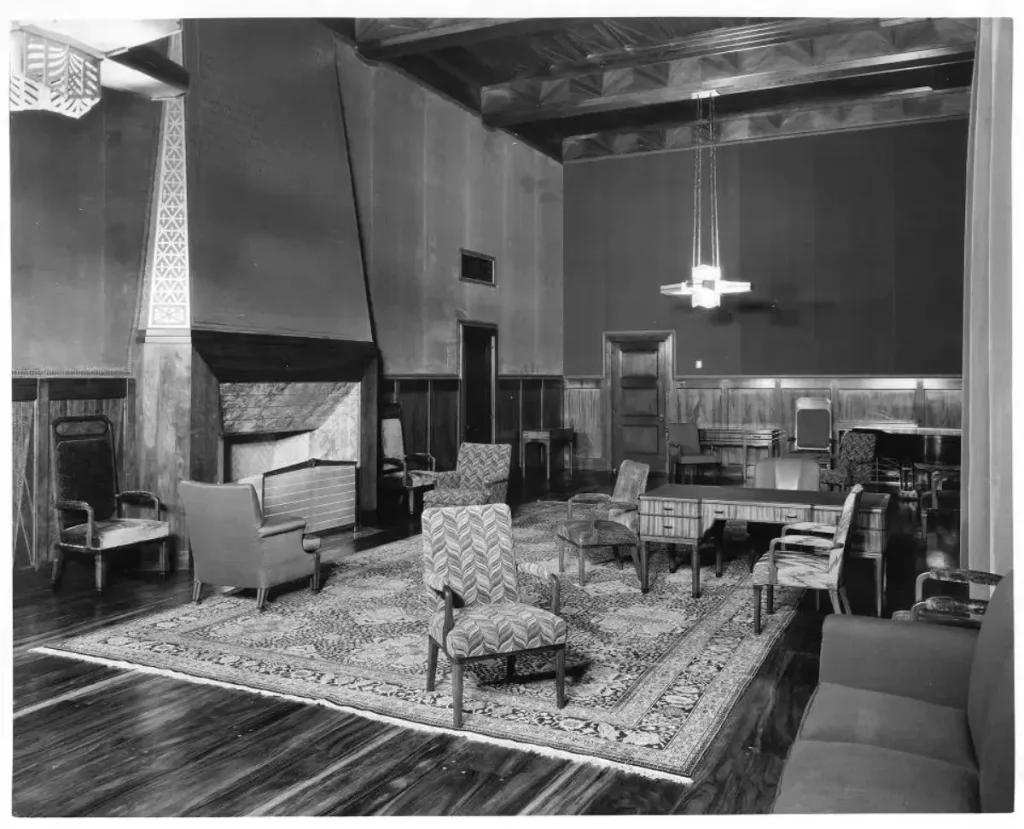
1931 Durham Museum photo of the Founders Room inside Joslyn Memorial. It served as the on-site retreat for Sarah Joslyn.
From the Bostwick-Frohardt/KMTV Photograph Collection, permanently housed at The Durham Museum.
Designed in the Art Deco style, the Joslyn Memorial building at 24th & Dodge Street was constructed from Georgia pink marble and 38 other types of marble from across the world. Its facade featured decorative panels that depicted the people of the plains, including both Native Americans and European settlers.
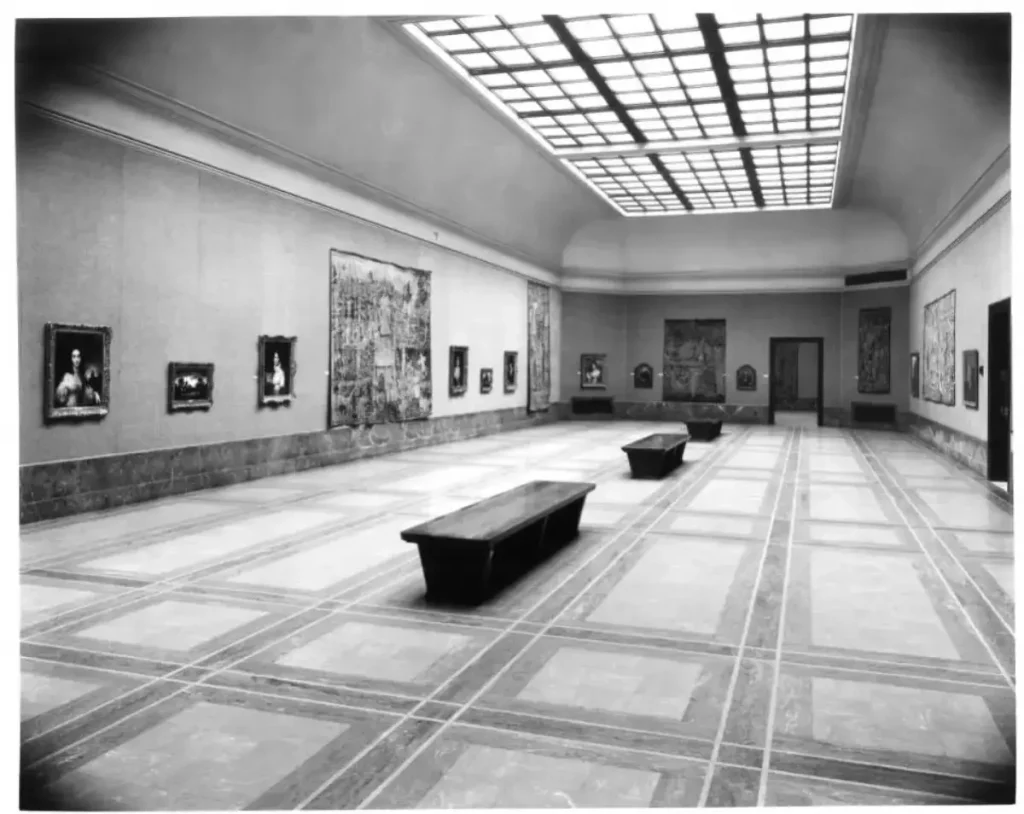
1931 Durham Museum photo of one of the art galleries inside Joslyn Memorial.
From the Bostwick-Frohardt/KMTV Photograph Collection, permanently housed at The Durham Museum.
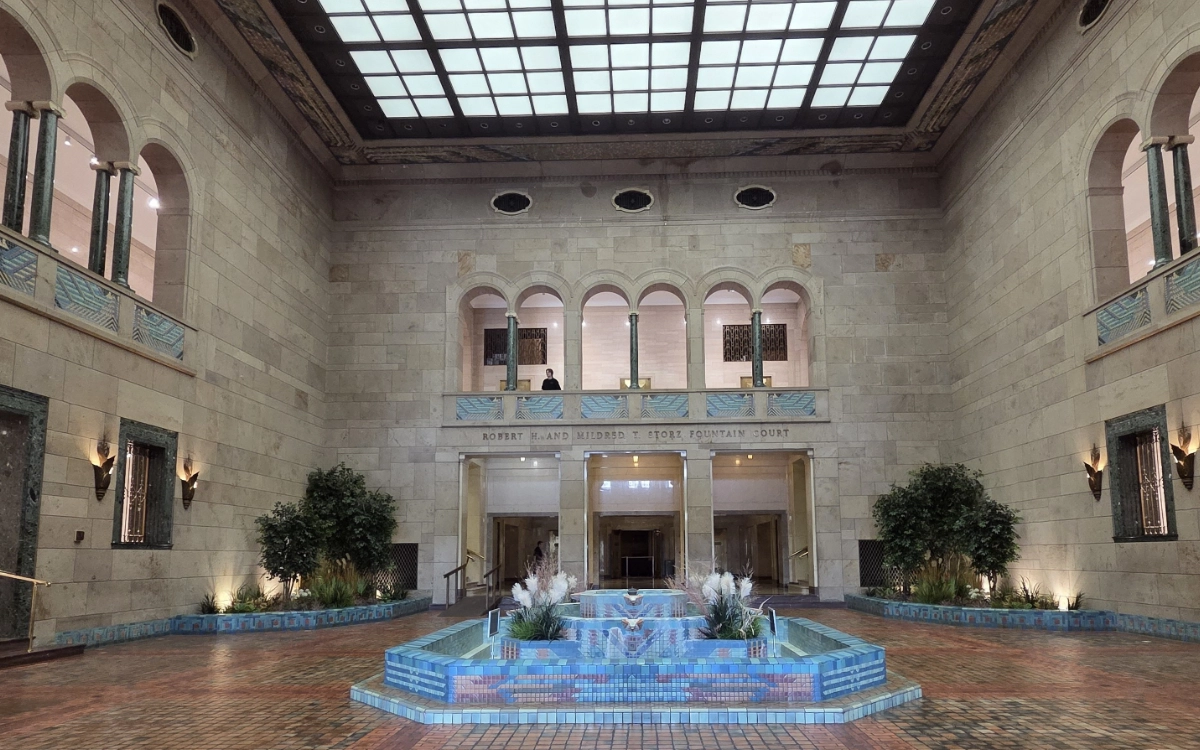
The memorial’s interior included art galleries but also housed a concert hall, lecture hall, art library, classrooms, an atrium with a fountain and a personal retreat for its founder. It was open to all with no cost to enter. Much of its art collection came from individual collectors as well as Omaha’s two main art societies: the Friends of Art and the Art Institute of Omaha.
The end result was impressive. So impressive, in fact, that the memorial was named one of the 100 finest buildings in the country in 1938. After Sarah passed away in 1940, 24 years after George, she turned both the memorial and the society that managed it over to trustees. She also left an endowment to ensure that it could continue to expand its art collection.
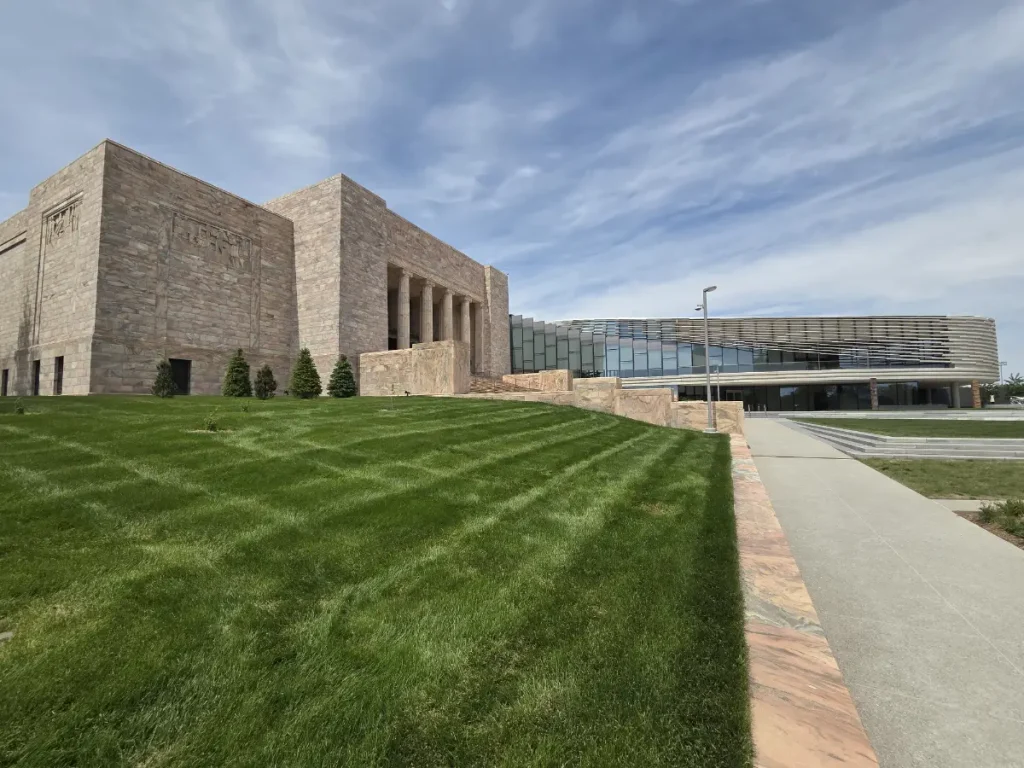
2026 OE photo of the original Joslyn Art Museum stands to the left while the Rhonda and Howard Hawks Pavilion on the right.
Courtesy of Omaha Exploration
In 1987, the Joslyn Memorial was renamed the Joslyn Art Museum to reflect its expanding focus on art. Well before 1994, it was becoming apparent that the museum was beginning to run out of space. At that time, it completed its first expansion, named the Walter and Suzanne Scott Pavilion.
The addition, designed by renowned British architect Norman Foster, complemented the original building. Impressively, they acquired pink Georgian marble from the same quarry used to create the original structure. The addition allowed for postwar and contemporary art galleries as well as space dedicated to visiting works of art, a cafe, kitchen, offices, storage space, classrooms and a glass atrium that connected the addition to the original building.
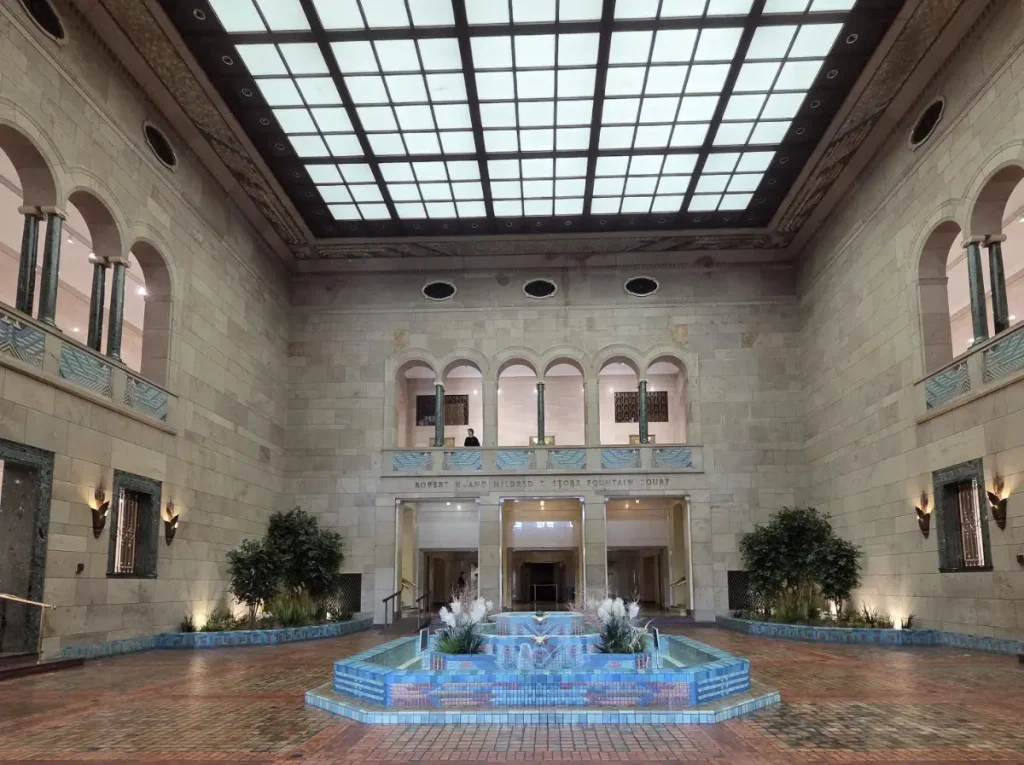
2026 OE photo inside looking at the Robert H. and Mildred T. Storz Fountain Court inside the Joslyn Art Museum.
Courtesy of Omaha Exploration
Free admission to the museum, one of Sarah’s primary goals, was reinstated in 2013 after ceasing in 1965. This was the result of a generous donation from the Sherwood Foundation. A dramatic spike in attendance followed, a nearly 60 percent increase from 2010 to 2019. During that time, more than 190,000 people from all 50 states and countries around the world visited the museum.
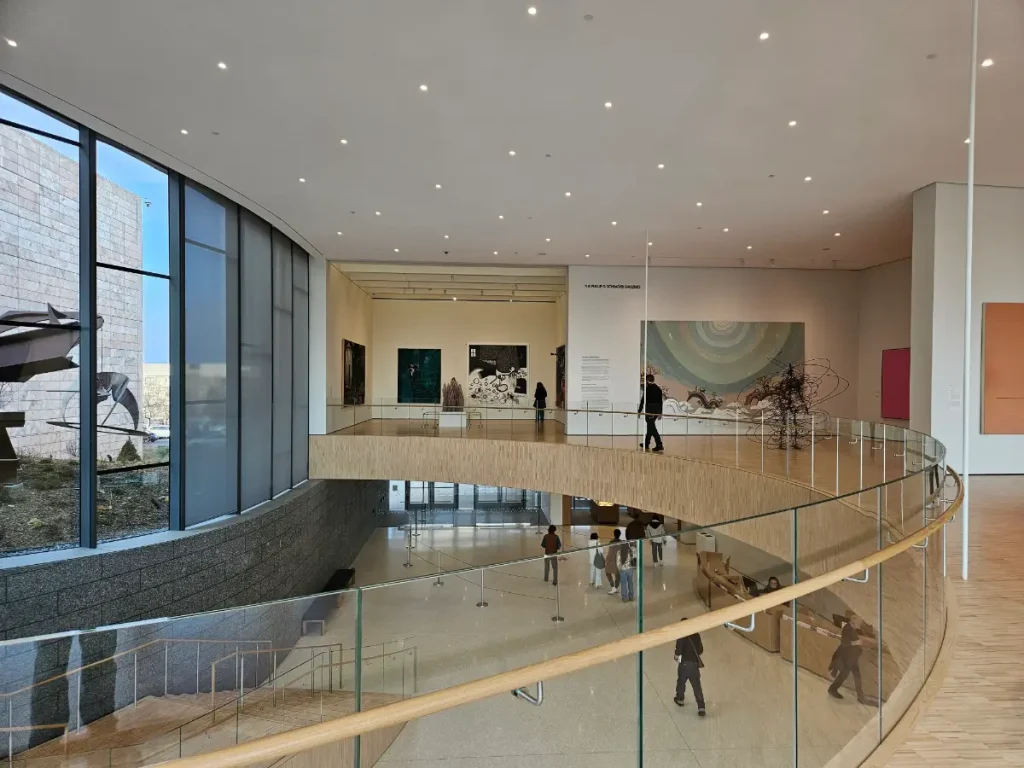
2024 OE photo of the Phillip G. Schrager Collection inside the Rhonda and Howard Hawks Pavilion at Joslyn Art Museum.
Courtesy of Omaha Exploration
More change was on the horizon when the museum closed for nearly two years starting in 2022 to make way for a second addition. Named the Rhonda and Howard Hawks Pavilion for the philanthropists who were among its primary benefactors, the new wing was designed by Alley Poyner Macchietto Architecture and Snøhetta and made no effort to match the facade of the original building.
Instead, the 42,000 sq. ft. addition resembled a cloud-like form blowing past the museum. The project allowed for a new entrance, additional gallery space, more classrooms, community space and a gift shop. It also offered another opportunity to revamp the outdoor spaces and sculpture garden. The result earned it Omaha by Design’s Laurels Award in 2024.
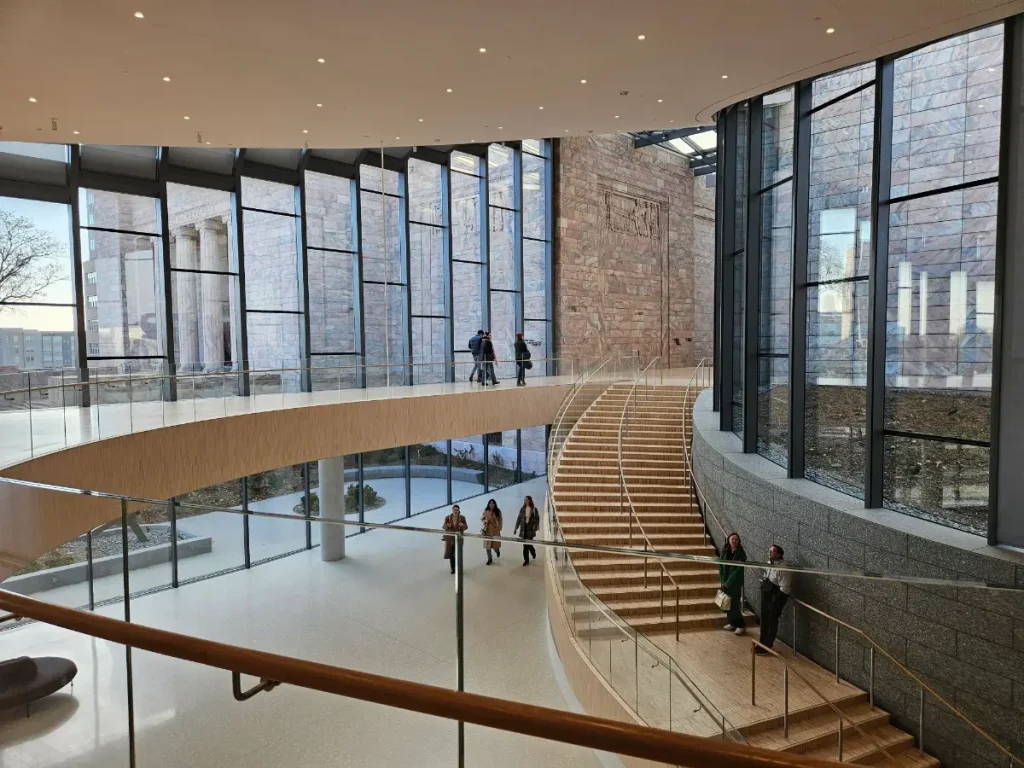
2024 OE photo of the Rhonda and Howard Hawks Pavilion at Joslyn Art Museum.
Courtesy of Omaha Exploration
More than 100 years since the Joslyn Memorial opened as a gift to the people of Omaha and a way to honor George Joslyn, it has become the largest art museum in the state with a collection of more than 12,000 objects representing 5,000 years of human creativity. According to Forbes, with its recent expansion, it also became one of the few museums in the country to fully integrate Native American art into its other galleries. Its permanent collection spans Ancient, European, Latin American, Asian and Postwar and Contemporary art.
During his life, George said, “The money was made in Omaha, and it will be spent in Omaha.” Sarah helped realize that promise. The Joslyn stands as proof.