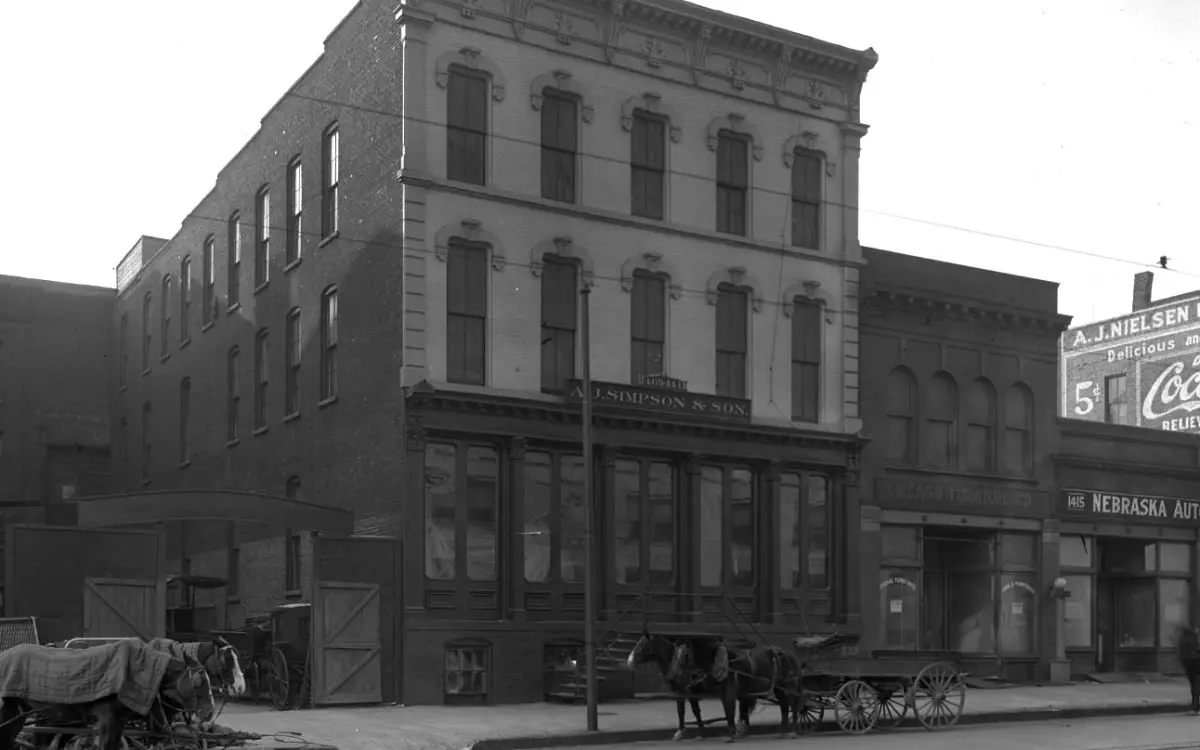
Omaha’s early growth was hindered by the large, steep hills just west of downtown along Farnam, Douglas, and Dodge Streets. The problem was so severe that it made it difficult for streetcars—and later automobiles—to reach the top of the hill at 24th Street. While Omaha had expanded both north and south in its early years, expanding west required solving this challenge.
Beginning in the 1880s and continuing for nearly 40 years, city leaders embarked on a series of ambitious projects to do just that. Rather than cutting through the hills, they decided to lower the streets. The focus was primarily on three thoroughfares: Farnam, Dodge, and Douglas. Farnam Street was lowered 45 feet at 17th Street, with the dirt used to raise the grade between 20th and 24th streets. Douglas Street was lowered from 16th to 20th streets, and Dodge Street from 17th to 22nd streets.

A steam shovel removing dirt on 19th and Dodge
Photo courtesy of The Durham Museum
Construction crews worked day and night on the project, making it difficult for nearby residents to get any sleep. Those residents sued the contractors for disturbing the peace and petitioned a judge to limit working hours. The judge ruled that work could not begin earlier than 6:45 a.m. and had to end by 9 p.m., but the restriction didn’t last long. Soon, two shifts were working from 6 a.m. to 10 p.m. to complete the project as quickly as possible.

A house on Douglas Street before the land beneath it was cut away so that it could be lowered
Photo courtesy of The Durham Museum
As you can imagine, a large number of homes and businesses were affected—some chose to close, while others relocated. Those that stood in the way of progress by refusing to sell had their buildings condemned and demolished. Of the structures that remained, most were jacked up while the land beneath them was cut away and then lowered to the new street level.

Looking west from 17th on Douglas
Photo by Patrick Wyman
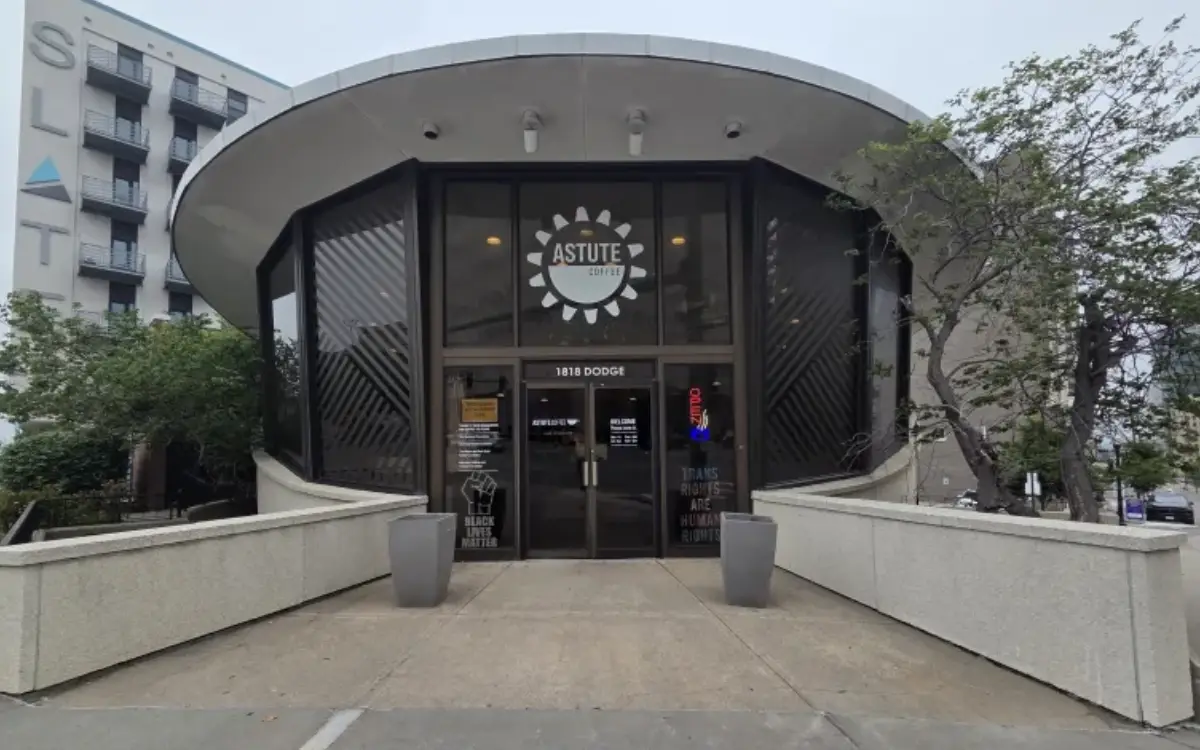
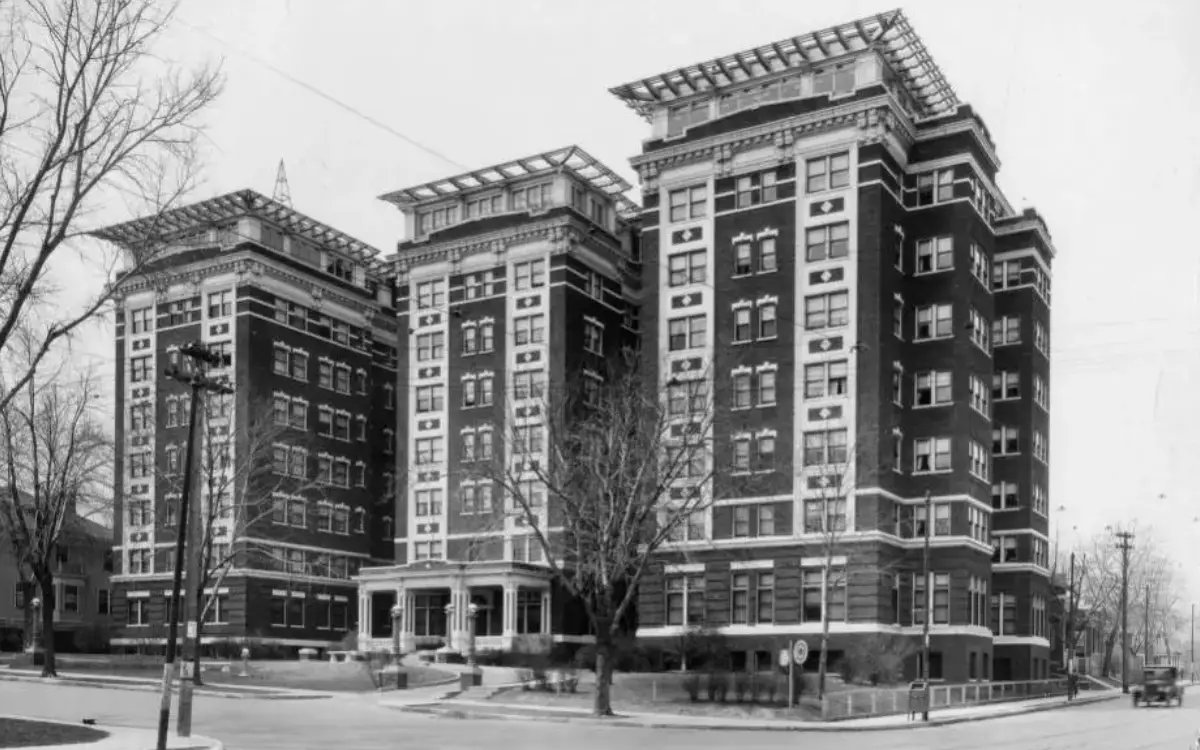
Rather than lowering St. Mary Magdalene Church at 19th & Dodge Street, the congregation opted instead to expand by building downward nearly 20 feet to meet the new street level. Once completed, the original main floor became a balcony overlooking the new main floor below. The original entrance, meanwhile, was converted into a fire escape. Across the street, El Beudor (present day Hotel Indigo) was significantly reconfigured, with its original entry filled in with windows and a new entrance created beneath it. One block west, Central High School benefited from its hilltop location overlooking downtown. When the grade was cut by five feet, the school opted to create a gradual slope down to the new street level.
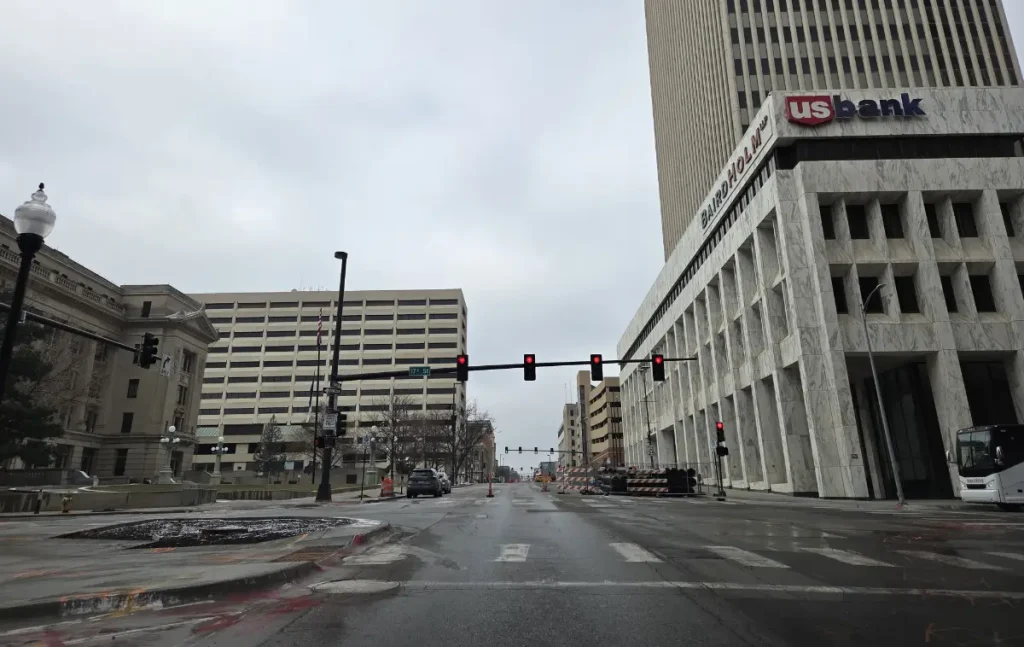
Photo by Patrick Wyman
When the grading was finally completed in 1920, the intersection of 20th & Dodge Street sat 36 feet lower than it had been in 1880. It took another six months to complete the street paving and install sidewalks.
The project required a specialized railway, bridges, diggers and mules—not to mention traffic officers and attorneys. Much of the 350,000 cubic yards of dirt that was removed was reused to fill ponds and an old creek bed along Dodge, Davenport, and Chicago streets. This reuse greatly improved public health in an area once known as the “Diphtheria District.”
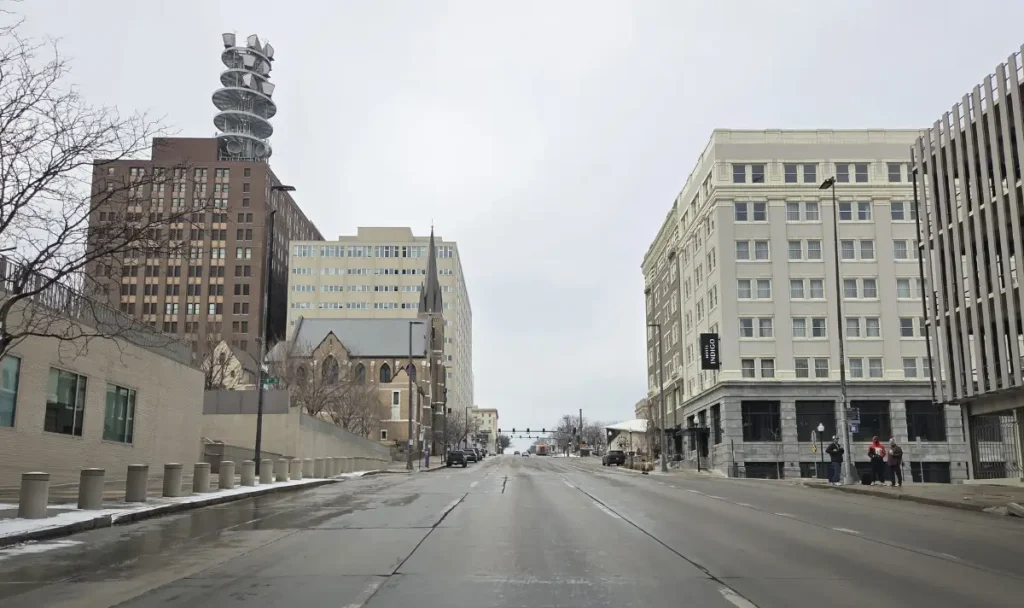
Looking west from 17th on Dodge
Photo by Patrick Wyman
It remains one of the most complex projects the city has ever undertaken. The total cost to lower the streets exceeded $4 million, split between the city and private business owners. It is estimated that the project ultimately saved the city more than ten times that amount by enabling westward expansion.