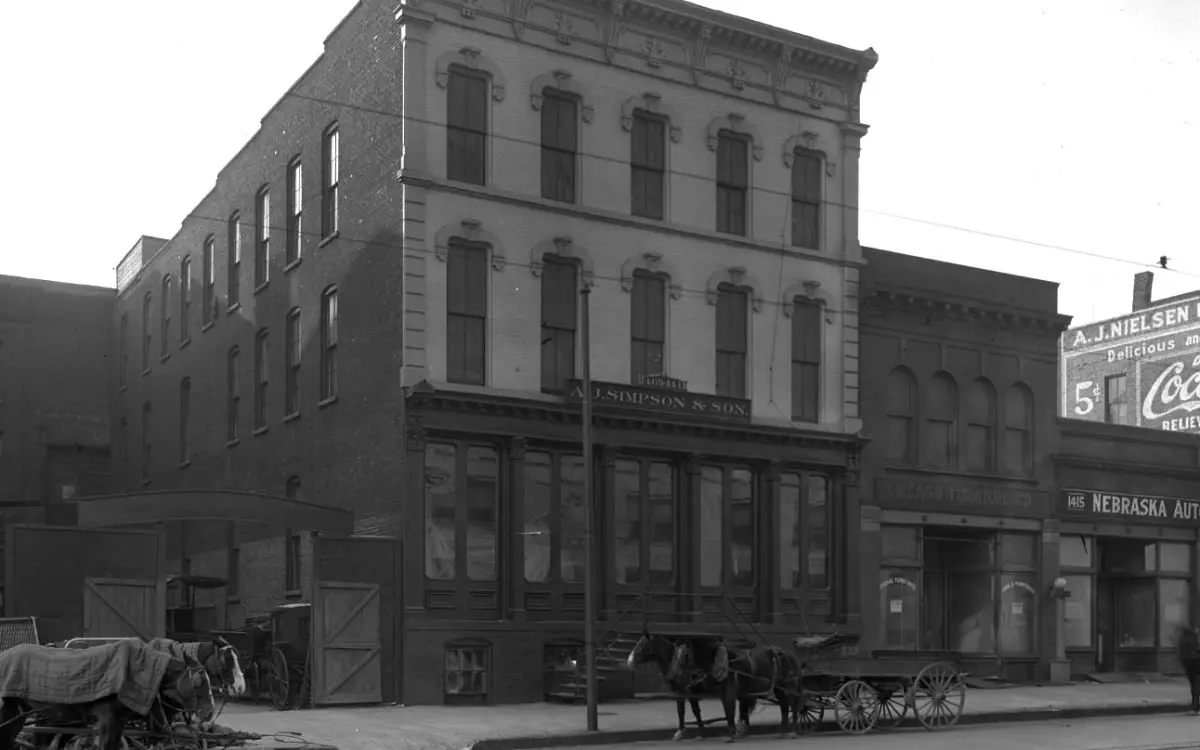
The largest destruction of a historic district in the country occurred in Omaha nearly four decades ago. The area was known as Jobbers Canyon.
The industrial district was formed after Council Bluffs was designated the eastern terminus for the transcontinental railroad in 1863. This act helped establish Omaha as an important transportation hub as its location on the western banks of the Missouri River was the starting point for the railroad that extended to the west coast.
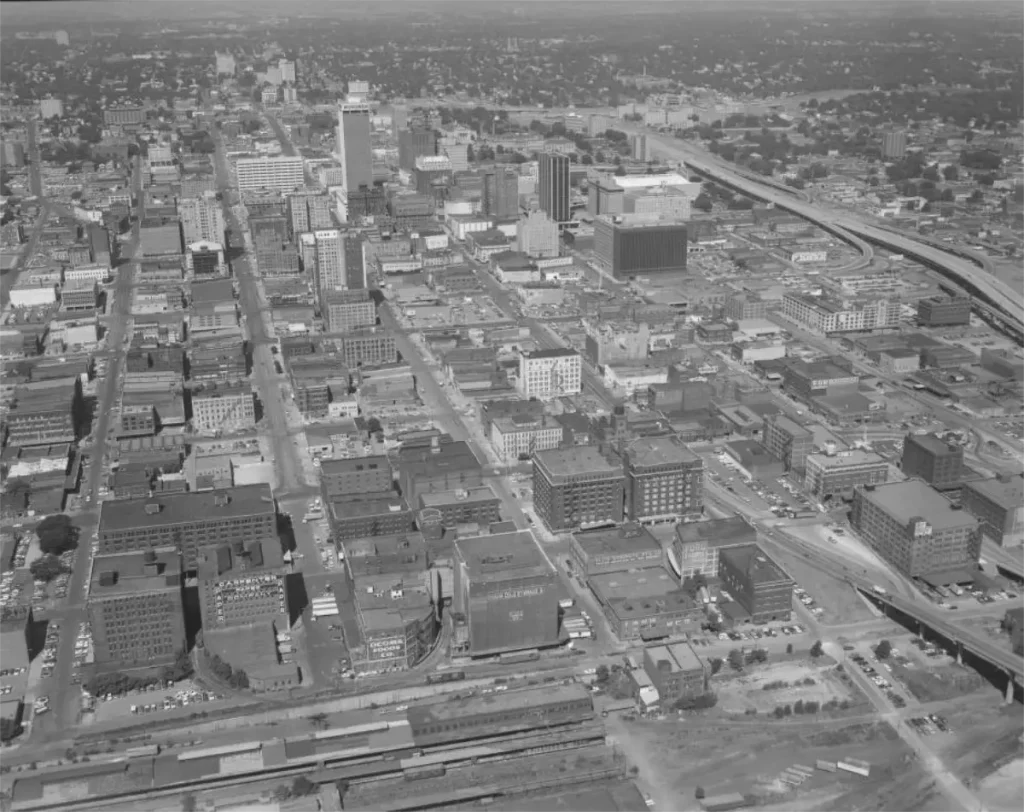
1974 photo of downtown Omaha looking west and north from around 8th Street with Jobbers Canyon at the bottom.
Photo courtesy of Durham Museum photo archives
In the area between the river and the train tracks, wholesalers or jobbers that acquired goods from manufacturers via train so that they could be sold to retailers, began to build warehouses. Starting in the 1880s and continuing into the 1920s, they built two dozen buildings in an area that grew into a massive jobbing district. This helped propel the city’s economic growth during its early years.
While the area extended from 8th to 10th and from Farnam to Jackson streets, there was a three-block section along 9th Street in which the massive structures created a “canyon” effect, thereby earning the nickname Jobbers Canyon. The warehouses within the district were designed by some of Omaha’s most prominent architects and firms, including Thomas Kimball, John Latenser and Sons, Fisher and Lawrie, Charles Cleves and George Prinz.
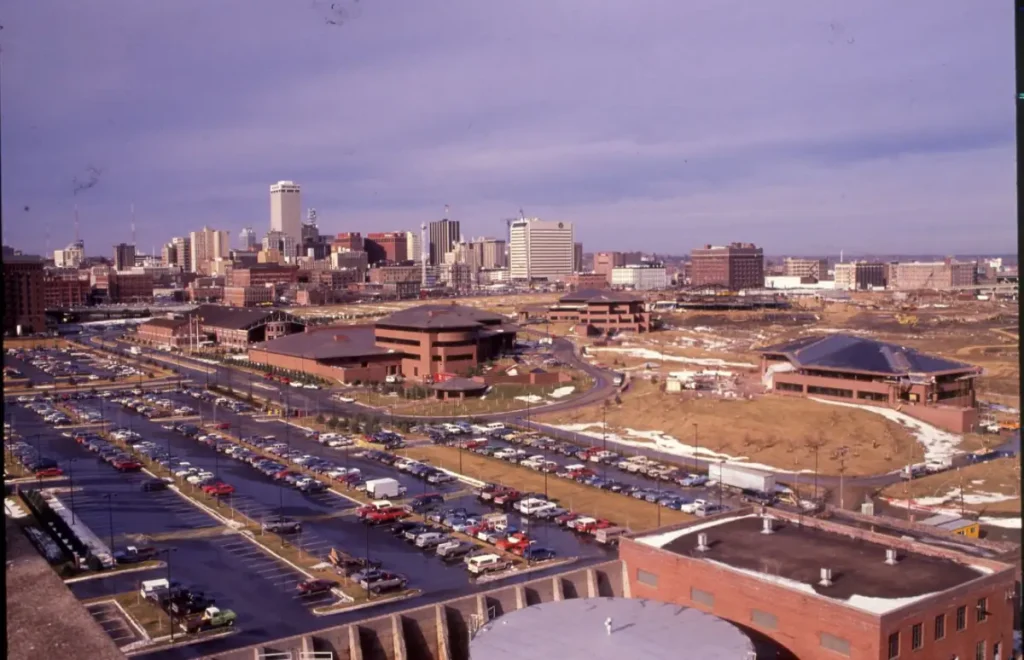
1990 Photo looking NW from about 8th and Leavenworth Street at the construction of the Conagra campus in the old Jobbers Canyon area.
Photo courtesy of Durham Museum photo archives
As the city grew, the downtown area continued to thrive as a center of commerce well into the 20th century but began to suffer as the city expanded west. This led to a decline in the urban core driven by highway construction, urban renewal projects and the building of suburban neighborhoods, shopping centers and business parks.
By the 1970s, the area downtown was no longer the retail and office center of the city. To reverse that trend, city leaders embarked on a decades-long effort to revitalize downtown and the urban core. The goal was to draw people back to the area by making it a more desirable place to live and work. This led to the construction of Central Park Mall (present-day Gene Leahy Mall), which was designed to connect the business district to the river from which the city began.
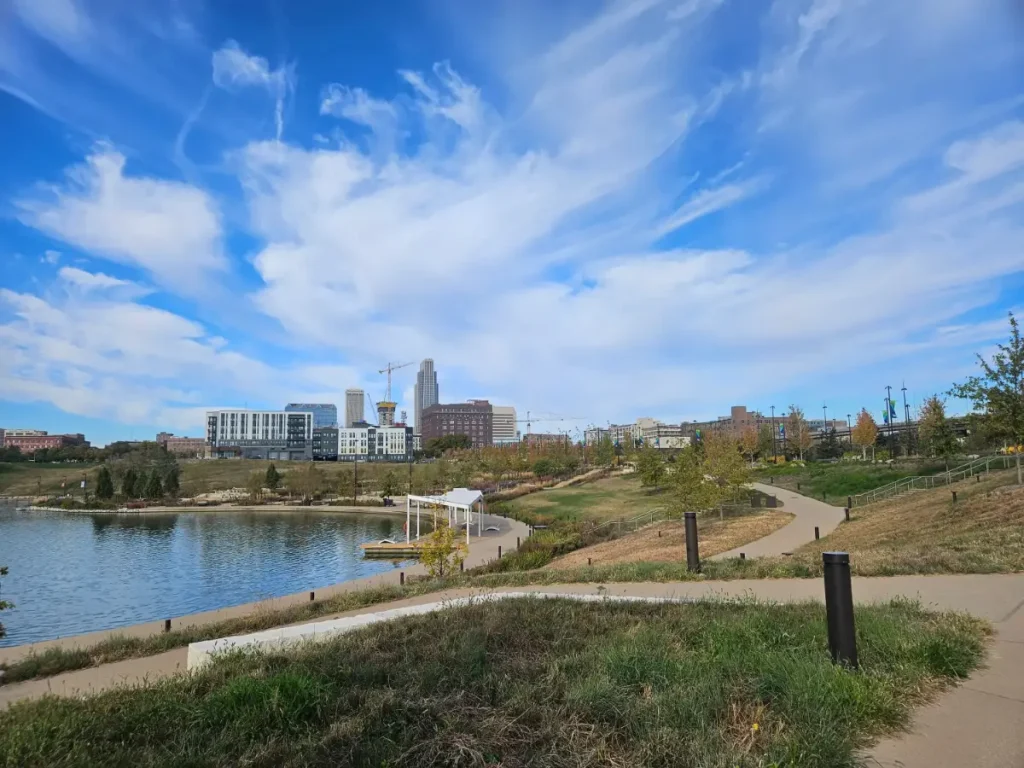
Trails and lake at Heartland of America Park on the former site of Jobbers Canyon.
Photo courtesy of Omaha Exploration
City planners at the time stressed the potential of the riverfront and the old warehouses in Jobbers Canyon. They even acknowledged that many of the buildings were in good structural condition and could be easily renovated. Having just witnessed the success of the Old Market, there was a proposal to reclaim and reuse the buildings for housing and other purposes. That led to Jobbers Canyon being listed on the National Register of Historic Places in 1986.
By this time, Omaha-based Conagra had outgrown its current headquarters and began searching for an alternative home. The company, which moved to Omaha in 1922 after being founded in Grand Island just three years earlier, had become one of the largest food companies in the country.
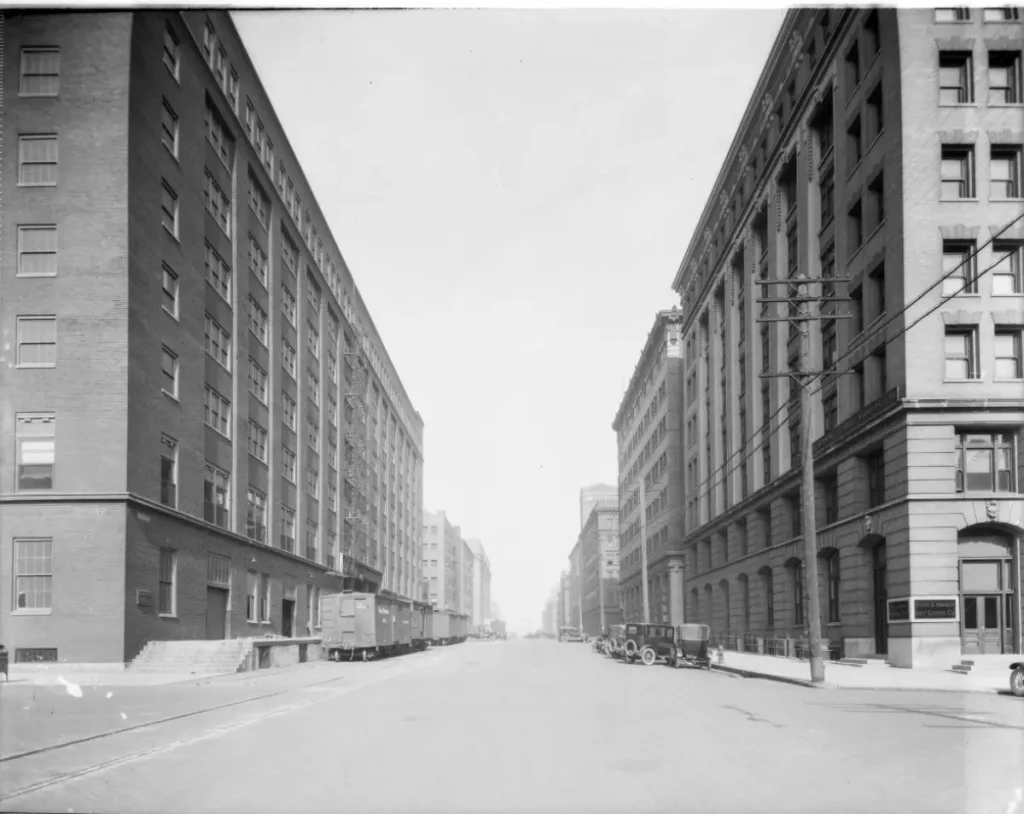
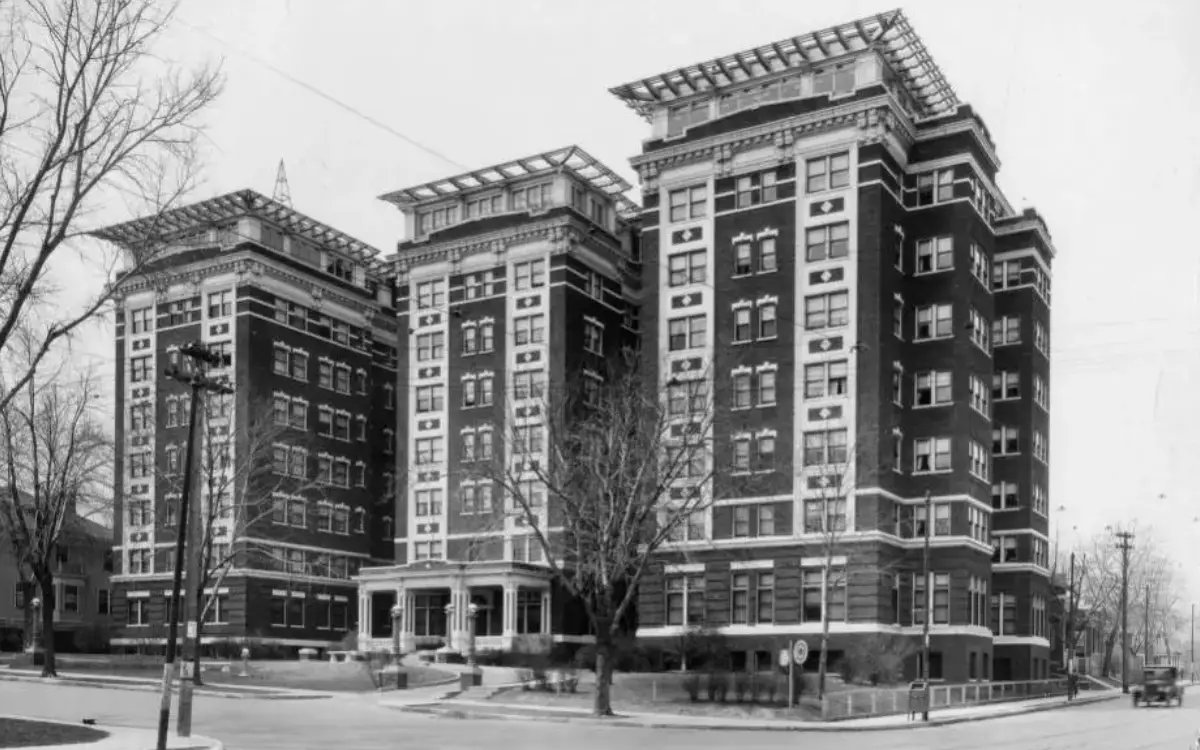
1920 Photo looking straight north on 9th Street from just south of Howard Street
Photo courtesy of Durham Museum photo archives
After losing thousands of jobs to Texas, when InterNorth (formerly Northern Natural Gas) acquired Houston Natural Gas to form Enron, Omaha was fearful that if Conagra also relocated, it would continue downtown’s downward spiral. Tax credits ultimately proved successful in getting the company to stay even as it expressed a preference for a suburban-style campus rather than a skyscraper.
As part of its return to the river plan, officials steered the company toward the riverfront. One proposal included a high-rise tower and several low-rise structures while also preserving nearly all of the warehouses in the Jobbers Canyon Historic District in addition to connecting the downtown park to the river.
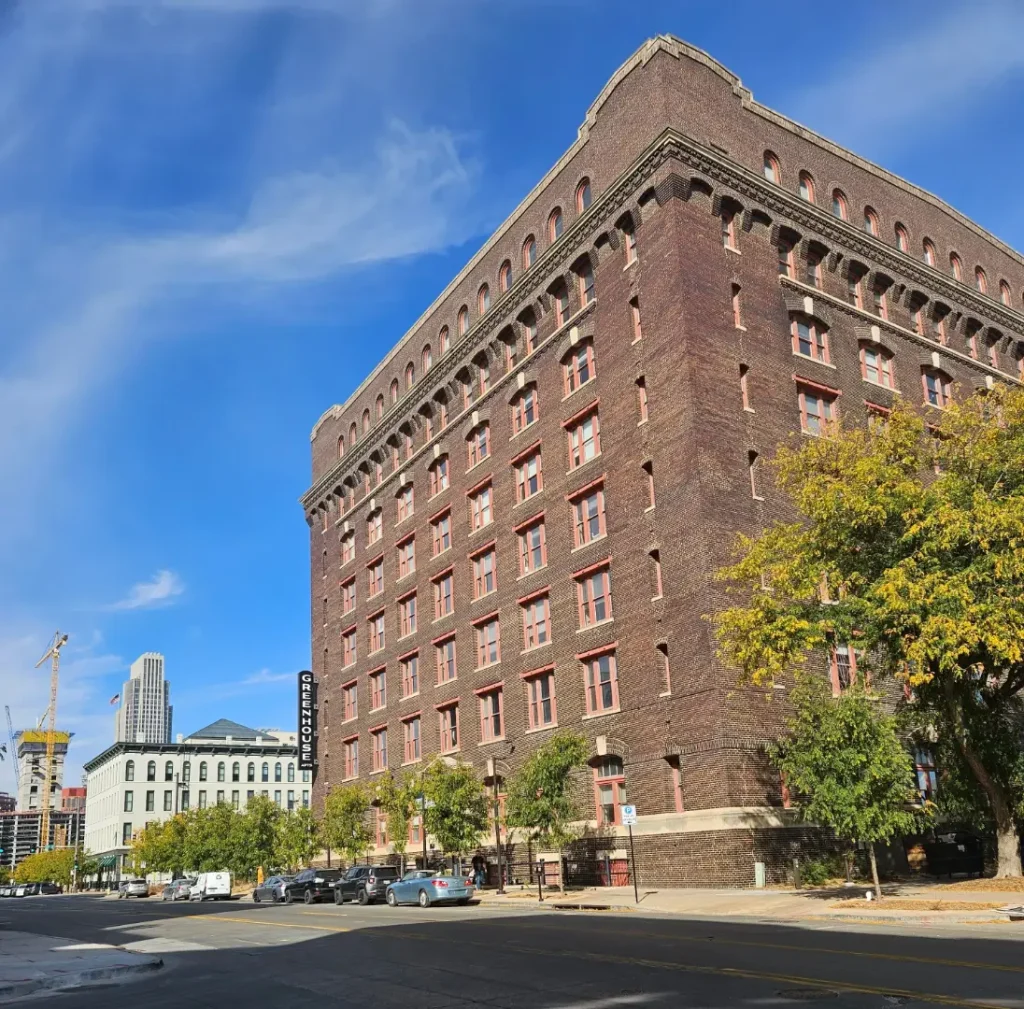
The Nash Block was the only building from Jobbers Canyon that was saved.
Photo courtesy of Omaha Exploration
The plan was rejected, at which point Conagra’s CEO at the time said that he wouldn’t build its new campus next to “some big, ugly red brick buildings” which would dominate the riverfront and compress the campus.
In response, city officials agreed to demolish Jobbers Canyon Historic District and to allow Conagra to build its coveted suburban campus just east of the Old Market, which had developed into the heart of downtown Omaha. In an effort that received national attention, preservationists attempted to rally support to save the historic district only to come up short.
With the exception of the Nash Block at 902 Farnam Street, which was in the process of being renovated as The Greenhouse Apartments, the entirety of Jobbers Canyon was cleared within a year.
Soon afterwards, the historic warehouses were replaced with several low-rise, suburban-style buildings on a campus that incorporated the new Heartland of America Park and its man-made lake.
In 2016, nearly 100 years since its founding and 27 years after causing the destruction of Jobbers Canyon, Conagra relocated its headquarters from Omaha to a historic building in downtown Chicago. The move resulted in the loss of 1,500 jobs and one of the city’s five Fortune 500 companies.
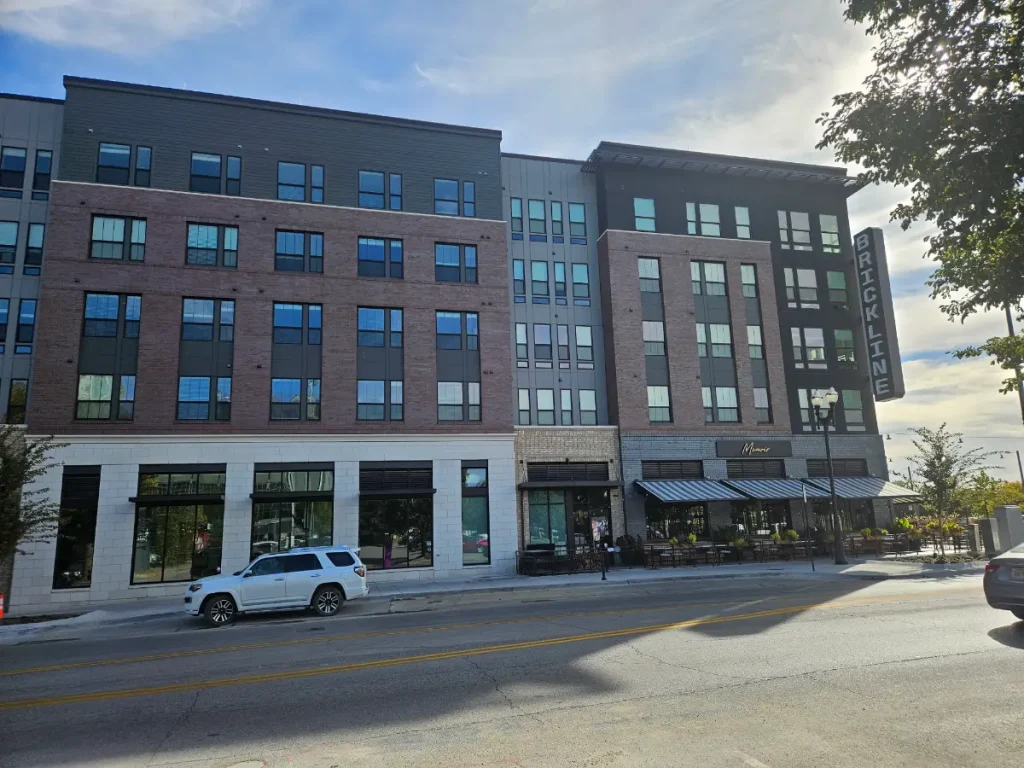
The Brickline apartments that were built on the eastern side of 10th Street on the former site of Jobbers Canyon
Photo courtesy of Omaha Exploration
In 2022, a portion of the Conagra campus was demolished to make way for Brickline at the Mercantile, a building that includes 379 apartments and a 640-stall parking garage. It also includes ground-level commercial space that serves as the home to restaurants Memoir and Tupelo Honey; Ghost Donkey, a cocktail bar; and Cham Pang Lanes, a duckpin bowling alley.
The park that made up a part of its campus was renovated to include the Farnam Pier, an outdoor skate ribbon along with other features. When it’s complete in 2028, the streetcar will also run along both 8th and 10th streets within the former Jobbers Canyon Historic District.