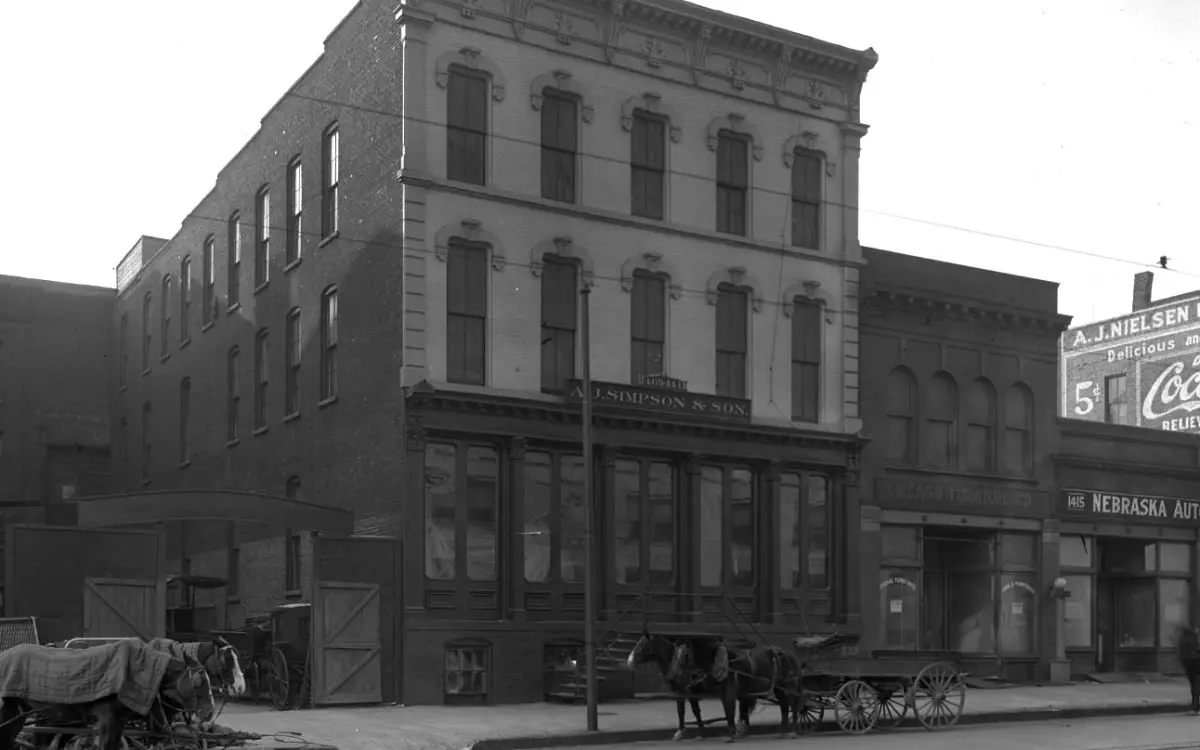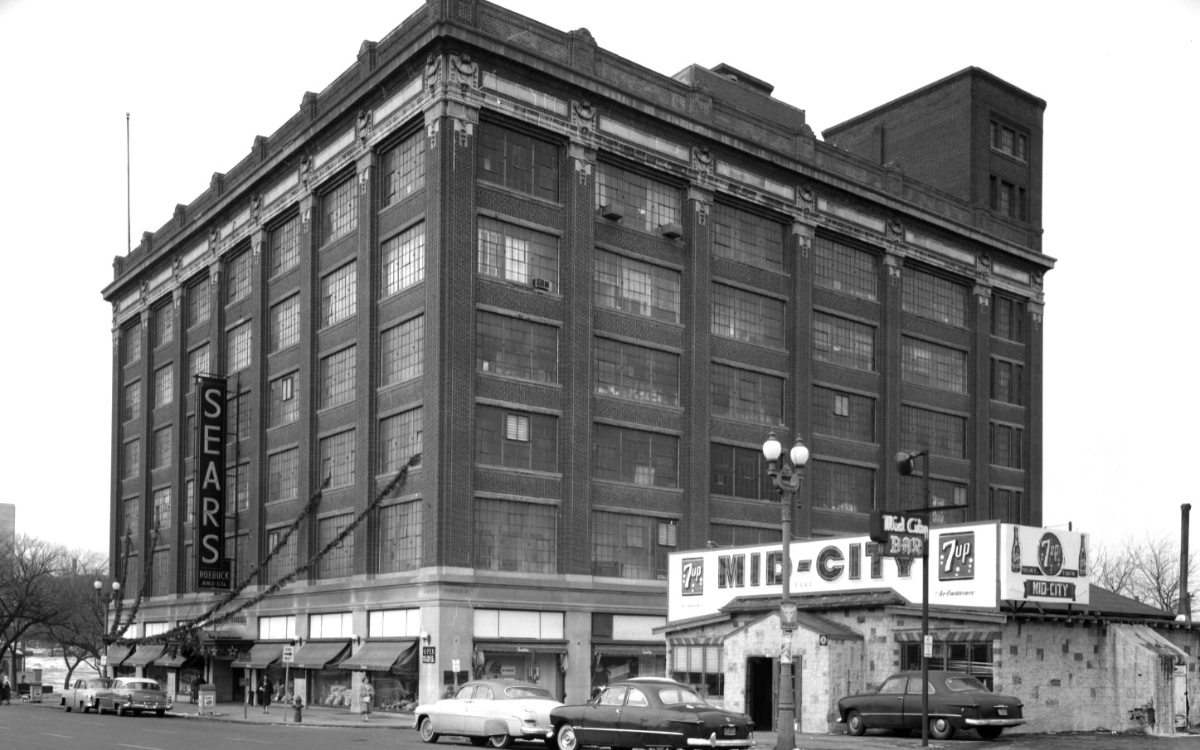
Amidst the streetcar construction, where Farnam Street intersects Turner Boulevard, is a building with a 1960s aesthetic that dates back more than 100 years.
The building was constructed by the Western Motor Car Company in 1919. The company was founded by Charles Hannan two years earlier after leaving his position as the director of City National Bank of Council Bluffs to get into the automobile business.
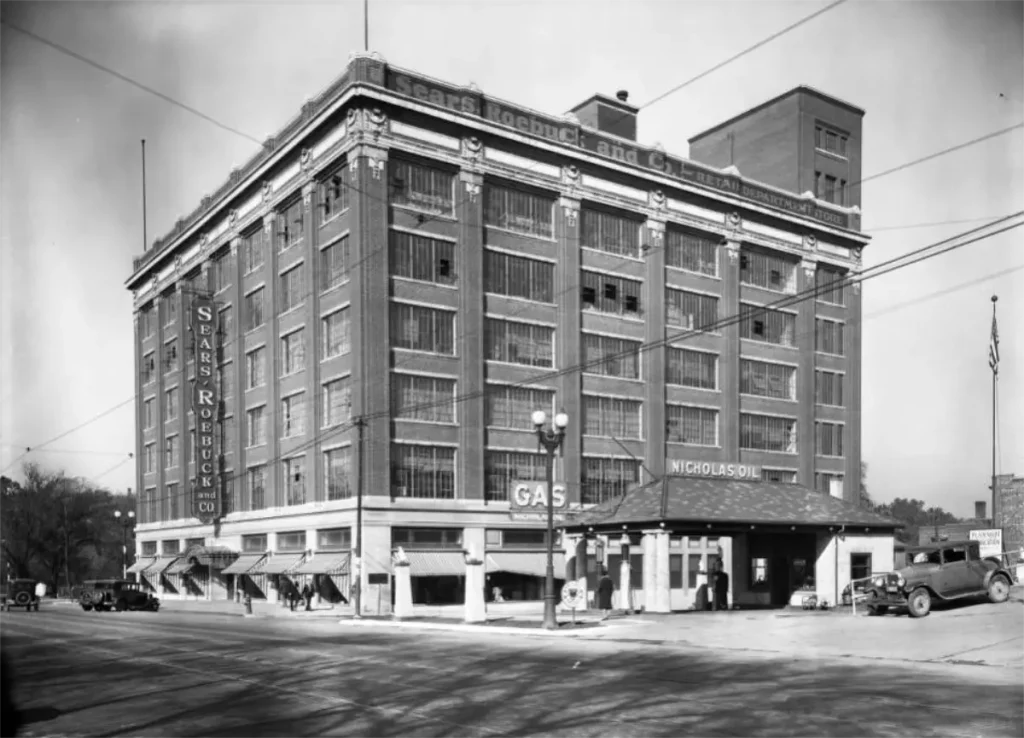
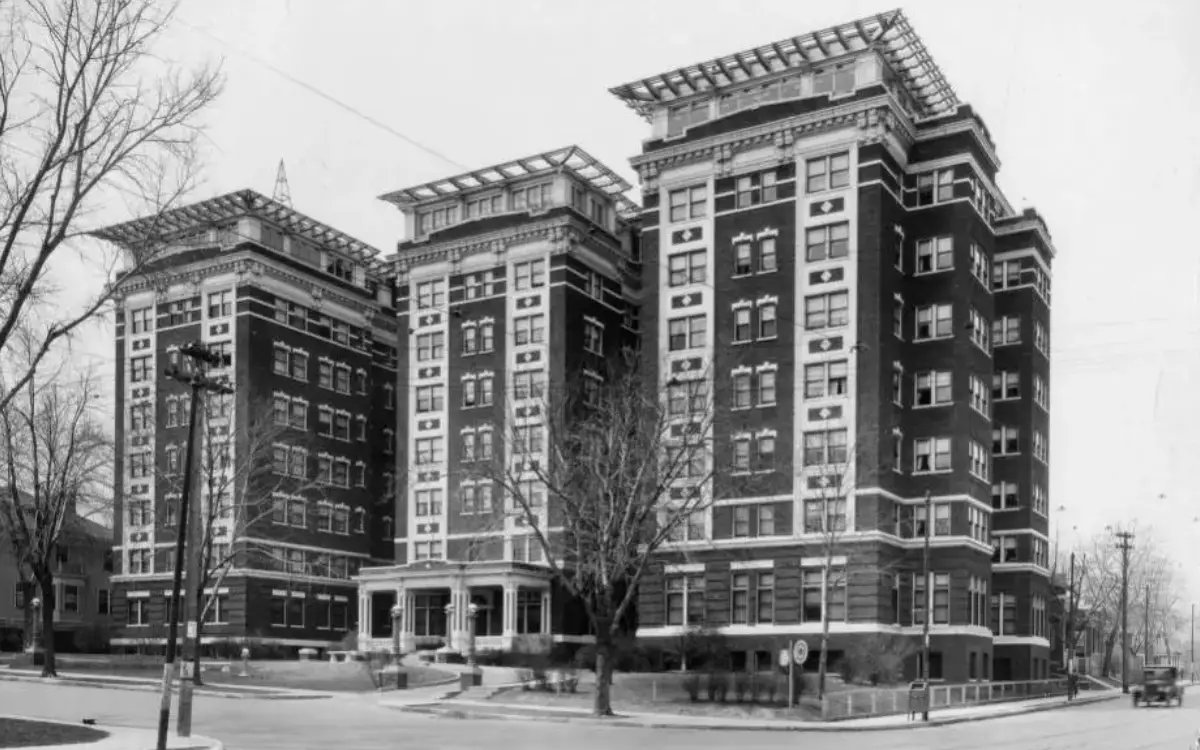
1929 photo of the former Western Motor Car Company as Sears Roebuck from around 30th and Farnam Streets.
Photo courtesy of The Durham Museum photo archives.
The Western Motor Car Company originally distributed Chalmers automobiles in addition to Peerless, Maxwell and others. Later known as Hannan-Odell-Van Brunt Ford/Lincoln when Robert Odell and George Van Brunt joined the company, it became a prominent early Ford dealership in the Midwest.
The building located at 3000 Farnam Street was constructed by George W. Stiles Construction Company of Chicago on land owned by the Hannan family, one of the wealthiest of Council Bluffs. The company hired architect George L. Fisher to design the six-story Classical Revival-style building that was constructed of steel, brick, stone and reinforced concrete at a cost of $474,000. It had 15,000 sq. ft. of floor space, storage capacity for more than 1,000 cars and service facilities.
The north side featured “twin towers” that contained unique 30×30′ high-capacity elevators that were large enough to carry vehicles to the upper floors of the building.
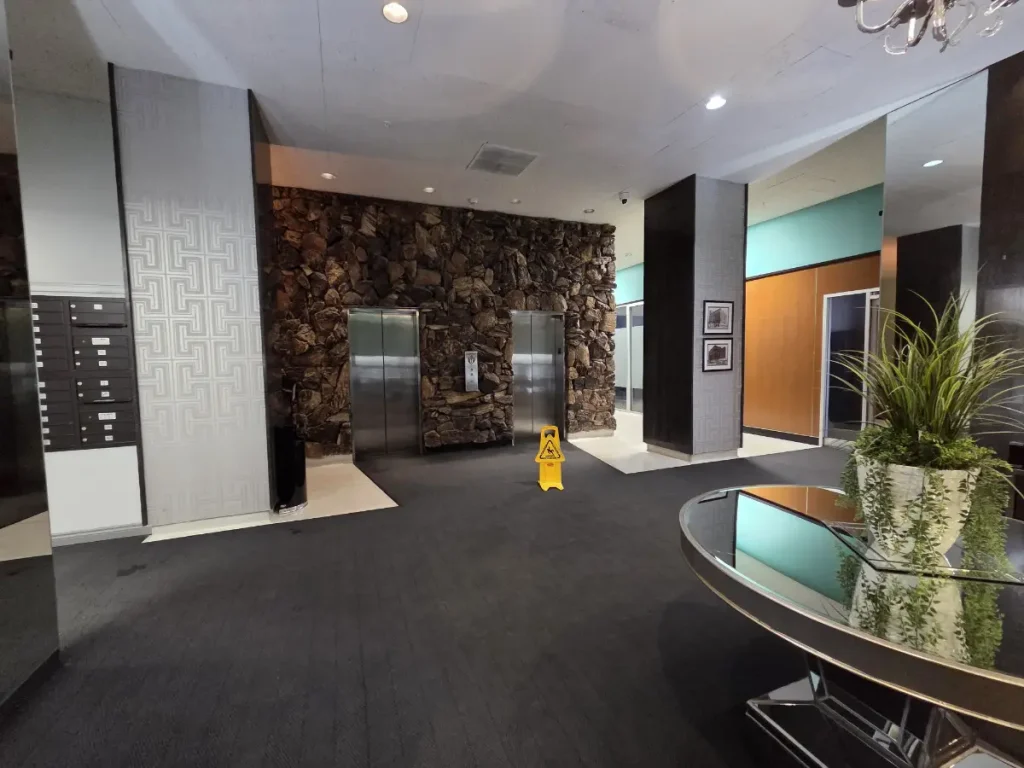
2026 photo of the lobby inside the Twin Towers Condos.
Photo courtesy of Omaha Exploration
The first floor was the showroom and contained entrances to the service department that had a capacity to handle 30 to 40 vehicles at a time. The second floor was used to handle repair work with parts and paint on hand. The third and fourth floors were used for storage. The top two floors were used to store cars. By 1923 the company moved west to 3852 Farnam Street and closed in 1928 when Ford revoked its license. The Omaha-based company claimed Ford had breached its contract, which led to a bankruptcy filing. Its founder passed away months later at just 43 years old.
After sitting empty for four years, the Chicago-based mail order company Sears, Roebuck & Company opened its first Omaha store in the building in 1928. They spent $200,000 renovating the building. The work was completed by Peter Kiewit & Sons and included tearing out partitions, installing new floors and stairways, plastering and interior decorating.
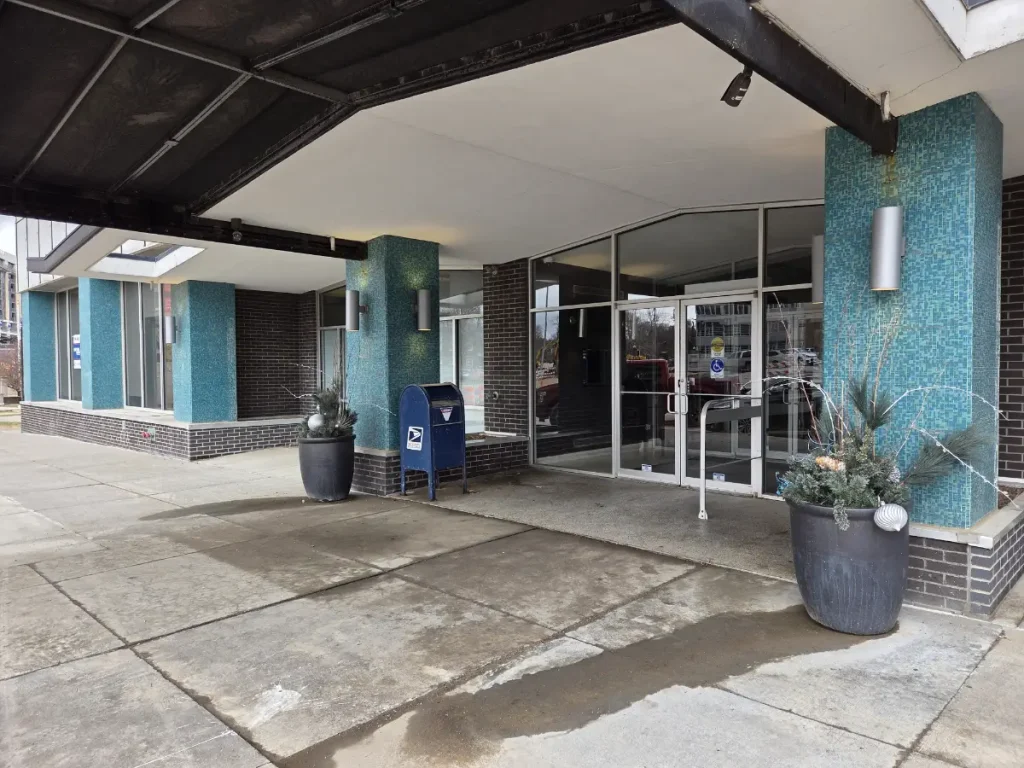
2026 photo of the lobby inside the Twin Towers Condos.
Photo courtesy of Omaha Exploration
Four floors were utilized as the retail store with the remaining floors and basement used for storage. It was the 25th Class-A department store the company opened and carried merchandise across every department store line. The store with “luncheonette” service was one of their largest, and Omaha was selected due to its strategic location in the central west. Sears utilized it as their primary retail store in Omaha until moving to Crossroads Mall in 1960.
While it was briefly considered as a site for a police headquarters in 1961, it was ultimately purchased by Julius Novak who owned a car dealership in addition to holding public office. He hired Kiewit to convert the former retail store into an apartment complex called the Twin Towers.
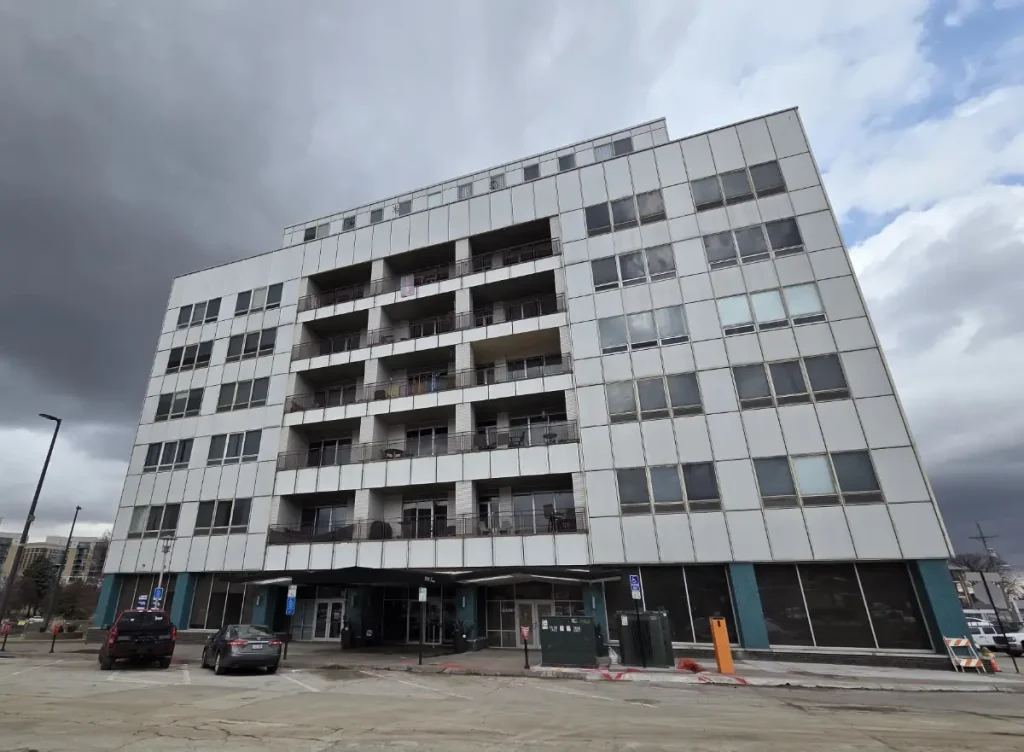
2026 photo of the Twin Towers Condos from Farnam Street.
Photo courtesy of Omaha Exploration
Designed by architect James W. Nicas in the modern style, only the floor slabs and columns of the original building were retained, while three additional floors were added. The renovated building utilized metal, glass and transite curtain walls along with a decorative concrete screen at the main entrance and balconies. It also featured a large neon “Twin Towers” sign that faced east toward downtown.
When the Twin Towers opened in 1962, the first two floors were utilized as commercial space while the basement held offices. The upper floors had 129 studio, one- and two-bedroom apartments. Nearly half the units had balconies while 10 penthouses had rooftop patios with redwood flooring. Each floor had storage and laundry facilities.
Immediately north of the original building, the second of the twin towers was built facing Douglas Street in 1966, along with an underground parking garage. The newer building was renamed Twin Towers Office Centre by the mid-1980s, at which point it was converted entirely to office space. After sitting vacant for a number of years, the 11-story north tower was razed in 2013 while the garage was retained.
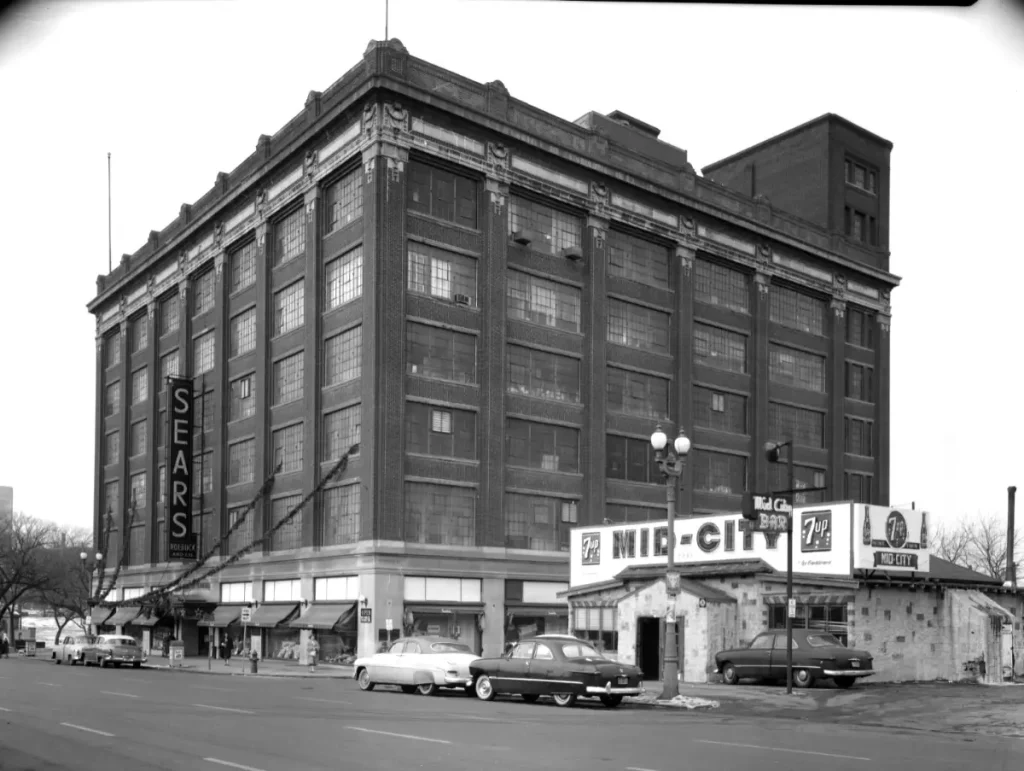
1929 photo of the former Western Motor Car Company as Sears Roebuck from around 30th and Farnam Streets.
Photo courtesy of The Durham Museum photo archives.
In 1984, real estate investor H. Michael Cutler purchased the south building and converted the apartments into condominiums. The upper floors remain condos today while the ground level commercial space, most recently home to Dice Communications, continues to turn over. Starting as the home to one of the region’s most ambitious auto dealerships, it has outlasted nearly everything around it and still stands even as the area continues to evolve.