
Key issues to consider with transit construction project timelines

I have been involved in numerous projects throughout my 21-year transit career, and there is nothing more satisfying than seeing transit service opening to the public, especially since these projects benefit people with a new mobility option. Large transit projects commonly take a long time to plan and build, and yes, I have also been part of transit projects whose plans are still sitting on the shelf.
First, let’s look at the big picture of large transportation projects in general. A recent example is the $1.5 Billion I-29/I-80/I-480 reconstruction project in Council Bluffs, which began construction in 2008 and was mostly complete by 2023. Like many other large transportation projects, this had been in the planning stages for many years prior to construction. The project updated the transportation infrastructure that had been in use and largely unchanged for almost 50 years. These are common themes among transportation projects – in the planning stages for many years and making a long-overdue improvements.
So why the long wait? Part of it relates to the inherent nature of transportation, that it may require adjustments to people’s routines during construction. While in the construction phase, detours need to be made and that requires a lot of communication and public meetings to inform people what is happening.
Part of the extended timeline relates to environmental regulations, which were adopted in the 1960s and 70s as a response to when transportation projects were used as a way to alter some neighborhoods.
Having transportation projects go through environmental studies is a way to try to create a project that meets with community approval, although this slows down the process and can make projects more expensive. Finally, it simply takes time to put together funding sources for large projects. Many times, a large transportation plan will sit on a shelf, waiting for funding to arrive. Or it can be a long process to receive approval from government grants, private donations or other funds.
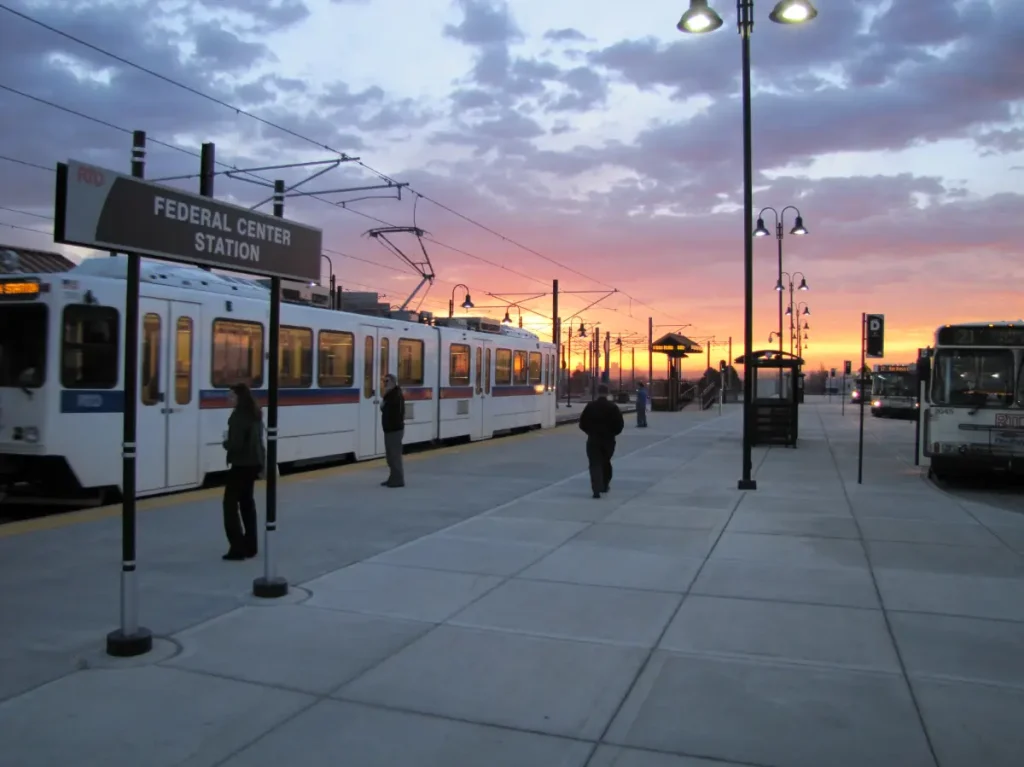
Large transit projects can be more complex than what is seen on the surface – Denver’s RTD West Line project shown here involved developing new transit nodes with multimodal connections
Transit projects in particular may require additional analysis when using government funds, as they need to answer questions such as how many people will use the system and how it will benefit the public. Transit projects may need to provide information such as the estimated cost per rider to see if the transit project will provide enough benefit to justify the cost.
Another facet of transit projects is coming to an agreement on building the project by many governmental organizations and communities, as most large transit projects stretch across multiple cities. This was a huge factor in the Denver Union Station project – this regional transit hub was a centerpiece of the FasTracks plan passed by Colorado voters in 2004, where all transit lines throughout the Denver community would come together. Getting to this level of support sometimes takes decades, similar to how the Omaha streetcar project came together between 2004 and the announcement in 2022.
Now that we have an overview of things that slow down all large transportation projects, let’s take a look at some details of transit projects. Let’s say that, similar to the Omaha streetcar project, we have a transit project that has gone through the planning and environmental stages, has general support from the community (government agencies, adjacent neighborhoods and the business community), has a financing plan in place and is ready for construction. How long should a transit project take from this point? That depends on the type of transit project.
A Bus Rapid Transit (BRT) project, for example, is relatively simple and should take about two years, similar to Omaha’s ORBT, which was under construction from late 2018 until opening in November 2020. Rail transit projects (in addition to bus projects with dedicated guideways) will take longer because of the need to construct the guideway – such as tracks – and stations, which require some level of utility work underground and adjustments to the existing infrastructure above ground.
Transit corridors can be scaled up or down in terms of specific technology (BRT, light rail, commuter rail) based on the funding available and the desired amount of economic development and ridership benefits.
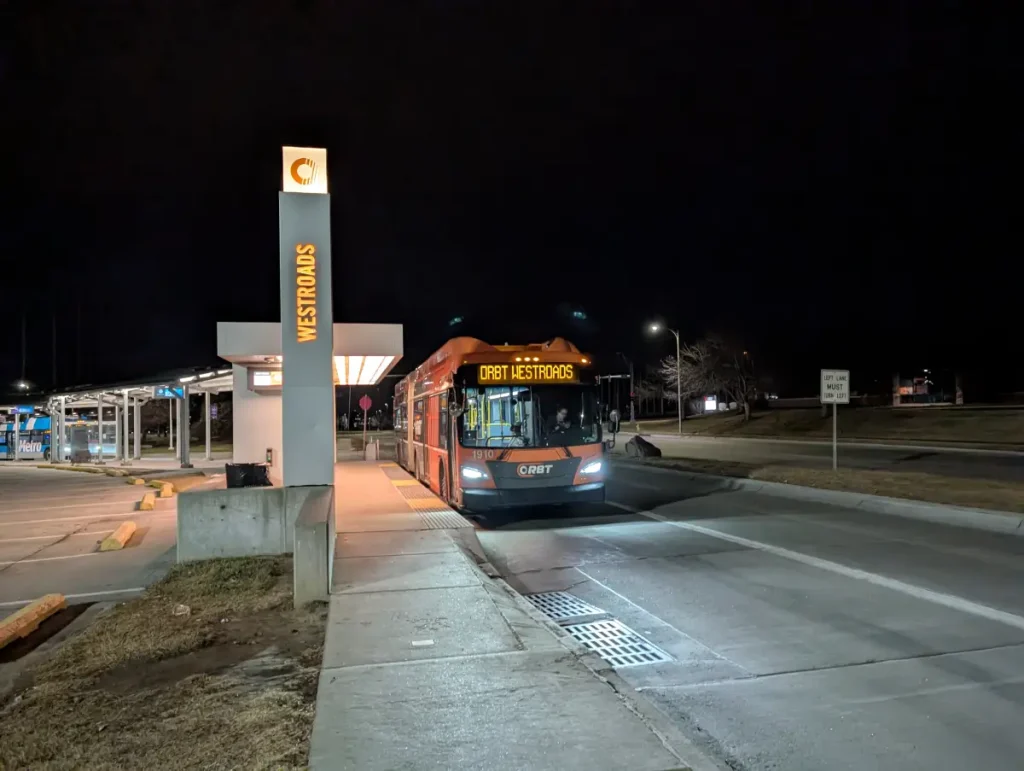
Bus Rapid Transit (BRT) as shown here with Omaha’s ORBT, can be a simpler transit project that still provides benefits for transit passengers
It also depends on the funding source. Transit projects built with federal funds will generally take longer, as the government requires additional information and specific construction processes.
I was part of the construction and implementation of two light rail lines in the Denver area, both built in newer, suburban areas. The West Line, partially funded through a federal grant, started construction in 2007 and opened in 2013 (six years). The I-225 Rail Line was locally funded and took five years, as construction started in 2012 and the line opened in 2017. Streetcar projects, in general, are smaller and require less heavy construction for the tracks and stops, although they are more intense with closer impacts on dense areas of cities.
For Omaha’s streetcar project, the construction timeline is common for a locally-funded project with the construction starting in 2024 (the first real utility relocation and improvement work) and the planned opening in fall 2028. Streetcar projects could be built slightly faster if there is less utility work. An example of this is the recently opened Kansas City Main Street extension, which started construction in early 2022 and opened in late 2025 (just over three years).
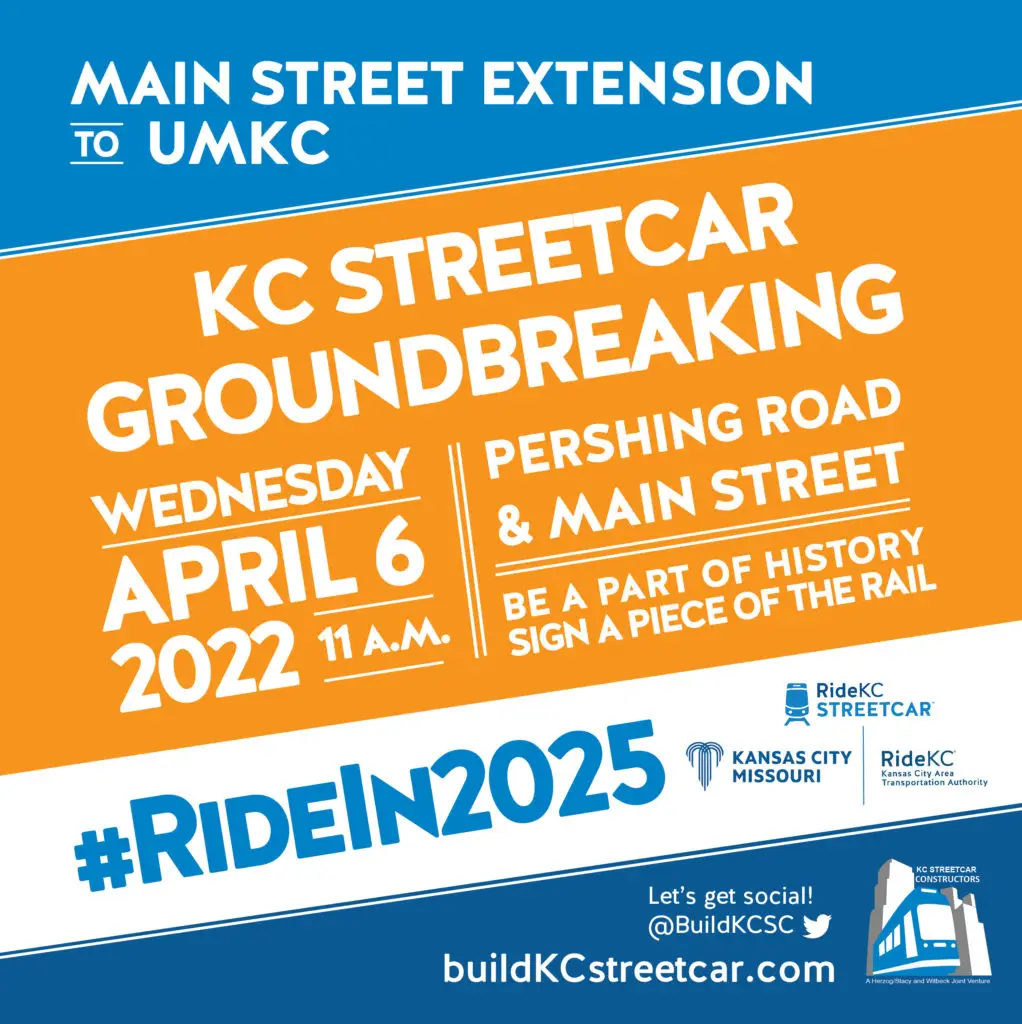
Kansas City groundbreaking announcement for the Main Street extension that opened in October 2025
Another example of a project that I have been involved in is the North Metro Rail Line in the Denver area. This was a classic case of a large transit project that took a long time from planning to construction, had some delays until it opened and still needs to complete its entire planned corridor.
I was part of the consultant team on the Environmental Impact Statement study that started in 2006 and lasted until 2010. Construction began at the end of 2013 with a planned opening in 2018, which was delayed until September 2020. Currently, 13 miles of the planned 18.5-mile line are in operation. This line currently has about 4,000 passengers riding it on an average weekday. The two-year delay in opening was attributed to some construction challenges (including a 2-mile-long bridge to avoid crossing creeks and freight railroads) and implementing a new train communication and signal system.
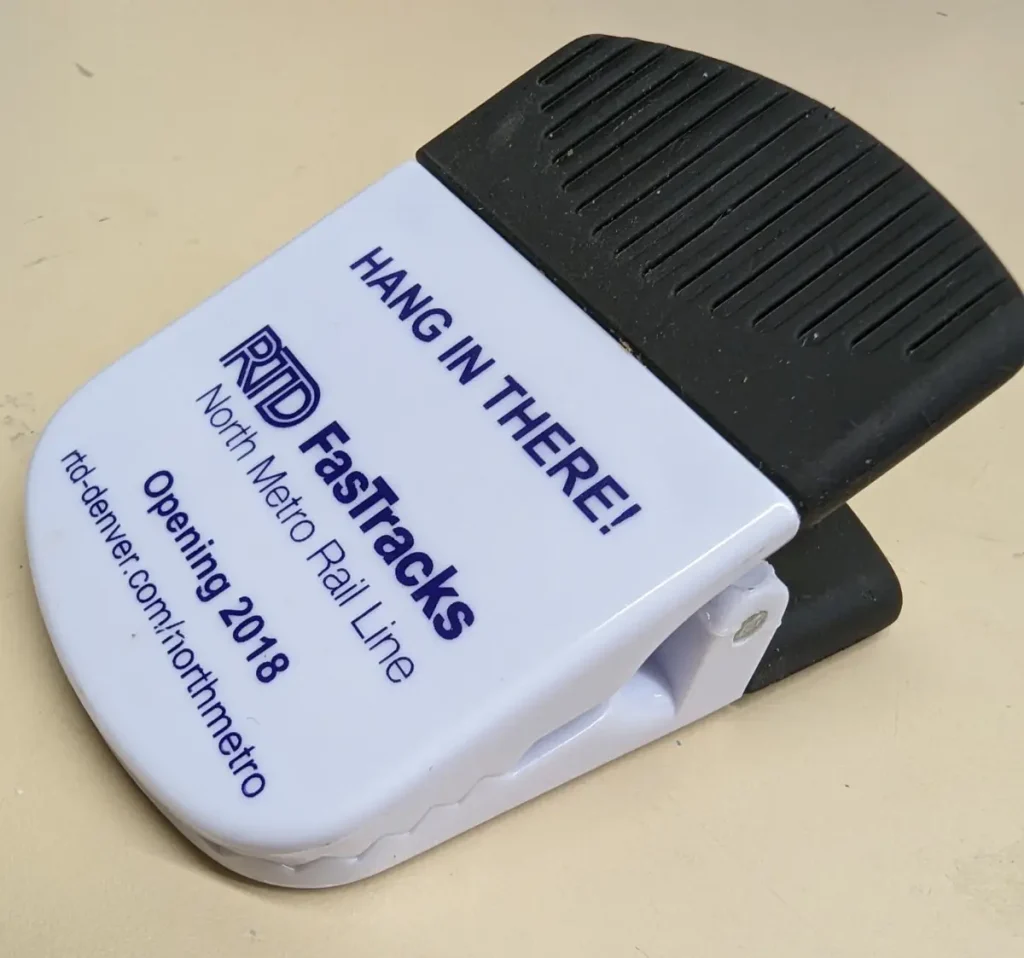
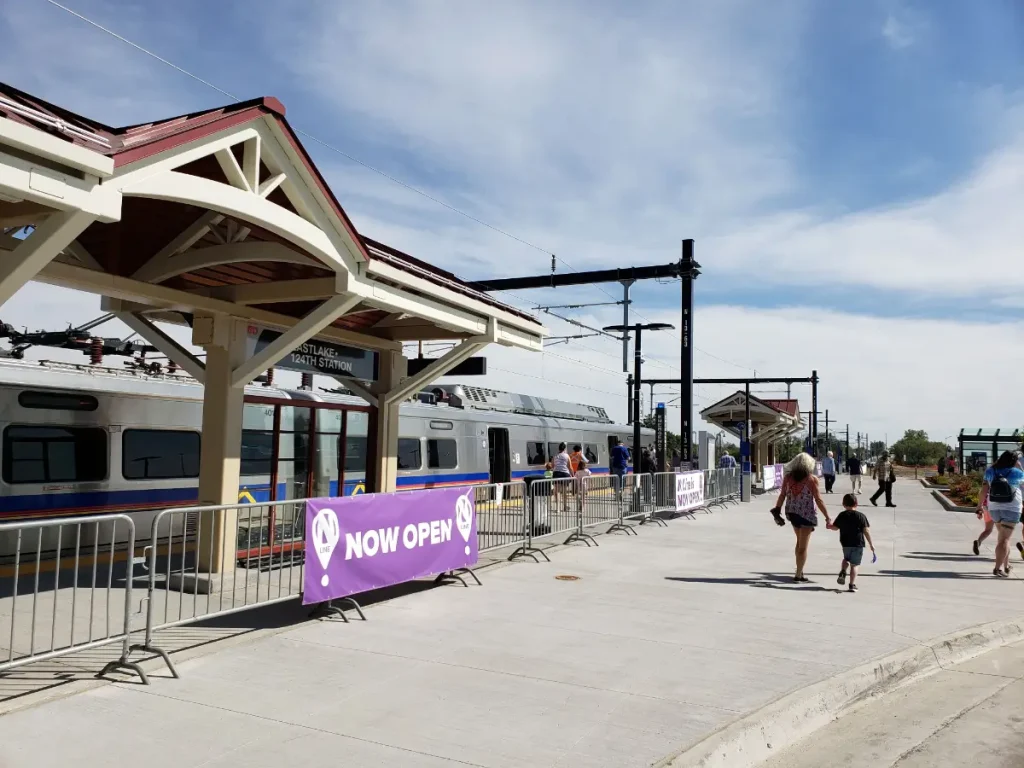
The RTD North Metro Rail Line (N Line) featured both common and unique delays to its opening, moving from 2018 to 2020
Construction challenges often cause longer timelines to open a new transit corridor. Most of this is because of things that are found underground, as the construction is underway, in addition to building something that may be unique to the project. For a streetcar project like Omaha’s, most of the surprises should be behind us with the utility work, although the track work will still be unique to Omaha, while it is similar to work done in other cities.
Besides these challenges, what are the normal construction activities that require a project to take so long to open?
For most rail transit projects, this is split into two phases: the actual construction and the testing and system integration. Building the new line takes a lot of time and requires additional time beyond usual road work because of the installation of track and the communication systems that keep the trains running reliably. Once the infrastructure is built, the streetcars need to be thoroughly tested to make sure that the system is safe and can operate well. It is important not to shortcut this process so that we have a system that is reliable and efficient from the first day it opens to the public.
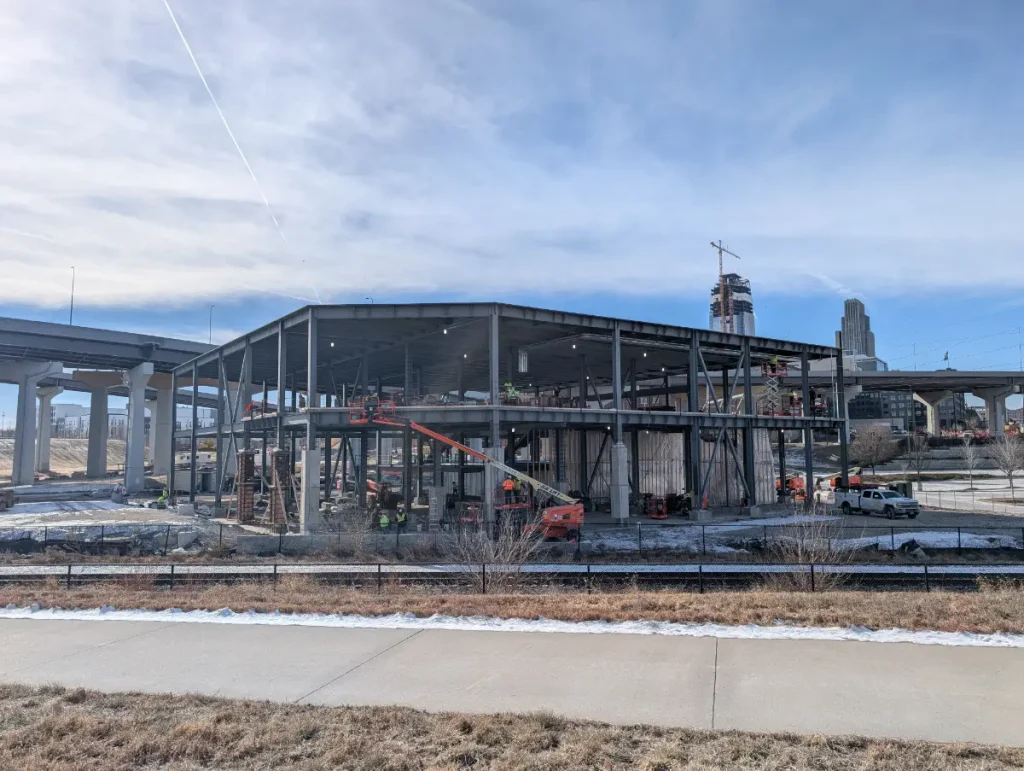
Consideration of other parts of a transit project, such as the vehicles and the storage and maintenance area required to support them, may add time as well. Shown here is Omaha’s streetcar maintenance facility under construction.
At this point, there’s really nothing else we can do to speed up the construction and testing process. The only method would be to completely shut down the transit corridor to more quickly build the project. However, that is unrealistic, as it does not consider that people still need to move through the urban core and keep businesses and residences open. The best strategy for building transit projects more quickly in the future is to reach common support for the project, which will increase the ability to gain funding faster.
I hope this helps shed light on why large transit projects seem to take so long. Every project is different, and things change over time, although there are similar themes that can help explain what to expect with all transit projects.
You can keep updated on the Omaha Streetcar website at omahastreetcar.org, register for our monthly webinars here, or check out previous webinars and other videos here.
Eric Miller is the Streetcar Operations Manager for the City of Omaha. Erik has a 21-year career in the transit industry that includes work in both the private and public sectors and work on planning and implementing bus and rail projects for transit agencies all across the country.