
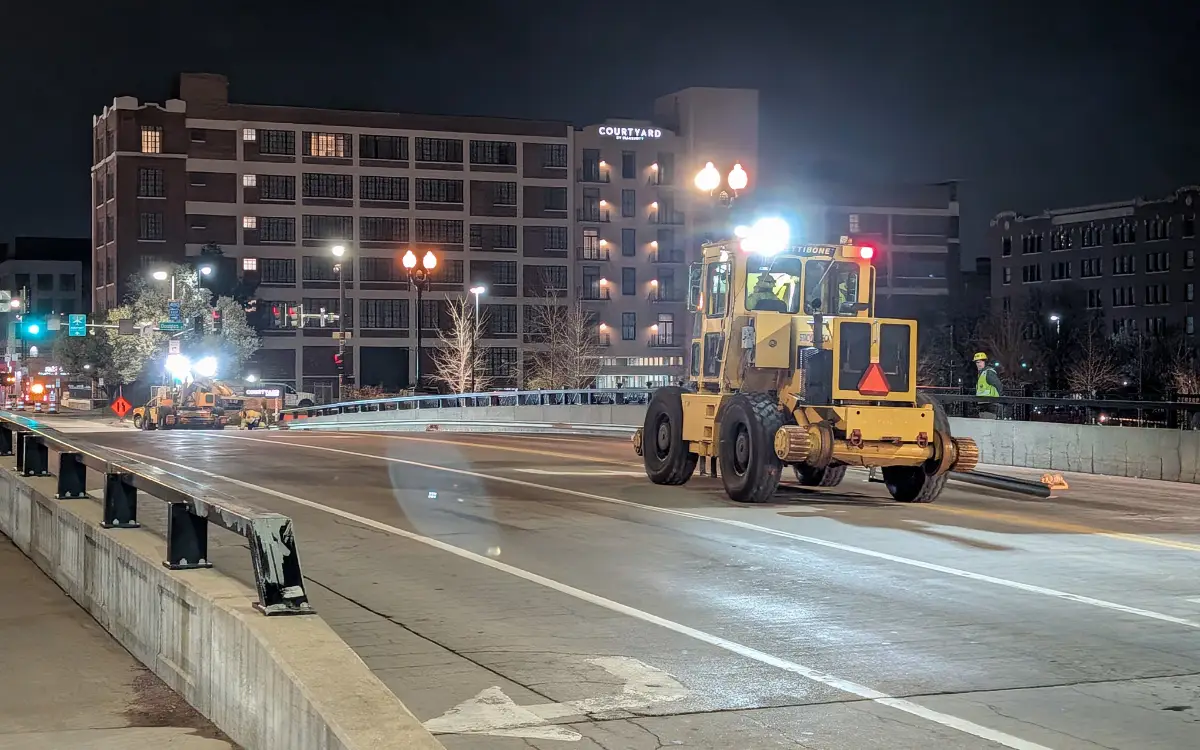
Another milestone occurred for the Omaha streetcar project this morning as the first rail sticks were moved from the laydown area to the specific site to be installed in the street. This occurred at one of the laydown areas, where the rail is being staged, between 11th and 13th streets on Farnam Street. The rail was moved to 10th Street near Capitol Avenue. The first rail will be installed in the street beginning in about two weeks.


Photos showing the movement of a rail stick around the 10th & Farnam Street intersection
In early March, crews began delivering rail to staging sites along the route in preparation for welding and installation. The rail weighs 112 or 115 pounds (the standard measurement that weighs it according to 3-foot lengths) and comes in 35- to 39-foot sections for the 112-pound rail and 80-foot sections for the 115-pound rail. There are two types of rail being used for the project as the slightly lighter 112-pound rail is used on bridges. These short segments of rail are welded together for a continuous smooth rail through the corridor. More deliveries will occur at multiple sites along the route through mid-2027 as the mainline track construction continues.

Rail piled at the laydown area in Blackstone, just west of 40th Street
The 115-pound rail is delivered on special 100-foot semi-truck trailers (the most common trailer length is 53 feet). Once the rail is unloaded downtown, it is stored on oak dunnage, a high-strength material used in rail and heavy-duty industrial storage. If you walk past the staging areas, you may notice piles of rail about 3 feet high. A specialized welding crew will visit Omaha to connect the 80-foot sections into 300- to 400-foot sections in preparation for installation. The welding process will typically occur a few weeks after each rail delivery.

Recently welded rail at the Blackstone laydown site – note the vertical line where the rail is spliced together
Welding the rail together involves a four-step process of polishing, welding, grinding and inspecting. Using a technique called electric flash-butt welding, the ends of two sticks of rail are heated to approximately 2,800 degrees and then pressed together to create the weld. By completing the electric flash-butt welds prior to installation, the team minimizes the number of welds that will be completed in the field during track construction, which maximizes schedule efficiency.
The welding process will be completed by subcontractor Holland Welding, which also conducted welding on the Kansas City Main Street extension. The rest of the rail will be welded at the locations where the track is being built to create a “Continuous Welded Rail”, or CWR, system of track.
By the way, be sure to keep updated on the Omaha Streetcar website at omahastreetcar.org, register for our monthly webinars here, or check out previous webinars and other videos here.
Eric Miller is the Streetcar Operations Manager for the City of Omaha. Erik has a 21-year career in the transit industry that includes work in both the private and public sectors and work on planning and implementing bus and rail projects for transit agencies all across the country.