Just south of the Old Market, an ornate one-story brick building long surrounded by empty parking lots will soon find itself at the center of the city’s newest park.
Located at 1213 Jones Street in the Rail and Commerce Historic District, the building originally served as the office for the Anheuser-Busch Beer Depot. Designed by German architect Henry Voss—whose primary focus was breweries—the depot was built in 1887 and included not only the office but also a beer vault and icehouse, bottling area, and stable arranged around a small courtyard that opened onto Jones Street.
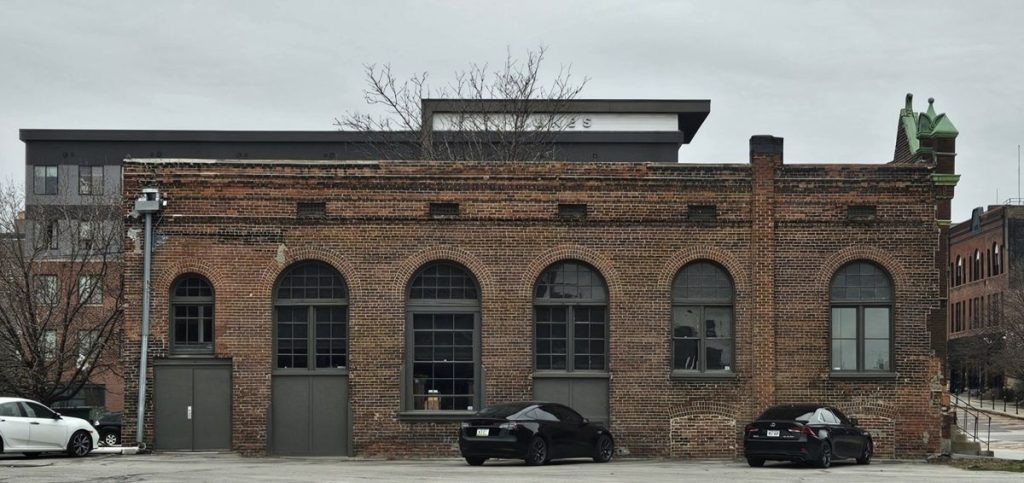
Historic Anheuser-Busch Beer Depot East Side of Building
The rectangular office building, constructed of red brick, is one of the most elaborate examples of Romanesque Revival architecture in Omaha. Facing Jones Street, the office served as the focal point of the depot, featuring a front façade surrounding a slightly projected middle section with large arched windows, columns, rounded corners, and a cornice with finials.
While Anheuser-Busch was based in St. Louis, Omaha served as the central headquarters for its western territory, which included Nebraska, Iowa, South Dakota and Wyoming. After the beer was brewed, it was transported by train to Omaha, where it was bottled before being distributed elsewhere.
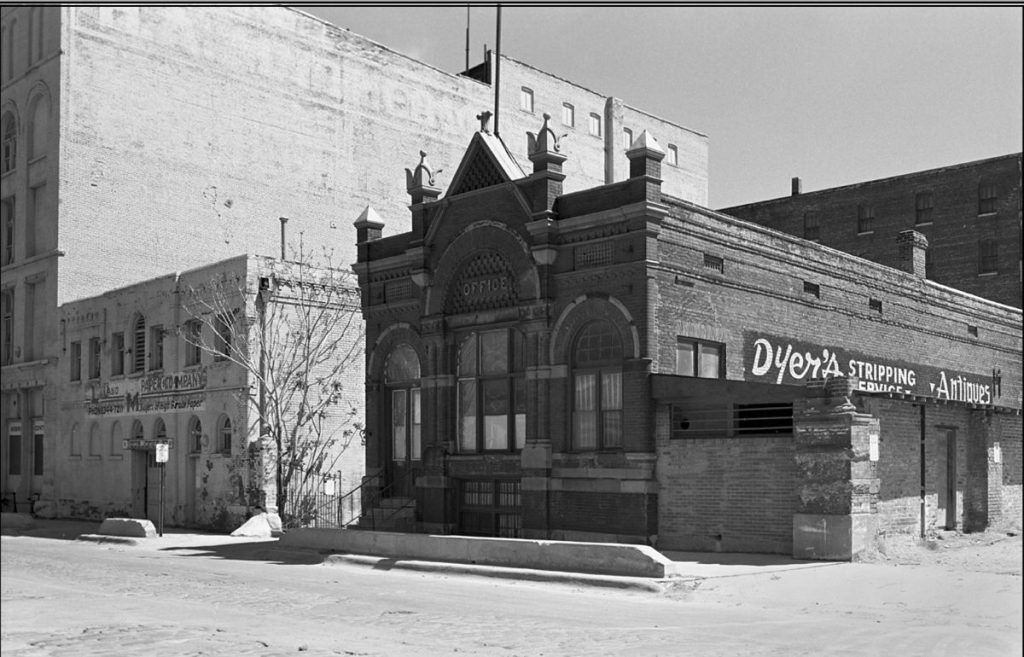
1978-2 Courtesy of D. Murphy, National Regsiter of Historic Places
Anheuser-Busch continued operating the beer depot until 1916, when Prohibition was approved in Nebraska. The Willow Springs Bottling Company then occupied it until 1949. After that, the office building continued to serve a number of purposes, including as the longtime home of Honest John’s Emporium before it relocated to the Old Market. All but the office and a gate post leading to the courtyard were demolished in the 1970s and replaced with parking lots.
In the late 1970s, the building became the private residence and studio of a commercial artist and designer. Despite the mice that roamed the basement, the occasional intoxicated individuals who slept on his doorstep, and the trains that passed by at 3 a.m., he enjoyed his unconventional living quarters.
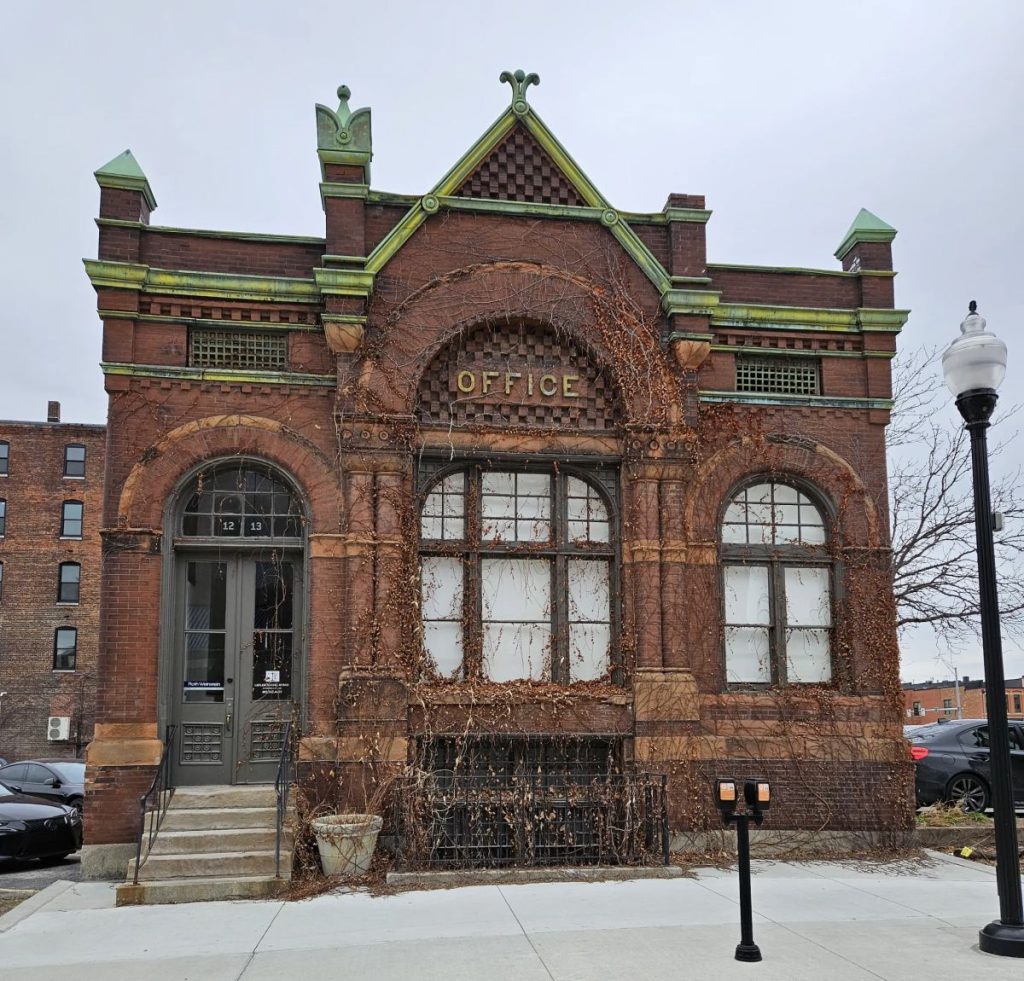
Historic Anheuser-Busch Beer Depot Front
Featured in the 1977 Landmark book Omaha City Architecture, the 4,000 sq. ft. building contained 14-foot ceilings, 11-foot-wide doors with arched transom windows above them and original oak woodwork that had been painted too many times to count. Large wheels—possibly once used in beer barrel production—still hung from the ceiling above the bedroom and workspace.
After its occupant moved out, it opened as Dyer’s Stripping Service followed by Beauty and the Beast Antiques. By 1989, the building had long been neglected and was falling apart. That’s when longtime admirers Perry Poyner and Michael Alley purchased it to serve as the headquarters for their architecture firm, Alley Poyner. The company embarked on a renovation that included new utilities, plastered walls, repaired window frames, a new stairway to the basement and a second-floor loft, along with extensive exterior work on the masonry and brick.
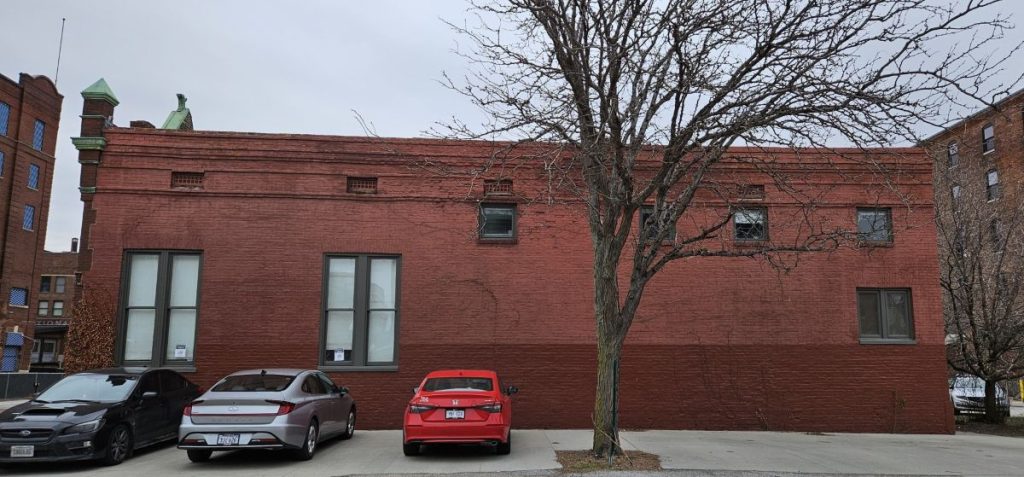
1207-1215 Jones Street West Side of Building
The architecture firm moved out in 2008, after which the building became home to the New BLK, an art gallery, event venue, and co-working space. Most recently, it was used as a law office before being purchased by Lauritzen Gardens.
Lauritzen Gardens will manage the park that now surrounds the building. Named Polina Gardens, the park is being designed by renowned Dutch landscape designer Piet Oudolf—whose notable works include the High Line in New York City and Lurie Garden in Chicago’s Millennium Park.