
The Orléans Room is part of the Kimpton Cottonwood Hotel, formerly The Blackstone Hotel. The building was renovated in 2020 in a $75 million project that brought its historic features back to life. The Blackstone operated as a hotel for decades before being converted into office space in the late 20th century. It wasn’t until the renovation that the building was returned to its original purpose as a hotel.
The Blackstone was built in 1915 by Bankers Realty Investment Company. The Orléans Room opened in 1920 after hotelier Charles Schimmel purchased the hotel. Schimmel wanted an elevated dining experience, and The Orléans Room became the hotel’s fine-dining flagship. It would go on to win Holiday Magazine’s prestigious Award for Excellence for 16 consecutive years. The award selected top American restaurants known for exceptional dining quality.
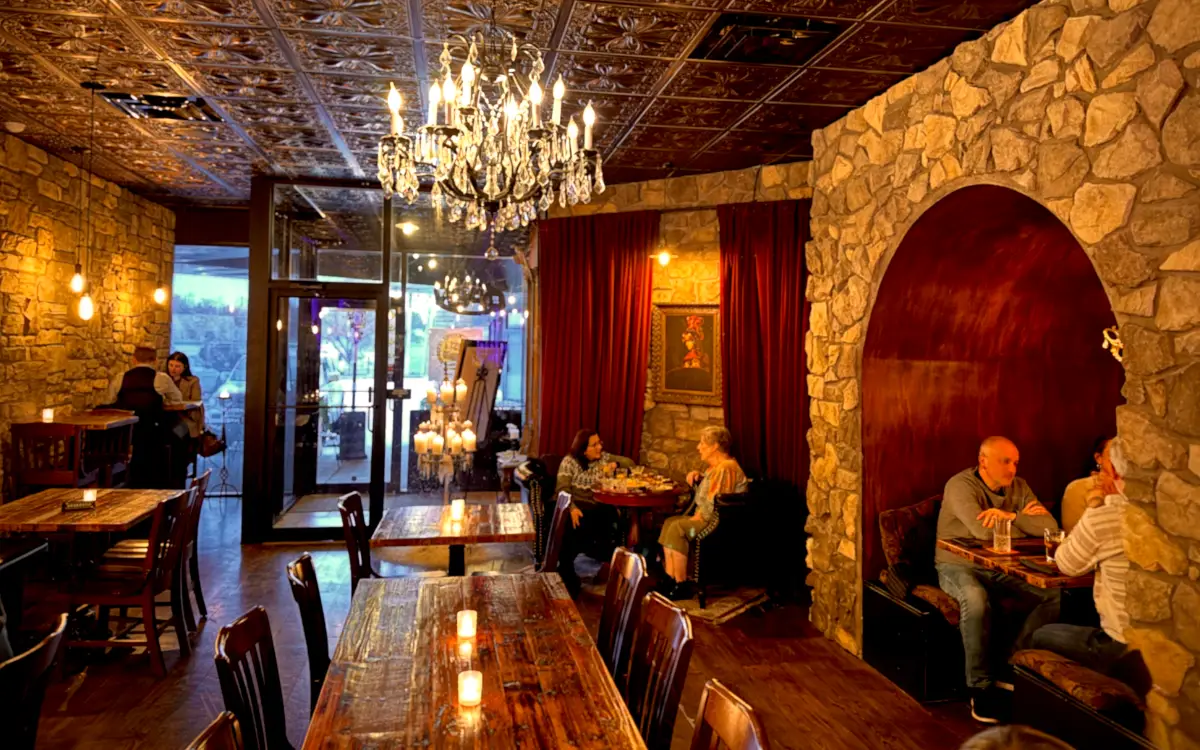
Today’s Orléans Room blends 1920’s glamour with a touch of speakeasy swagger. The lighting is moody with globe chandeliers, tufted booths and warm-toned walls. It’s the kind of place Ernest Hemingway might duck into between chapters and bar fights. It’s the kind of place where date nights and drinks with friends both feel right at home.

The Orléans Room renovated tile floors
Photo By Jennifer Corey
During renovation, the original mosaic tile floor was discovered beneath layers of carpet. Restored to its original beauty, the tile gleams beneath your feet—a literal foundation of history.
I’ve wanted to visit The Orléans Room for some time, if only to try The Original Reuben. Omahans likely know that the popular sandwich was invented at the Blackstone.
There is some debate about the Reuben’s origins. According to The Orléans Menu, the Reuben was invented in 1925 at the Blackstone Hotel during a weekly poker game led by Reuben Kulakofsky, a local grocer. Chef Bernard Schimmel developed a toasted sandwich with layers of corned beef, Swiss cheese, sauerkraut and Thousand Island dressing on rye bread. It was such a hit that it became a part of the hotel’s regular menu.

The Cottonwood Hotel exterior
Photo By Jennifer Corey
But New York City credits Arnold Reuben, a deli owner as the sandwich originator. His version was called the “Reuben Special” and was made with ham, turkey, Swiss cheese, coleslaw and Russian dressing. While this version—created around 1914—predates the Blackstone, what truly makes the Reuben we know today is the corned beef and sauerkraut.
Sorry, New York. I’m going with corned beef for the win. The Blackstone Reuben was named Sandwich of the Year in 1956 by the National Restaurant Association—another point in Omaha’s favor.
A documentary, “Finding Reuben” is in the works about this very debate. Husband-and-wife filmmakers Dan and Kathleen Markel explore the subject through their production company, A-Frame Productions.

The Orléans Room bar
Photo By Jennifer Corey
As is our usual practice, we visited The Orléans Room twice. The service was impeccable, thanks in large part to Kyle, our server on both visits. He made sure everything was up to par without ever hovering. The food came out promptly—too quick for our camera, but just right for anyone else.
On our first visit, we began with the rasmaretto and peaches and cream for cocktails. We tried the corn soup and lobster deviled eggs for starters. Jennifer chose the salmon for her entree, and I had the famous Blackstone Reuben. We finished with the blood orange tarte for dessert.

Rasmaretto
Photo By Jennifer Corey
The rasmaretto is made with Dekyper amareto, raspberry syrup, lemon juice and garnished with a lemon slice and luxardo cherry. It’s fantastically sweet, but not over the top. The raspberry and amaretto play nicely with one another. It’s playful, like a candy shop with a dress code.

Peaches and cream
Photo By Jennifer Corey
The peaches and cream is made with Grey Goose peach and rosemary vodka, Rumchata and Dekyper Peachtree liquor. The Rumchata’s sweet, creamy and spicy profile and the fruitiness of the peach rosemary vodka are an excellent match. It’s dessert in a glass—creamy, fruity and unashamedly smooth.
The corn soup is a dance of sweet and savory. It comes with a coconut fried shrimp, perfectly deep fried, that gives it a tropical edge. It’s light and creamy—a great start to a meal or a light entree in itself.

Lobster deviled eggs
Photo By Jennifer Corey
The lobster deviled egg is an inspired take on the traditional potluck dish. But this is anything but potluck. It’s elevated in the best way. The buttery, tender lobster is mixed with diced onions and creamy whipped egg yolk. The eggs sit on top of an avocado aioli that’s tangy, savory and has a good punch of acidity. Deviled eggs are a hard sell for me, but I devoured my portion with enthusiastic gusto.

Grilled salmon
Photo By Jennifer Corey
The salmon had a wonderful crust from the searing and was glistening, flaky and tender. There are two types of vegetables on each side of the fish. One side featured long ribbons of carrots and cucumber in a creamy Asian sauce. Opposite were fried cauliflower with sauteed red peppers and onions with prominent umami and savory notes. This well conceived dish is sure to appease any seafood lover’s appetite.
Before we get to the next menu item, please indulge me as I veer off course a moment and tell you a personal story.
My relationship with the Reuben started at age five in Seattle when my parents first made Reuben sandwiches or at least their version of them – two slices of rye bread buttered on the outside, mayonnaise, sauerkraut and swiss cheese plus slices of Carl Buddig corned beef from those 2-ounce plastic pouches. The sandwiches were toasted on a pancake griddle until the cheese melted.
I hated it. My five year old palate wasn’t ready for the tangy fermented sauerkraut. The seeds in the rye bread, for reasons I can’t explain, stung my tongue. But it became almost a weekly staple in our house. As the family budget increased, our homemade Reubens would incorporate Thousand Island dressing we made from mayonnaise and ketchup. Carl Buddig packets would elevate to deli counter corned beef, and eventually, home-roasted corned beef.
I grew to love the Reuben, and many of the variations of it I’ve tried over the years. And for me, the chance to try a sandwich that had such an impact on my own culinary experience from the place that first made it is akin to meeting a favorite celebrity. The stakes were kind of high, which might be why it took me so long to get to The Orléans Room.

The Original Blackstone Reuben
Photo By Jennifer Corey
The Original Blackstone Reuben is made with corned beef, sauerkraut, thousand island and Gruyère on toasted dark rye bread. The corned beef is moist and tender. The pickling spices are more subtle and blend seamlessly with the rest of the ingredients without overpowering. The sauerkraut has a slight crunch and is both mildly sour and salty. The Gruyère cheese (a welcome deviation from traditional Swiss) is melted in with the sauerkraut and lends nutty warmth that complements that tangy kraut. The Thousand Island is made in-house—that extra detail to freshness goes a long way here. The Dijon mustard takes this sandwich to a whole new level and makes it truly special.
For me, there’s no debate—this is the best damn Reuben I’ve ever had.

Blood orange tart
Photo By Jennifer Corey
The blood orange tarte is topped with slices of blood orange and piped cream cheese on top of a blood orange filling. This is the one menu item that didn’t fully live up to its potential. I would have preferred the crust to be more buttery and flaky. As it was, it was soft and lacked the fresh crunch I expected. The cheese’s creaminess diminished the already understated blood orange citrus. The components are there, and with a more robust crust and more prominent citrus acidity, this could be a winner.
On our second visit, we started with the Orléans fashioned and the opuntia for cocktails. We tried the smoked salmon dip as a starter. For entrees, Jennifer chose the rigatoni a la vodka and I had the beef carbonnade. We closed with the chocolate espresso mousse for dessert.

Orléans fashioned
Photo By Jennifer Corey
The Orléans Fashioned is made with Maker’s 46, vanilla demerara, bitters and garnished with a luxardo cherry and orange peel. The vanilla demerara adds just a hint of vanilla and plays well with the bitters. It’s a superb mix of bitter and sweet. The vanilla notes make this a memorable play on the classic without completely changing its construct.

Opuntia
Photo By Jennifer Corey
The opuntia is made with Mi Campo tequila, St. Elder blood orange liqueur, prickly pear syrup and lime. The citrus from both the blood orange and lime are a playful pairing with the agave sweetness of the tequila. The tequila makes its presence known as it mixes with sweet citrus acidity. Jennifer kept stealing sips. It’s that good.

Cold smoked salmon dip
Photo By Jennifer Corey
The cold smoked salmon dip is a mix of salmon, hard boiled egg, chive and pickled onion served with an everything cracker. It’s smoky, salty and incredibly fresh. The sharp profile of the capers and pickled punch from the onions adds a depth and richness. It’s an excellent start to any meal.

Rigatoni a la vodka
Photo By Jennifer Corey
The rigatoni a la vodka is made with burrata, basil, vodka sauce, grana padano and olive oil. The rigatoni were boiled to a perfect al dente. The sauce, made in-house, is an expert blend of fresh tomato, cream and vodka. The basil gives it a crisp garden vibe. The burrata gives up a tantalizing, stringy cheese pull. Its beauty is in its simplicity as it bursts with creamy, savory cheesy goodness.

Beef carbonnade
Photo By Jennifer Corey
The beef carbonnade is beef braised short rib with whipped potato and root vegetables. The crisp, fried onions on top add a rich depth to the beef, which is delectably fork tender. The carrots are cooked well and still have an ever-so-slight crunch. The golden beets were a pleasant surprise and added an earthy sweetness that complemented the more heavy, savory elements. The sauce has a rich, roasted, red-wine beefy flavor that helps tie everything together. And the base of whipped potatoes—they’re buttery and well seasoned. It was the best dish we tried—a home run.

Chocolate espresso mousse
Photo By Jennifer Corey
The chocolate espresso mousse is topped with espresso beans and powdered sugar, giving way to a creamy base over a rich chocolate crumble. That crumble? Think salted cookie dough made from brownie batter. It’s a teacup of deep, dark decadence—a chocolate lover’s paradise.
The Orléans Room is a living piece of Omaha history, from the restored tile floor to the vintage lighting, every little detail tells a story. It’s a restaurant that bridges the gap between eras—an unapologetic echo to the past. Every dish is intentional and shows restraint, refinement and respect for the ingredients. The Orléans Room is an Omaha icon that still stands tall.

The Orléans Room table setting
Photo By Jennifer Corey
I won’t try to tell you The Orléans Room has the best Reuben sandwich in Omaha—that’s for you to judge. I will tell you that between the beef carbonnade and that sandwich, The Orléans Room put forth two of my favorite dishes so far this year.
Original Reuben or not, Omaha’s claim delivers. And this time, my inner child was all in.