

Construction wraps up on the Kansas City Main Street extension as cars are testing the full service
As underground utility improvement work continues on the Omaha streetcar corridor, we still have another three years of various forms of construction, including the long-anticipated mainline track construction that will begin in early 2026. Since mainline construction starts soon, it is a good time to take a look at other streetcar systems that have recently been under construction to see what businesses along the lines have done to get through the challenging time and into the more rewarding service opening. We can then use some of these good practices from other cities in Omaha (or maybe we already are), and this will also give us a better idea of what is coming down the track.
Streetcar construction has different impacts to communities compared to other forms of transit. One thing in common among all types of transit construction are the stops or stations, which is how people get on and off the system. Bus improvements usually don’t require as much construction activity as streetcars (although some high-capacity bus systems are built with their own guideway or right-of-way and require similar construction). Other forms of rail transit such as light rail and commuter rail may be mostly built on their own right-of-way as well, although they usually connect a downtown and require some street construction there. A primary advantage of streetcars is the ability to directly serve the urban community, becoming ingrained in the fabric of neighborhoods. This is very beneficial after construction is complete and the service is operating, although it means some intense construction work and impacts to adjacent properties to build the project.
There are three main phases of streetcar construction:
- Any underground utility improvement work that needs to be done now because it would otherwise disrupt the service in the future (5-10 years or more).
- The actual track construction which involves putting down a track bed about a foot below the surface, with the rails visible at street level.
- Support systems for the streetcar include the construction of stops, poles for the overhead wire, electrical substations to power the wire, and pedestrian access and landscaping. This comes together with integrative testing of the system to ensure everything works well before opening the line for service.
Each phase can take about one to two years, depending on exactly what needs to be done, and Omaha is still in the first phase and just about to enter the second phase with track construction. There will be some overlapping of the phases, and the entire line will be in different phases, split into segments, as construction moves forward. The majority of 2027 and 2028 are planned to involve integrating the support systems and testing the line while the actual construction wraps up and landscaping and pedestrian access improvements are finished.
Currently, there are two new streetcar lines that are about to open in the United States: the Kansas City Main Street extension with a planned opening on October 24, 2025 and the Santa Ana OC Streetcar set to open in March 2026. Kansas City has a second, shorter extension to the riverfront slated to open in early 2026. The Kansas City Main Street extension construction began in April 2021, and the OC Streetcar groundbreaking was held in November 2018. Both streetcar lines feature intensive construction in an urban community with many existing small businesses. Each streetcar construction story is different and has some relatable similarities with the Omaha streetcar project.
Santa Ana/Orange County
The Santa Ana streetcar project is being led by the Orange County Transportation Authority (OCTA), which is one of many transit systems in the Los Angeles metropolitan area. The system is branded as the “OC Streetcar” and the first line is 4.15 miles end-to-end with just over half of the system being a curbside, street-running system with the western part of the line running in its own right-of-way, similar to a light rail line, taking advantage of the former Pacific Electric interurban right-of-way. Eight Siemens streetcar/light rail vehicles have been purchased and delivered for the line, with six vehicles planned to be in operation at a time for peak service. Herzog Transit Services Inc. was awarded the operations and maintenance contract in 2020.
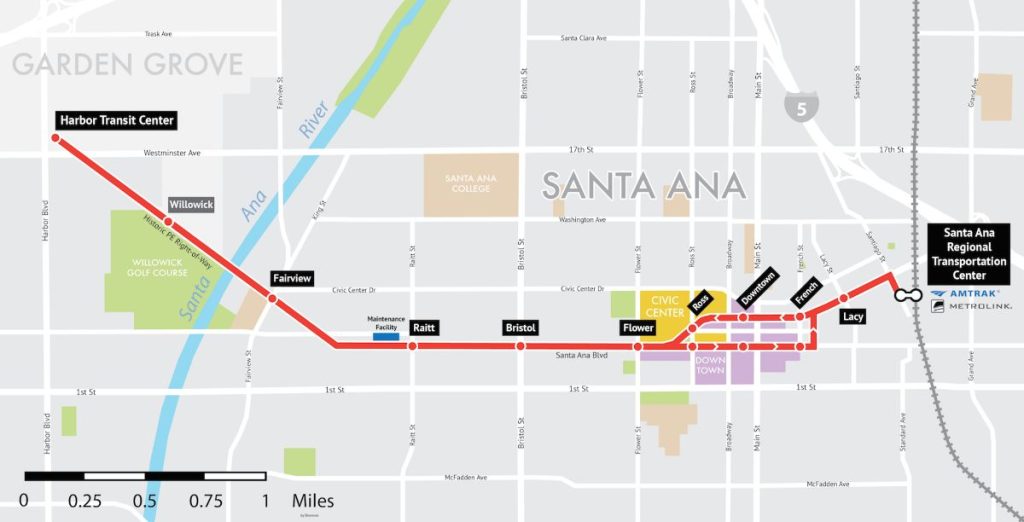
Map of the OC Streetcar
As construction began in 2018, the line was planned to open in 2021, although many unusual circumstances have delayed the construction progress, including environmental issues (such as discovering historical artifacts), lawsuits largely based on cost escalations, and delays related to COVD-19.
In May 2022, the Orange County Board of Supervisors approved a $1.2 million Small Business Assistance Grant program to support businesses facing financial challenges due to the construction of the new OC Streetcar. The fund was created amidst frustrations from businesses in the affected areas of Santa Ana and Garden Grove, where the streetcar is under construction. The fund was approved and established to address the economic impact of the streetcar project on local businesses. This is very similar to the Greater Omaha Chamber of Commerce’s Midtown Small Business Resiliency Fund.
Utility work and construction for the OC Streetcar was quite extensive, involving moving and replacing most of the water, sewer, gas, and electric utilities along the corridor in the downtown Santa Ana area for the streetcar, and included completely digging out and replacing the street infrastructure from curb to curb in most blocks. This was another reason for the extensive construction timeline and the need for additional business support through initiatives, including the grant program, as business access during construction was very limited.
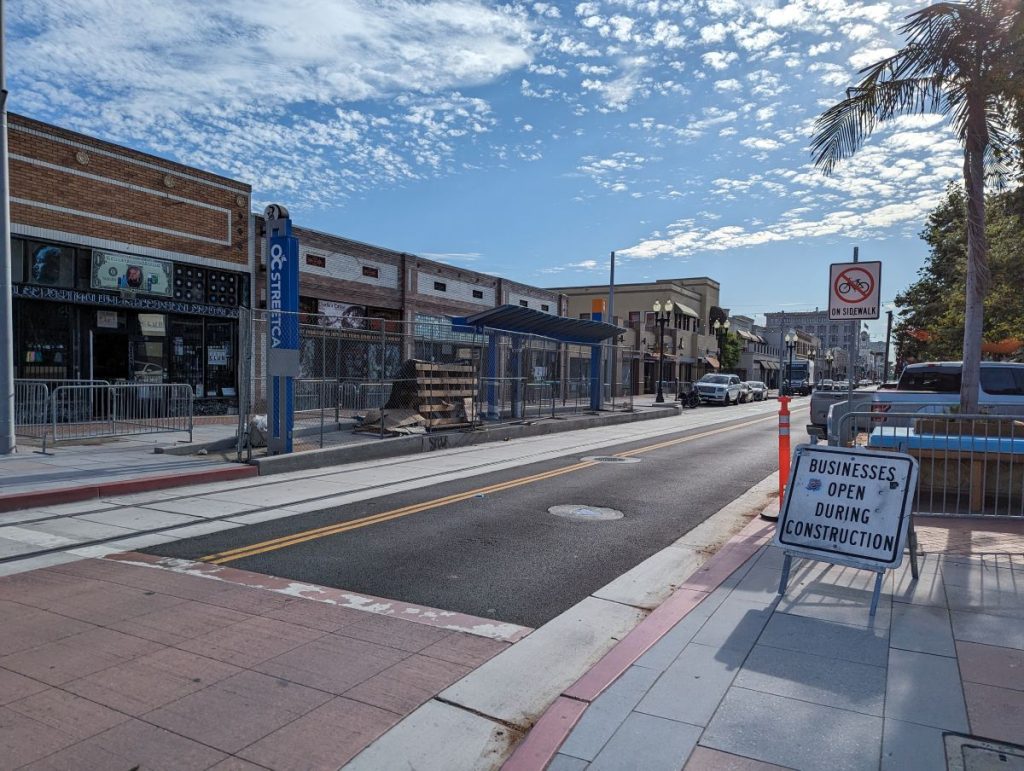
Looking down 4th Street in downtown Santa Ana in August 2023 as construction finishes up in the area.
As construction of the OC Streetcar was delayed, many businesses voiced frustration over the project and called for action, which resulted in the business assistance grant program. The main concerns were decreased visibility with the completely closed streets and difficulty with parking. These are key differences that Omaha is making priorities with our construction phases: to still allow movement through the corridor and providing parking alternatives, which includes communicating the options for access and parking alternatives. Business along the OC Streetcar created their own signage to communicate that they are still open during construction – signage for businesses is part of the Omaha streetcar project at no cost to the businesses.
It has been reported that at least one business in downtown Santa Ana closed as a result of decreased activity, although it appears that most businesses were able to survive the streetcar construction and can take advantage of the new transit service that will open soon. The line will feature transfers to existing transit service, such as the Metrolink commuter rail, to connect to other parts of the Los Angeles region, providing new mobility options for Santa Ana.
Kansas City Main Street Extension
The first streetcar extension in Kansas City has been going smoothly, largely thanks to a capable organization that has worked together to build the first line, and because the extension primarily utilizes public streets, like the original line. This extension is 3.5 miles end-to-end (slightly longer than the Omaha line) and includes the purchase of eight additional streetcar vehicles. The streetcar vehicles are being built by CAF, the same manufacturing company as our cars for Omaha. This brings the entire fleet up to 14 total vehicles, and the full system will be just over six miles long.
There are some notable differences between this extension and the Omaha streetcar line. First, underground utility work is not quite as complex, although there are some major projects, including the installation of an 11-foot-wide, 6-foot-tall, 300-foot-long storm box between 36th and 37th streets to mitigate stormwater concerns. Second, the line follows an area that is not quite as urban as the Omaha line (or the original Kansas City streetcar line), with a more suburban feel in some parts. Finally, Kansas City is moving to include more transit-only lanes in this project. This was a result of closing one lane in each direction throughout construction – many residents and businesses noted that the change in traffic with one less lane was not an issue and appreciated the slower speeds through the neighborhoods. As a result, the design was altered to include transit-only lanes where possible.
There are also some key similarities between the Kansas City Main Street extension, including the double track down the entire street, similar to Farnam Street west of Turner Boulevard. The track construction and testing are similar to what can be expected in Omaha. However, as construction did not direct impact as many businesses, a business support fund was not implemented.
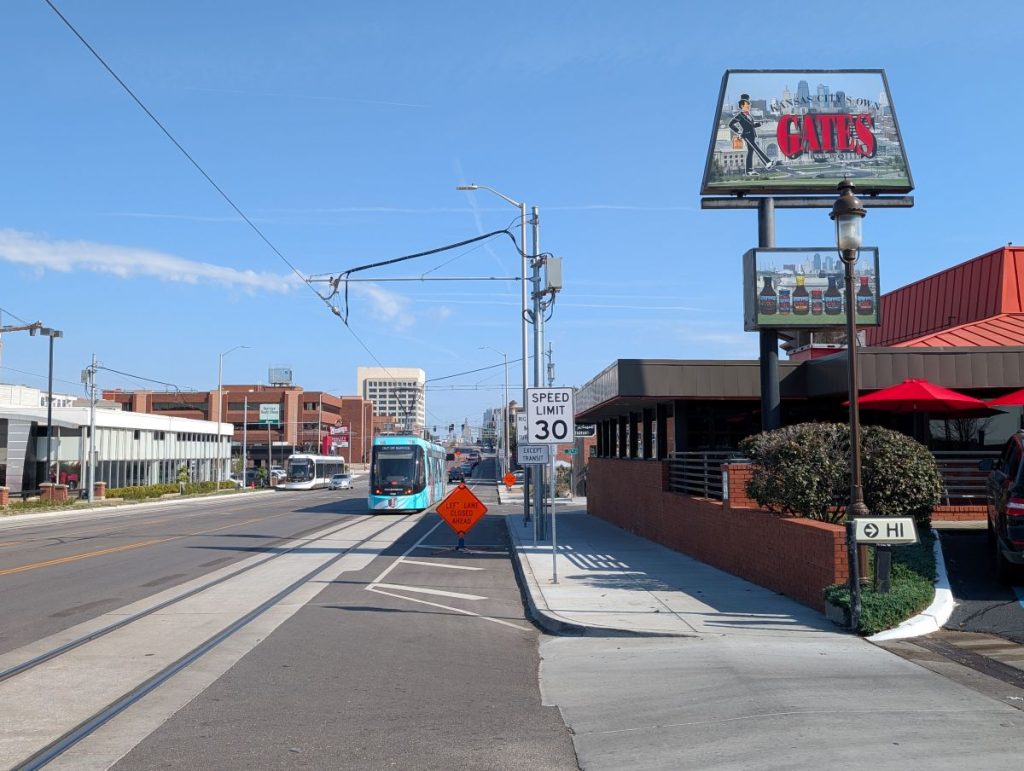
Streetcars are testing the full service on the Main Street extension in September 2025. Gates BBQ is a legendary Kansas City business that has stayed in operation through construction.
In talking with people directly involved with the KC Streetcar extension construction, businesses overall did not see drops in revenue any more than usual economic cycles or other trends that normally affect sales for merchants. A positive outcome of streetcar construction for restaurants is that the construction workers brought in more customers than normal for the lunchtime crowd.
The Main Street extension project implemented several items to help mitigate impacts to businesses. Similar to Omaha, this included not closing Main Street, always having at least one lane open to help with business and neighborhood access. As part of the construction contract, a 24-hour hotline was set up in addition to a weekly newsletter to explain construction detours and activities – again, similar to what we are doing in Omaha. The project also involved door-to-door outreach to explain the project to businesses, and always keeping pedestrian access open to the businesses. These are all priorities with the Omaha streetcar construction.
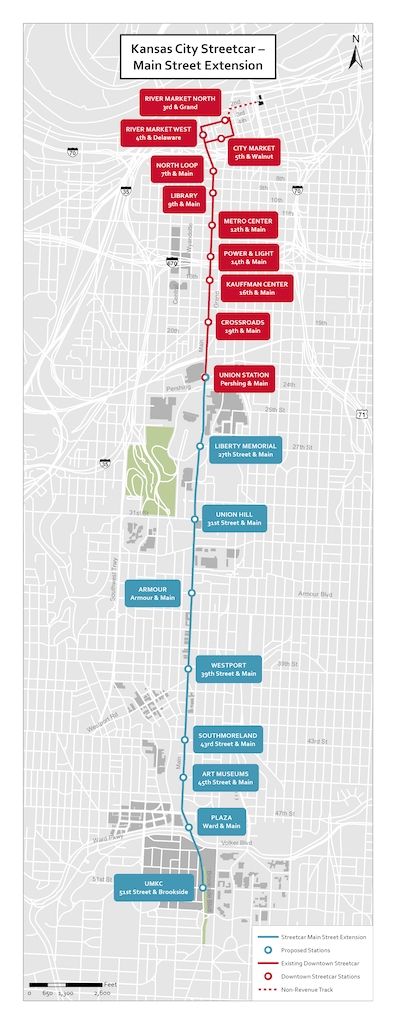
Map of Kansas City Streetcar Main Street Extension
Kansas City Original Line
And what about the original line along Main Street? Construction impacts are about a decade away along the original line that is in service between City Market (the north end of downtown) and Union Station (just south of downtown), so this is a good comparison to see how businesses have done after construction is completed. The Kansas City Streetcar is often compared with Omaha, as each line has a similar size (the KC Streetcar is about 2.5 miles, slightly shorter than Omaha’s initial line) and serves a similar urban composition.
Since 2014, over $4 billion in new development projects have been completed along the original corridor in Kansas City, with another $1.2 billion currently under construction. This includes 1.7 million square feet of office space and almost 10,000 new apartments. Over that time, the total number of downtown residents has increased 44%.
As for businesses, stores found that surviving the construction was worth it, and the new transit mode is increasing foot traffic and bringing in new and different clientele. One example is Michael’s Fine Clothing near the Crossroads stop, which notes that it had to deal with two years of intense street construction and has enjoyed the last nine years with the activity that the streetcar has brought in. This retailer notes that the streetcar brings a higher level of visibility for people going by and more customers who are younger.
Vendors in the City Market area noted a 20% increase in sales (compared to the previous year) within six months after the line opened in 2016. A large part of the reason for the increase in business in City Market is that people can now access shops that couldn’t before, such as people who don’t own a car.
Relationship to the Omaha Streetcar
In Omaha, using the new projects along the corridor that have been announced or are under construction as a guide, where development is above initial projections from a few years ago, businesses along the line should see similar benefits to Kansas City once the line is up and running. And the Omaha Streetcar Authority is doing everything possible to stay on track to complete the project in 2028 to minimize construction impacts and allow businesses – old and new – to start taking advantage of the new mobility system.
As pointed out throughout this article, there are a few key things that we are doing with the Omaha streetcar project that have been successful in these recent examples from Santa Ana and Kansas City. The first one is to continue providing as much access to businesses as possible. This is achieved through keeping lanes open in the streets and avoiding full closures while making sure that parking is still available in the corridor and giving people additional options. Another priority is communication – having the weekly newsletters to detail recent construction impacts, talking with businesses and residents, and putting up signs and banners to advertise businesses and show parking options.
To that end, the City of Omaha hosts a monthly virtual meeting to discuss construction and answer questions. You can register here for the October 1st meeting. The September meeting can be viewed here on the Omaha Streetcar Authority YouTube channel. You can also sign up for weekly construction emails here.
Equally important is the small business resiliency fund that the Greater Omaha Chamber of Commerce is leading. This can help businesses to stay in operation through the next three years as construction is at its peak, with ongoing utility work under the streets and mainline track construction. The program can help mitigate any temporary setbacks in business revenues.
With these positive measures in place, we can provide as much help as possible for our businesses and neighbors on the corridor to flourish during construction and then reap the benefits of the streetcar after it opens. Another important priority echoed throughout this article is to stay on schedule with construction to minimize the disruptions and start serving our passengers and businesses.