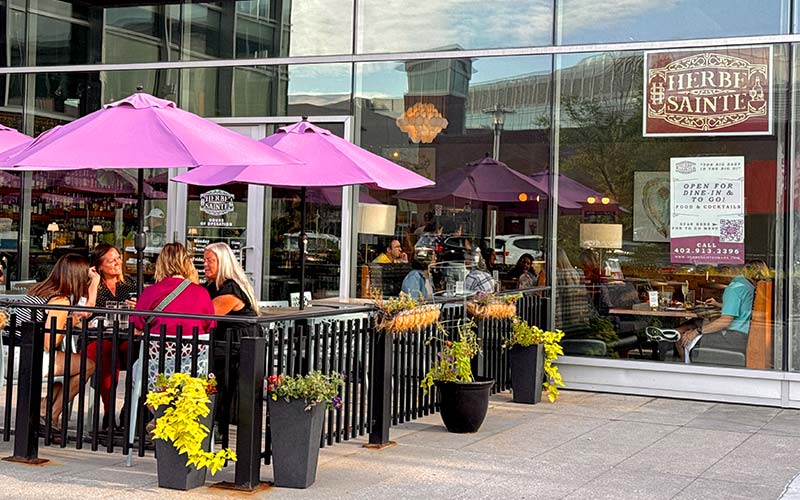
Herbe Sainte opened in Aksarben Village in 2016, a project Justin Halbert had been working on with his brother Aaron and uncle Ron Samuelson. Noddle Cos., owner of the building at 67th & Frances Street, had been holding a prime corner bay for just the right restaurant tenant. When Halbert and his group walked through, the idea took shape. Initially, the plan was to focus heavily on cocktails and light food. Over time, guests embraced the food so much the concept evolved into a full Cajun-Creole restaurant.
Samuelson was previously co-owner of M’s Pub and the creator behind Vivace, an Italian restaurant that closed in 2015. After the infamous M’s Pub fire of 2016, Samuelson partnered with his nephew to start new concepts, including Herbe Sainte.
The menu is rooted in New Orleans tradition but balanced with creative adaptation. With a smaller kitchen, the menu needed to honor tradition while bending to the location’s constraints. Samuelson’s experience in Cajun and Creole kitchens provides the culinary backbone. Recipes aren’t intended to be carbon copies of New Orleans cuisine, but a reflection of the city’s culture of melding influences.

Herbe Sainte dining area
Photo by Jennifer Corey
“When you go to New Orleans, you’re not going to find the same gumbo on every street,” Halbert noted. “It’s always different, and it’s always influenced by the creator of that recipe. And I think that’s where we come in and say, we do things in our own way and that’s okay.”
While Samuelson has his signature on the cuisine, Halbert keeps his focus on the cocktail menu. From the onset, the brothers wanted to lean into New Orleans’ reputation as “the epicenter of cocktail culture.” They attended Tales of the Cocktail, a weeklong expo in New Orleans where cocktail professionals immerse themselves in everything from rum seminars to ice workshops.

Herbe Sainte bar
Photo by Jennifer Corey
The decor is sophisticated and comfortable—a mix of sleek urban design and relaxed New Orleans living room designed to reflect the Creole inspiration. Floor-to-ceiling windows flood the space with natural light and provide framed views of Aksarben Village’s modern surroundings. Black exposed ceilings and beams give it an urban, industrial edge, which is balanced by concrete floors, statement fixtures and warm lighting. The dining room mixes mid-century and contemporary design—mustard-yellow couches and dark booths offset by wood tables and curved chairs.
“We didn’t want it to feel like a kitchen representation of New Orleans,” Halbert said. “We wanted a place that felt like you could be in New Orleans. We left rusty beams up top, put rusty metal behind the bar, and just wanted it to feel like a place that had been there for a long time.”
On our first visit, Jennifer had the pineapple rum daiquiri, and I ordered the Sazerac. We took advantage of the happy hour menu and tried the artichoke crab dip, a cup of gumbo and cornbread. For entrees, we ordered blackened shrimp and grits and the etouffee. We finished with two cups of coffee and the king cake bread pudding for dessert.

Sazerac
Photo by Jennifer Corey
Herbe Sainte’s Sazerac is made with rye whiskey, simple syrup, Peychaud’s bitters and Legendre Herbsaint (an anise-flavored liqueur). It’s very rye forward, warm and soothing. The Herbsaint gives it herbaceous notes that are balanced with the rye’s natural spices. This Sazerac leans dry rather than sweet, with a layered, mature complexity.

Pineapple rum daiquiri
Photo by Jennifer Corey
Made with pineapple rum, lime and simple syrup, the pineapple rum daiquiri has an excellent fruity sweet balance. The pineapple is prevalent but doesn’t overpower and is complemented by refreshing citrus from the lime. Bright, smooth and effortlessly drinkable, it’s gone before you know it.

Artichoke crab dip
Photo by Jennifer Corey
The artichoke crab dip is made with lump crab, artichoke, Monterey Jack and cream cheese. The crab is plentiful and prominent. The jack and cream cheese make this a creamy and savory dip. The bread is lightly toasted and is a great delivery system for the dip. Neither the artichoke nor the crab compete; both complement one another in mouthwatering fashion.

Cup of gumbo
Photo by Jennifer Corey
The gumbo comes loaded with pecan, shoulder bacon, chicken, andouille, onion, celery, peppers, okra, tomato, a dark roux and rice. It’s rich, thick and hearty with a generous mound of rice in the center. The rice offered two textures—slightly overcooked at the bottom and a bit firm on top—but the dish still packs a lot of flavor. A gentle heat runs through without overwhelming, the pecan lends a welcome nuttiness, and the chicken and bacon are tender and satisfying.

Cornbread
Photo by Jennifer Corey
Cornbread shows up in cupcake wrappers here, a down-home classic with a rustic, homemade touch. They arrive piping hot, releasing steam as you cut them. They hold their shape and carry a sweet, corn flavor with chunks of fresh corn in the mix. Served with a side of fresh whipped butter, this is a reminder that even the simplest side can carry the soul of New Orleans.

Blackened shrimp and grits
Photo by Jennifer Corey
The blackened shrimp and grits are made with NOLA BBQ sauce, corn, bacon collard greens and Monterey Jack cheese grits. The grits were lush and cheesy, the collard greens juicy with Cajun spice, and the shrimp gave a satisfying burst with each bite, tender and flavorful. This is currently the spiciest dish on the menu. It certainly carries a decent level of heat—exactly how we like it.

Étouffée
Photo by Jennifer Corey
Étouffée is made with crawfish, onion, red pepper, celery, cream, a blonde roux, Louisiana hot sauce, rice, and shrimp. It’s abundant with crawfish, cooked well, and the sauce is a lovely roux—creamy, savory, and touched with gentle heat. As with the gumbo, the rice leaned between overcooked and firm, but the vegetables added just enough crunch to stand on their own. Altogether, it’s a soulful, satisfying dish that captures the heart of Louisiana cooking.

King cake bread pudding
Photo by Jennifer Corey
The king cake bread pudding consists of custard-soaked baguettes with a pecan brown sugar glaze and creme anglaise. It comes piping hot—split it with your fork and watch the steam plume. The sugar glaze caramelizes the exterior and gives it a toasty crunch. Inside is soft and warm, wonderfully moistened from soaking in the custard. The pecans add a nutty profile that plays well with the caramelized sugar and creamy elements. If a dessert could throw a blanket over you and make any tough day better, this would be it.

Bloody Mary
Photo by Jennifer Corey
A good friend told us about the Bloody Mary at Herbe Sainte, so that’s what Jennifer ordered to kick off our second visit, while I went with the classic hurricane. We had the Cajun crab cakes for an appetizer. For entrees, Jennifer had the red wine braised short ribs, and I tried the surf and turf linguine. We finished with one of the rotating frozen cocktails, the mango margarita.
The Bloody Mary marries vodka, house-made mix and spices into something fresh, invigorating and just spicy enough—the classic, done right.

Hurricane
Photo by Jennifer Corey
The hurricane is a blend of three rums, passion punch, lime, grenadine and syrup. It’s fruity, citrus-bright and unapologetically boozy.

Cajun crab cakes
Photo by Jennifer Corey
Packed with lump crab and delicately fried, the Cajun crab cakes are made with celery, onion, red pepper, NOLA spice, cream, egg whites, Panko bread crumbs and remoulade. The cakes are fried well, and the abundance of crab was a lovely mix with the celery, onion and red pepper. The remoulade was creamy and tangy without overbearing.

Three hot sauces
Photo by Jennifer Corey
Herbe Sainte provides three bottles of house-made hot sauces. The red is a chipotle and is the mildest with a gentle heat and strong pepper flavor. The serrano is a white hot sauce, their medium sauce—creamy and spicy. The mango habanero is by far the spiciest. All three paired very well with the crab cakes. Each one of them was excellent, but the mango habanero was our favorite.
Red wine braised short ribs
Photo by Jennifer Corey
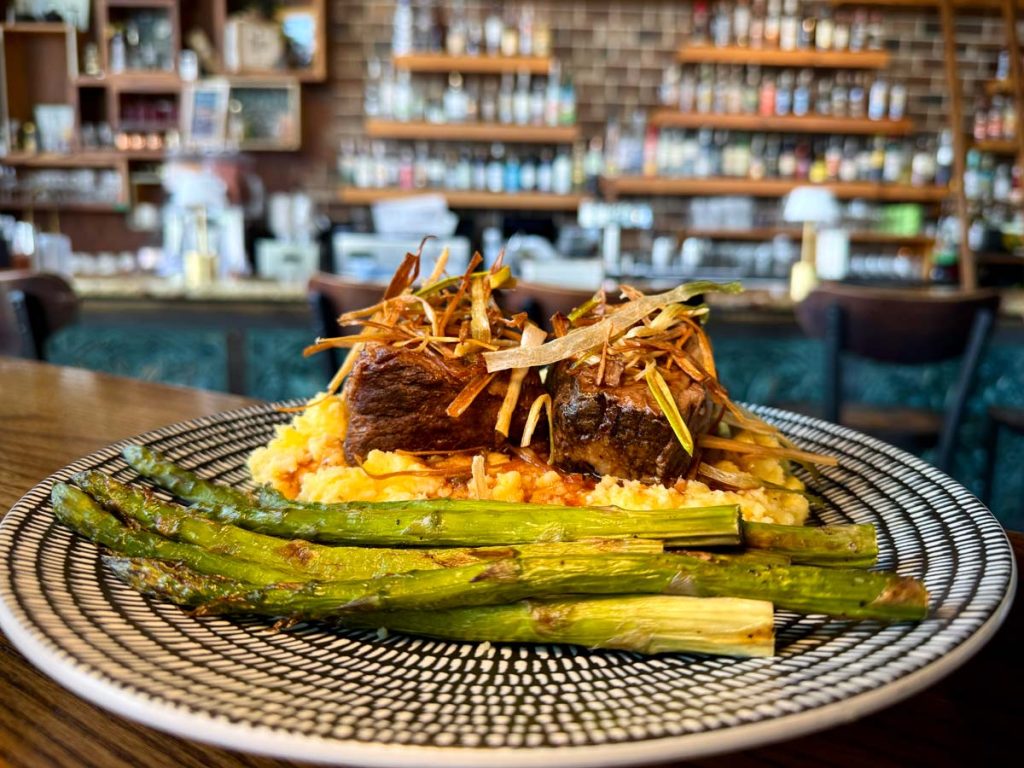
The red wine braised short ribs come with seasonal vegetables, Monterey Jack cheese grits, crispy leeks and a red wine jus. The short ribs are melt-in-your-mouth tender, juicy and well-seasoned. The grits, like with the blackened shrimp dish, were expertly cooked—creamy, cheesy and well-seasoned. The vegetable was asparagus roasted to tender perfection. This is a hearty plate of comfort.

Surf and turf linguine
Photo by Jennifer Corey
The surf and turf linguine is steak tips, sauteed shrimp, broccoli and a Cajun tomato cream sauce. The linguine came just slightly past al dente, which worked well with the proteins. The shrimp were cooked just right, popping in your mouth as you bite them. The steak tips were fork-tender. The creamy tomato sauce was savory with a hint of sweetness. It’s a flavorful, well balanced dish.

Frozen mango margarita
Photo by Jennifer Corey
In lieu of dessert, we had to try one of the rotating frozen cocktails—the mango margarita. It’s an adult slushie of boozy goodness. The mango is sweet and refreshing but doesn’t overtake the herbaceous spiciness of the tequila. They also had a plum raspberry gimlet that we would love to try, but for the sake of our sobriety, we will have to try that another time.
The cocktail menu is deliberately split in two halves. The classics, such as the Sazerac, hurricane and Vieux Carrés are at the top of the menu. The seasonal section is driven almost entirely by the staff. With each new menu cycle, the team presents their new creations in a group tasting where everyone collaborates on adjustments until the cocktails are unanimously endorsed. This approach ensures that the staff have creative freedom and a collective accountability to quality. The result is eight rotating cocktails, plus two rotating frozen drinks, that keep the menu dynamic.
Beyond Herbe Sainte, Halbert and Samuelson consult for other Omaha restaurants, most notably the recently opened Ooh-De-Lally–a restaurant concept designed to provide jobs and structure for those coming out of incarceration and rehabilitation. They were brought in as consultants from day one—they helped design the space, create the program, hire staff and build menu concepts.

Herbe Sainte corner exterior
Photo by Jennifer Corey
Ooh-De-Lally’s second-chance philosophy tied in directly with what Halbert and Samuelson were already doing. They have long employed staff from programs like the ARCH Rehabilitation Center, giving individuals the opportunity to build stability after battles with addiction or brushes with incarceration. They’ve watched dishwashers rise to management because of that dedication to second chances. So when the Sherwood Foundation asked them to consult on Ooh-De-Lally, it felt natural.
“We’ve been doing this program that is trying to prevent people from incarceration, and this is then the back end of it, trying to give people a leg up as they’re coming out,” Halbert recalled. “It just meshed really well.”
The flavors coming out of Herbe Sainte are bold, boisterous, and they make a statement—that’s down-home cooking at its best. It’s a little magic from The Big Easy right here in Omaha.