
It is important how we build our infrastructure and provide reliable service
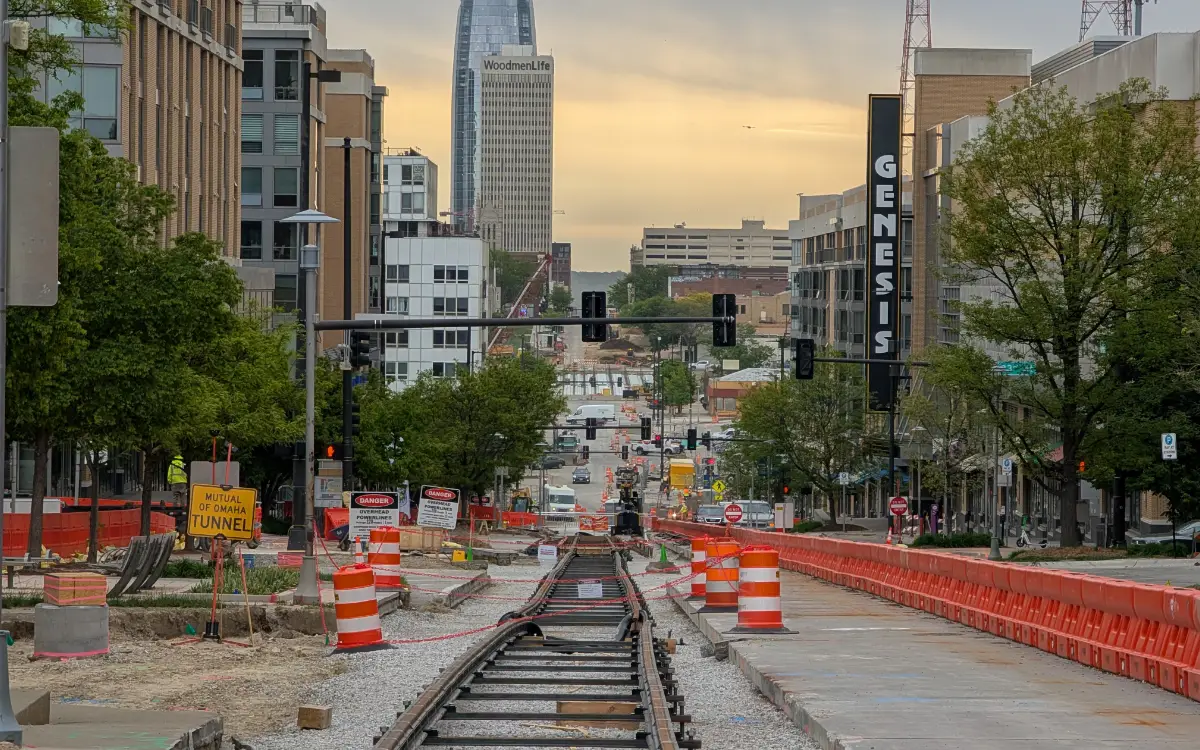
Infrastructure resilience is an increasingly utilized concept for transportation: the ability of a critical system to plan for, absorb, recover from and adapt to disruptive shocks like natural disasters. It is becoming more important that we learn from previous projects and work to build infrastructure that lasts longer and is safer.
It also helps transportation systems to increase the value of a project while protecting the people who rely upon it. For the Omaha Streetcar, infrastructure resiliency is highly important to provide a reliable transportation source through utilizing this major investment in our Urban Core to its fullest potential. It is not only important to build a resilient system but to also plan and prepare for emergencies and recovery efforts.
Infrastructure resiliency for the Omaha Streetcar has three main goals:
- Maintain operational reliability
- Anticipate and plan for issues
- Strive for efficiency — not redundancy
Through disruptions, it is important for the streetcar to continue to provide good service. This could mean a major snow or flood event. In some cases, it may not be safe for the streetcar to continue operating and require a temporary disruption in service. In this case, it is important for the infrastructure to be able to respond to the impact and get back into service quickly. This anticipation and planning for issues is critical in getting the streetcar service back up and running. Overall, the streetcar infrastructure should still be an efficient transportation system and not simply provide redundant systems to utilize when the original system is inoperable.
These infrastructure resilience goals will be accomplished through five main areas:
- Building for the long term
- Sustainability and multimodal options
- Future-proofing and capacity
- Weather response
- Service disruption planning
Building for the Long Term
The streetcar, similar to most rail transit projects, is a long-term mobility investment for Omaha. This transit spine will provide connectivity throughout the urban core for multiple generations. Rail transit track infrastructure generally lasts over 30 years with well-maintained rail being able to last up to 50 years before needing to be replaced. The first modern light rail systems in the United States are starting to go through major rebuild projects, such as the light rail system in Denver, which has been gradually replacing the rail through downtown as the track approaches 35 years in age.
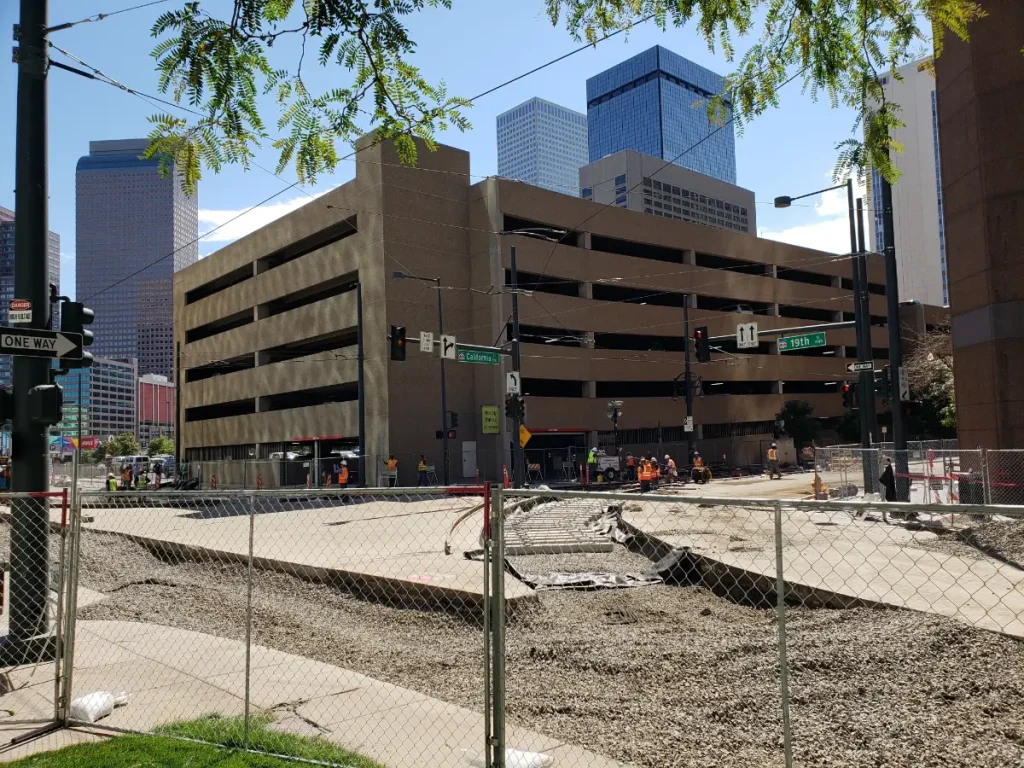
Light rail track in downtown Denver provided service for more than 30 years before being replaced
Rail vehicles also have a very long life, commonly about 40 years. Most rail cars go through a mid-life overhaul program after about 20-25 years, which replaces or updates many of the parts inside the vehicle and upgrades the technology. An example of this is also found in Denver, where the oldest rail cars built in 1993 began going through an overhaul program that was completed at the transit agency’s own rail shops, starting in 2013. The cars were completely gutted, and parts were either replaced or reconditioned with the result being a transit vehicle that is essentially brand new.
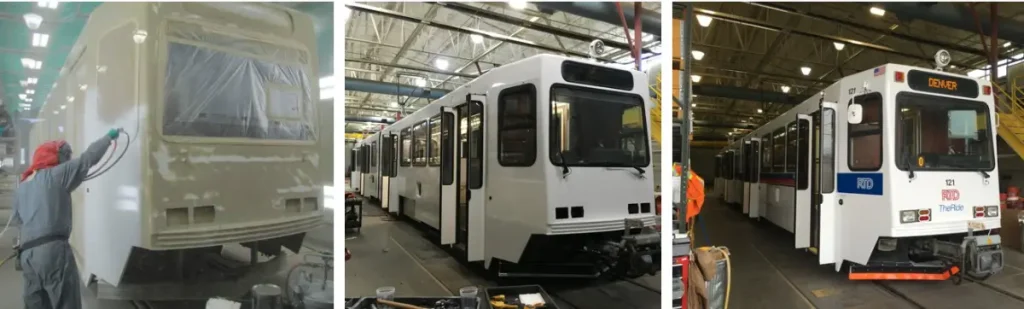
The repainting and rebuilding of an old light rail vehicle in Denver after 20 years of service
Sustainability and Multimodal Options
The Omaha Streetcar system is being built not as a stand-alone system but as part of a complete mobility system, interacting with and complementing other multimodal forms of transportation including buses, parking, biking, and of course pedestrian activity. This creates a sustainable system that minimizes impact on the environment through reducing emissions and promoting long-term ecological and economic viability.
Multimodal connections are being intentionally planned by implementing “Mobility Hubs.” These are focusing on four specific stop locations that will have direct connections to more than one other mode of active transportation. The Mobility Hubs will have greater attention to connections to these other modes through accessibility improvements and wayfinding. We will focus on the details of the Mobility Hub plan in a future article.
Each streetcar stop is designed with pedestrian accessibility improvements in mind, such as the 34th & Farnam Street stop shown below.
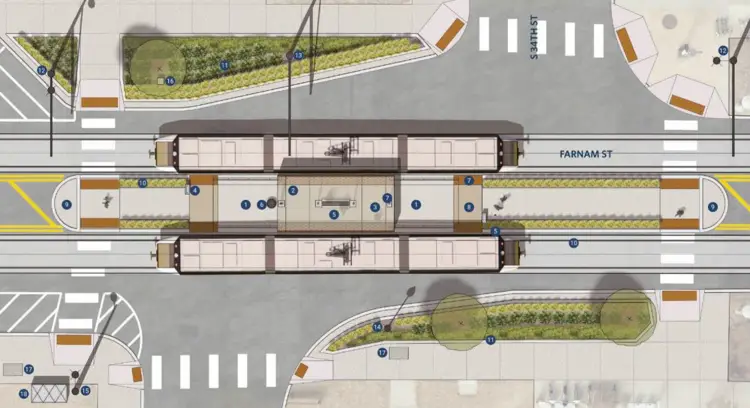
The 34th and Farnam streetcar stop will have pedestrian improvements to make it easier for people to access the area
Providing these connections will result in a robust system where people in the Urban Core will have multiple options to get around depending on their needs. It also provides the ability to access amenities in the areas by using other transportation methods if there is a problem that disrupts one of the modes.
Future-Proofing and System Capacity
The Streetcar system is being built to have the vehicle and track capacity to last many years. Perhaps most important, the utility work that is completed below the track will enable the streetcar service to continue without requiring major service disruptions in the next several years.
The streetcar system itself is built with capacity in mind, with a track for each direction, so that vehicles do not have to wait to pass each other. This will allow for an increase in service as ridership grows or if there are extensions built and the route continues to use the initial spine.
The vehicles, which are similar to the Kansas City cars in the photo below, include options for increasing capacity in the future. As the system grows through ridership and/or extensions into other areas of the city, the streetcars can be operated more often at higher frequencies and could be coupled together to create longer trains (as long as platforms are long enough for this).
These are options for consideration as the cars reach the latter half of their lives – while this is seen as “a long ways off”, it is important to consider now and make this initial system more resilient. For now, the design of the cars with level floor space will provide capacity for planned near-term ridership, which includes everything from regular service to special events that draw large crowds.
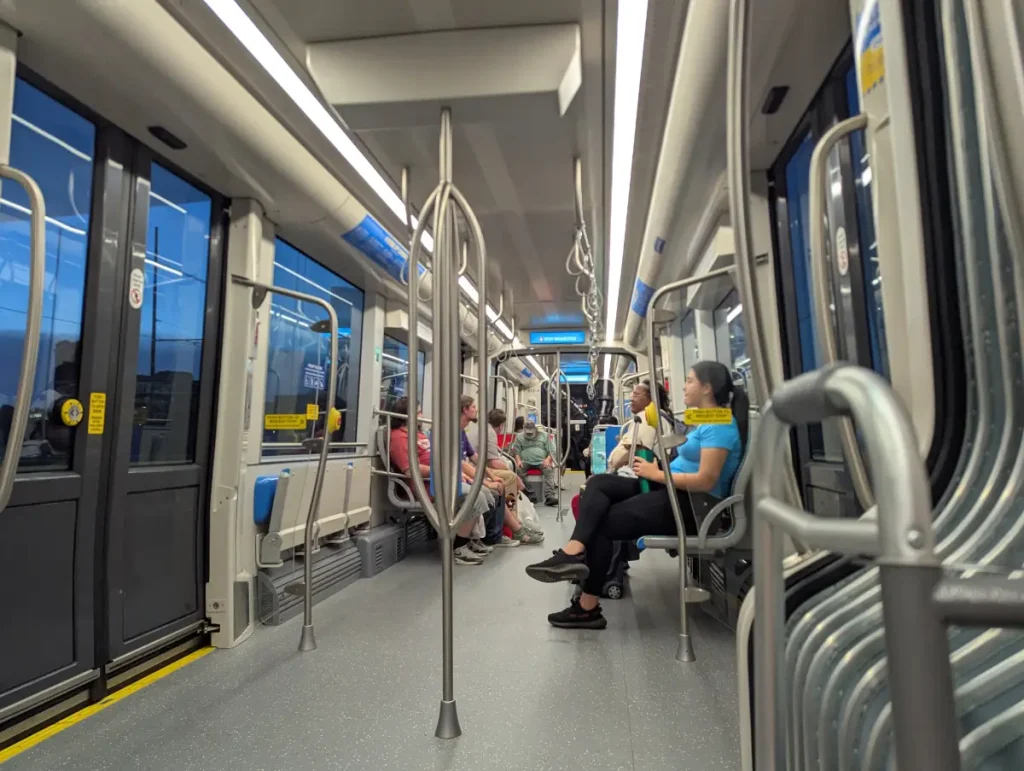
Omaha streetcar vehicles are built with future capacity in mind
Weather Response
The system is built to continue providing reliable service in all types of weather. This includes passenger accommodations at the stop platforms to provide shelter in a variety of weather and design of the track to provide adequate drainage during rains.
When weather turns severe, that is when proper emergency planning is essential. The streetcar will have specific weather response plans in place so that operators and supervisors work together to keep the system running safely or know when the system needs to stop running (such as during a tornado). If there is damage from strong storms, planning comes through again to implement substitute transit service along the route to keep people moving and get everyone to their destinations until the line is back open. The design of the system, using common materials and components, allows for a quick return to service in most situations.
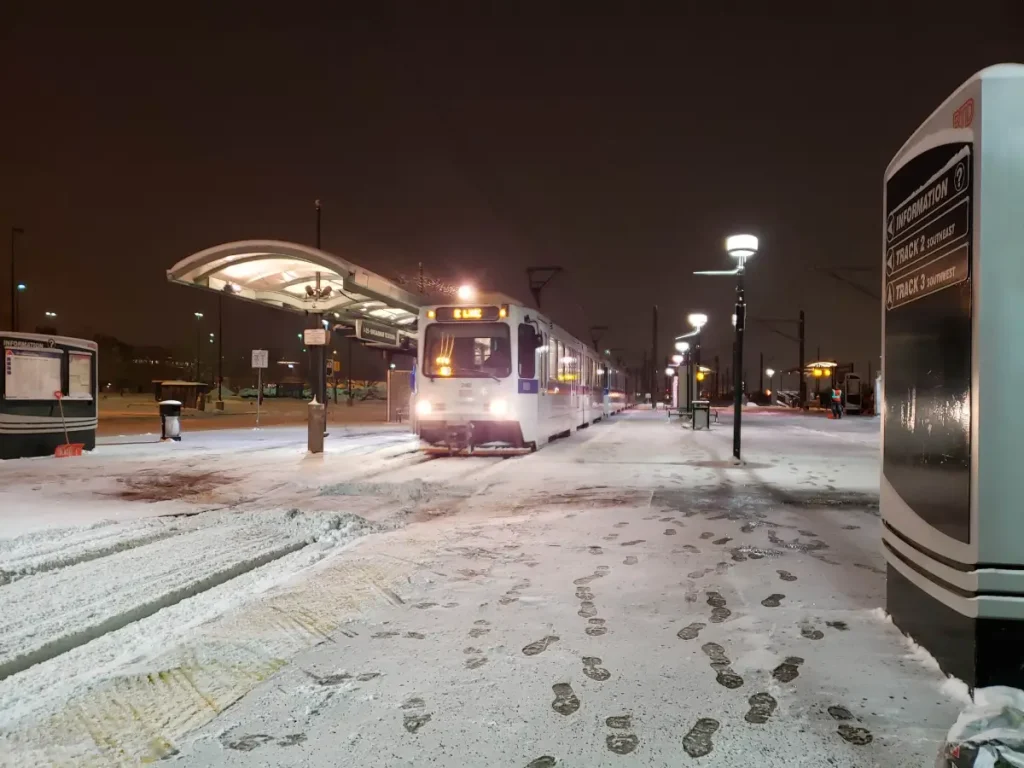
Normal snow amounts will not hamper rail service
Service Disruption Planning
Similar to weather response implementation, having plans for other service disruptions is important to keep transit service going and to provide a resilient system. Having spare vehicles – two vehicles in addition to the four that are planned to operate in normal service – will allow for a replacement during routine maintenance as well as if a vehicle is damaged during service. There will also be procedures in place for issues that may come up, such as a car parked illegally on the tracks.
Having track for both directions provides the ability to take one track out of service if necessary and still operate on the other track. The “wye” at Turner Boulevard – where trains can turn around – will also provide an option to temporarily continue service on either end of the system if something happens on the track at the other end.
There are two parts to infrastructure resiliency for the Omaha streetcar: having the system designed for the future and developing the emergency response plans for issues that may come up. These two parts will play a significant role in providing reliable service for passengers in Omaha for many years.
You can keep updated on the Omaha Streetcar website at omahastreetcar.org, register for our monthly webinars here, or check out previous webinars and other videos here.
Eric Miller is the Streetcar Operations Manager for the City of Omaha. Erik has a 21-year career in the transit industry that includes work in both the private and public sectors and work on planning and implementing bus and rail projects for transit agencies all across the country.