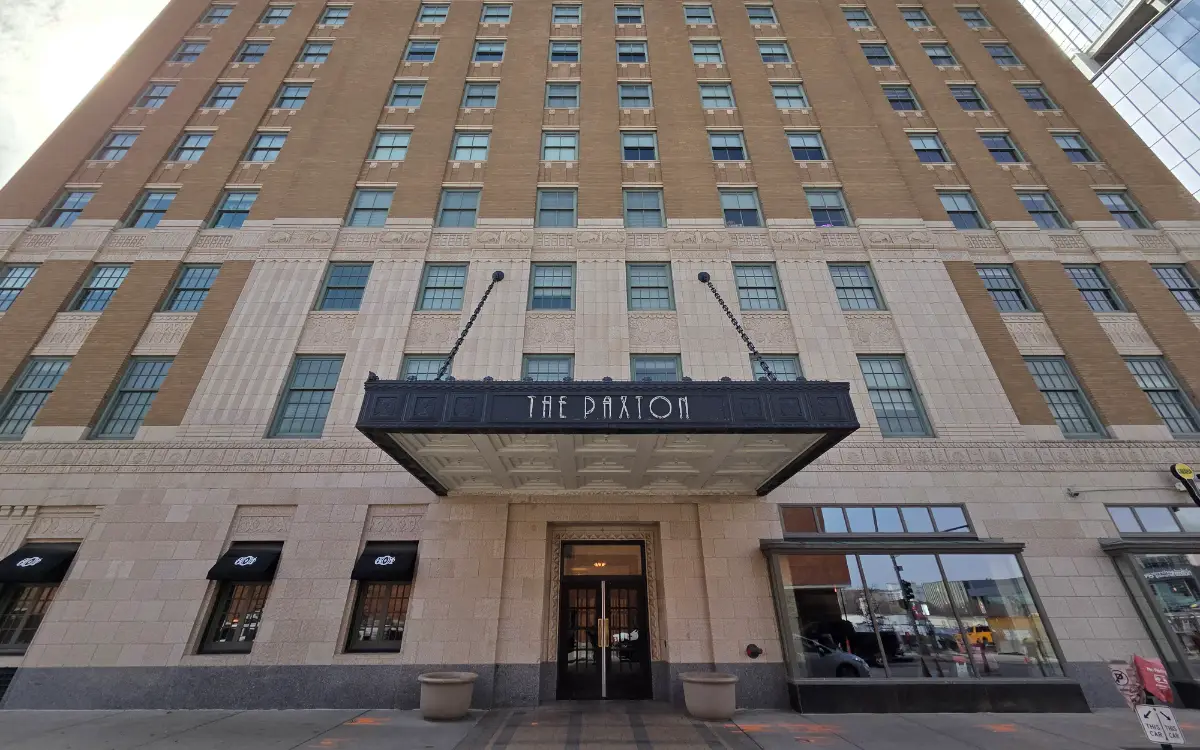
Located on the southwest corner of 14th & Farnam Street, across from the newly rising Mutual of Omaha headquarters tower, is an Art Deco structure that was once one of the city’s grandest hotels: The Paxton.
It was named after William A. Paxton, who helped raise the money to complete the original Paxton Hotel when it was constructed in 1882. During his distinguished career, Paxton helped found the Omaha and Northwestern Railroad, Paxton & Gallagher wholesale grocery, Paxton & Vierling Iron Works and the South Omaha Stockyards.
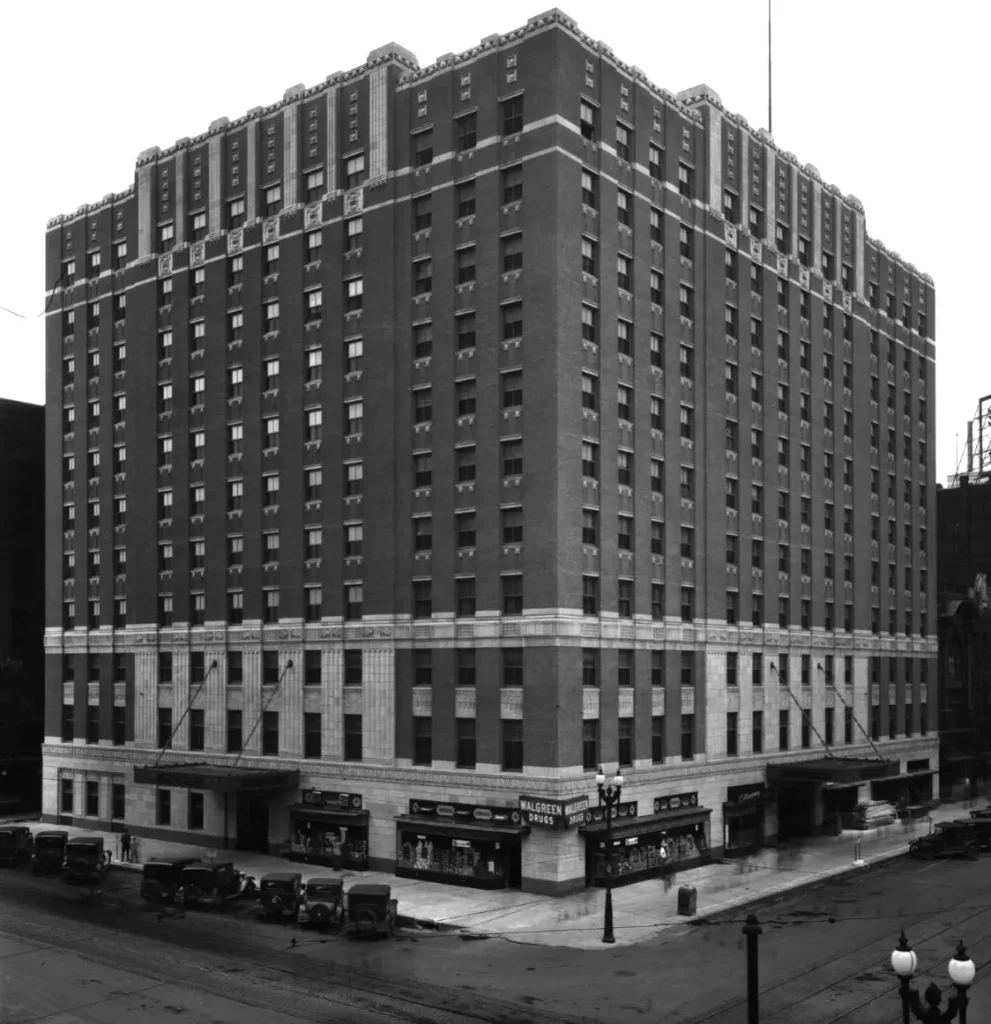
1929 photo of the new Paxton Hotel
Photo courtesy of The Durham Museum photo archives
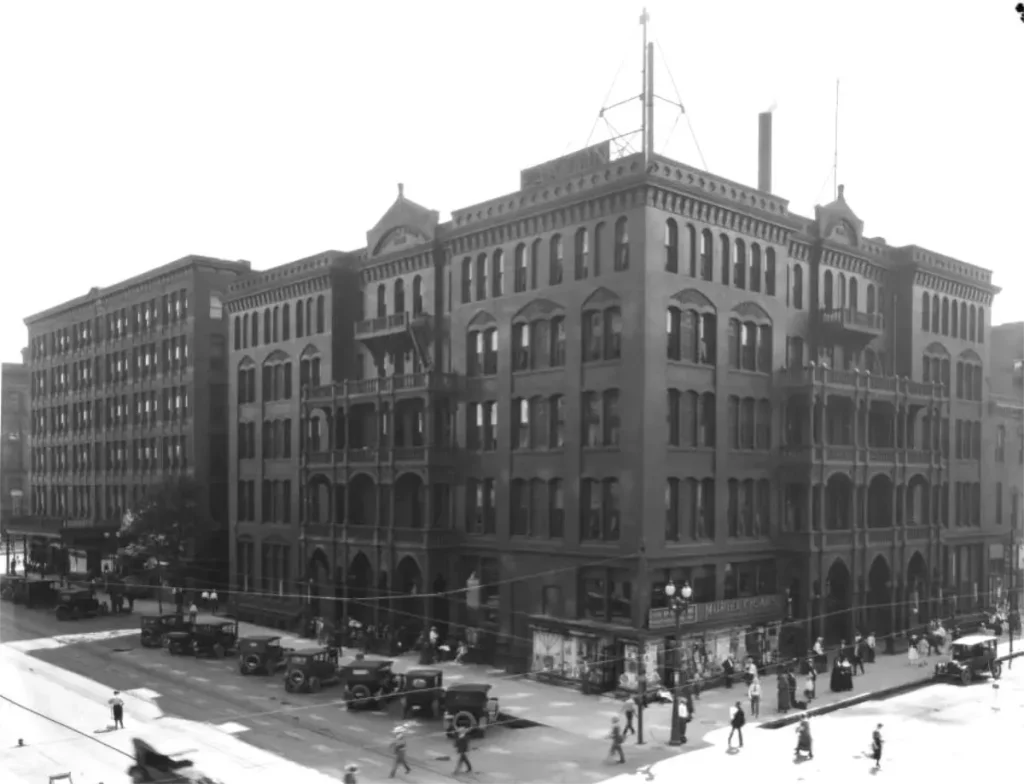
Before it was razed in 1927, the original Paxton Hotel hosted notable guests, including Presidents William McKinley, Theodore Roosevelt and Woodrow Wilson as well as “Buffalo” Bill Cody and William Jennings Bryan, among others. It was also the site of the founding of the Woodmen of the World Life Insurance Society.
Like the original, the new Paxton Hotel was built by the Kitchen Brothers Hotel Company and operated by Ralph and Dick Kitchen. The 11-story hotel was designed by architect Joseph G. McArthur in the Art Deco style. McArthur’s other projects included the Medical Arts Building at 17th & Dodge Street and the Redick Tower (present-day Hotel Deco) at 15th & Harney Street. Constructed by Selden-Breck, The Paxton was built with brick and concrete and featured a facade of terra cotta and Bedford stone.
2026 photo of The Paxton condominiums looking north from 14th Street towards the Mutual of Omaha Tower
Photo courtesy of The Durham Museum photo archives
Located at 1403 Farnam Street, the 325-room hotel opened in 1929, at which point an editorial in the Omaha World-Herald declared it “the finest hotel of its size in the country, New York not excepted.”
The hotel featured four dining rooms, a ballroom, tearoom, cafeteria, coffee shop, barbershop and elevator, telegraph as well as cable services, and steam-heated dog kennels on the rooftop. The modern hotel was built with conventions in mind, as it could accommodate more than 1,000 people spread across its dining rooms and the ballroom. In addition to guest rooms, the hotel included office space and ground-floor retail. Among its original tenants were Walgreen’s Drug, Leon’s Inc., a local haberdasher chain, Ye Diamond Shoppe and Henderson Florist.
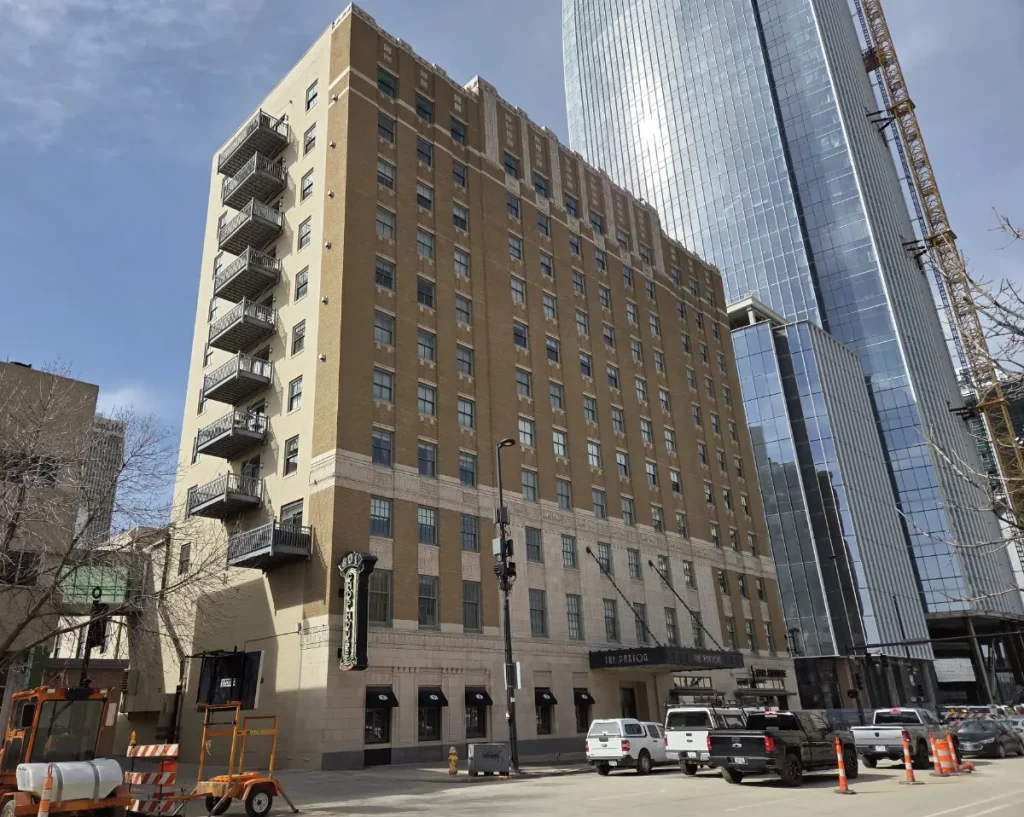
2026 photo of The Paxton condominiums looking north from 14th Street towards the Mutual of Omaha Tower
Photo courtesy of Omaha Exploration
When Ralph Kitchen, who also managed the original hotel, retired in 1930, he sold it to the Oklahoma City-based Huckins Hotel Company in what was referred to as Omaha’s largest real estate deal ever. The hotel was sold again in 1939, this time to the National Hotel Company of Galveston.
The hotel retained its status and became a popular stay for wealthy cattlemen visiting the stockyards as it grew to be the largest in the world. Some of the more notable events included its in-house band, the Paul Moorhead Orchestra, featured in national radio broadcasts starting in the 1930s, the founding of the Nebraska Women’s Press Club in 1946, and hosting the teams participating in the city’s first College World Series in 1950.
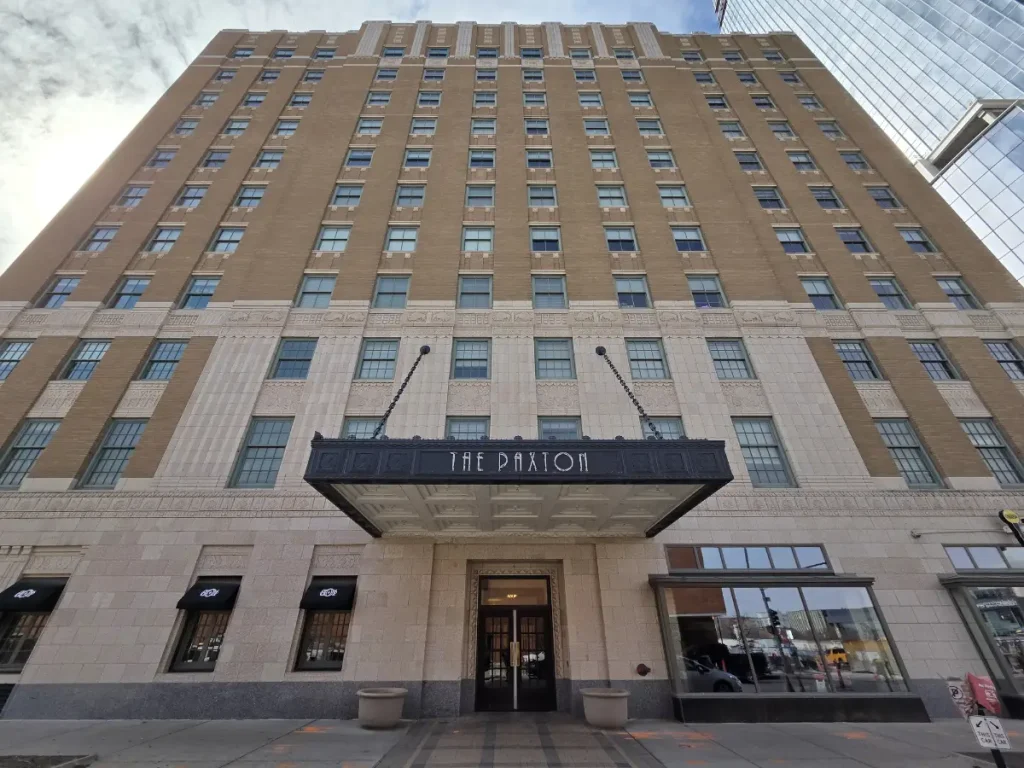
2026 photo of the former Paxton Hotel, present day Paxton condominiums
Photo courtesy of Omaha Exploration
The Paxton closed as a hotel in 1964 and served as the home to the Women’s Job Corps until 1969 when it was sold. After suggestions of converting the building to low-income apartments, it reopened as a Mediterranean-themed hotel in 1971, following renovations that included the lobby, ballroom, cocktail lounge and guest rooms.
The building closed for good as a hotel in 1975, at which point it was converted to Paxton Manor, a senior housing facility that included a nondenominational chapel and a second-floor recreation area. By the mid-1990s, it also included facilities for those living with mental illness. Due to financial troubles, the building fell into disrepair, and the facility closed in 2000. Fearing that the building would be razed, many of the fixtures and other items were sold at auction.
Shamrock Development bought the former hotel in 2003, and with the help of Lund-Ross Constructors and RDG, completed a historic renovation. The project consisted of restoring the original two-story lobby and ballroom, cleaning the exterior brick, restoring the original granite and marble walls, and terrazzo tile floors, in addition to repairing the molded ceilings. In the process, Shamrock also recovered many of the original fixtures, including a brass mailbox, lamp, mirror and 23 copper and stipple glass windows.
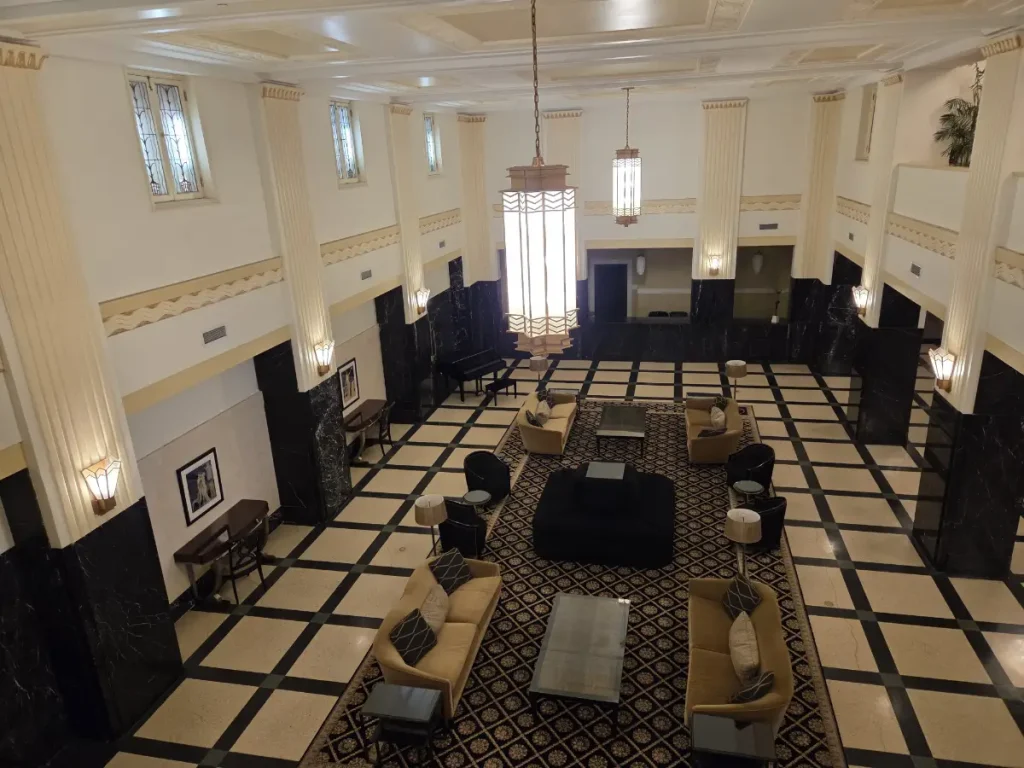
2026 photo of the restored lobby inside The Paxton condominiums.
Photo courtesy of Omaha Exploration
When it reopened as The Paxton in 2004, the renovated building included commercial space on the ground floor, offices on the second floor, 56 condos and two penthouses. Among its amenities are a fitness room, home theater and rooftop deck. A parking garage was built as part of the project. Located on the main level are three restaurants: Omaha Tap House, 801 Chophouse and Gandolfo’s Deli.
While its days as one of the city’s most glamorous hotels are long past, the careful restoration of The Paxton for use as condos more than 20 years ago ensured that one of Omaha’s finest examples of Art Deco architecture lives on.