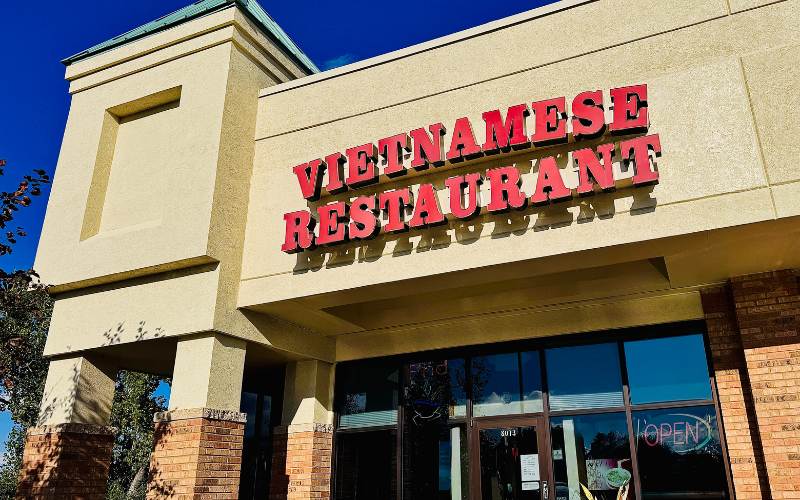
Tyler Schaeffer opened Inkwell with his brother, Jonathan, in April 2017, after the owners of a scissors-and-scotch-style barbershop in Countryside Village decided to cut their space in half. The Schaeffer brothers stepped into the former barroom, took one look and made an offer on the spot. To this day, a small window still connects Inkwell and the barbershop next door—a quiet nod to the space’s previous life.
Though Schaeffer holds an art degree from Grinnell College, he took a different career path. He moved to Miami where he found himself immersed in the emerging “craft mixology” movement. He would later make his way to Los Angeles where he took on every job from doorman to barback before earning a place behind the bar at Roger Room in West Hollywood.

Inkwell interior
Photo by Jennifer Corey
“It was through those relationships that I met some really talented bartenders and brand reps—titans of the industry, at least the way I saw them,” Schaeffer said. It was those long nights of talking shop until dawn that sparked his dream of opening his own bar.
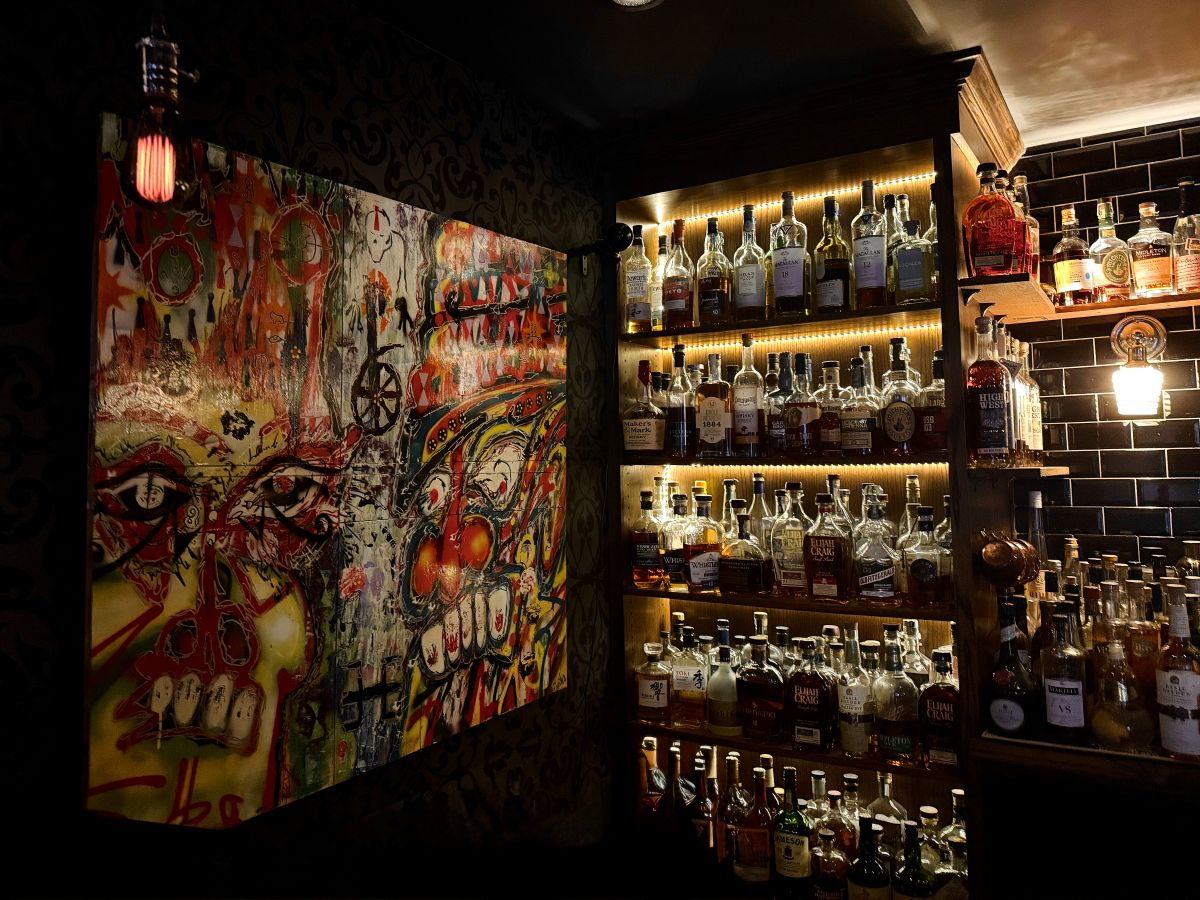
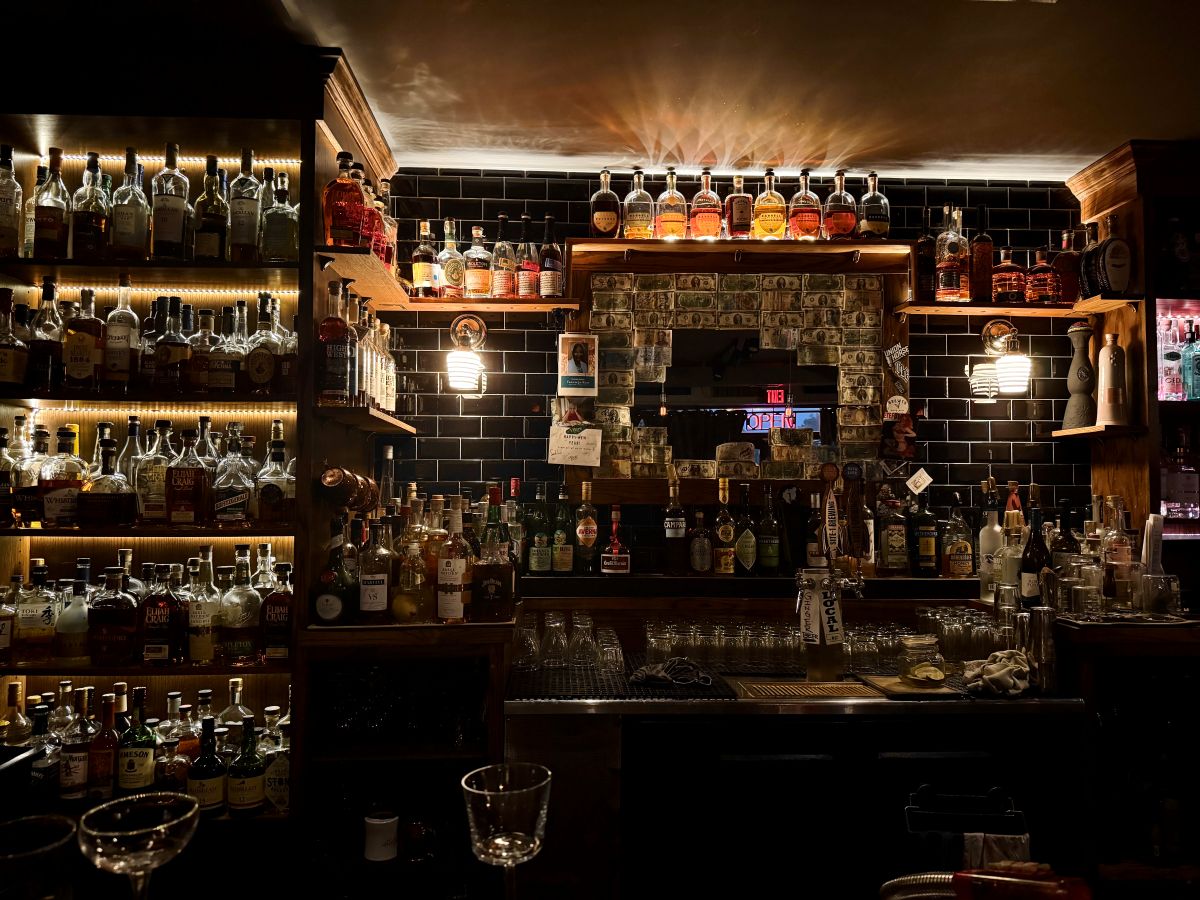
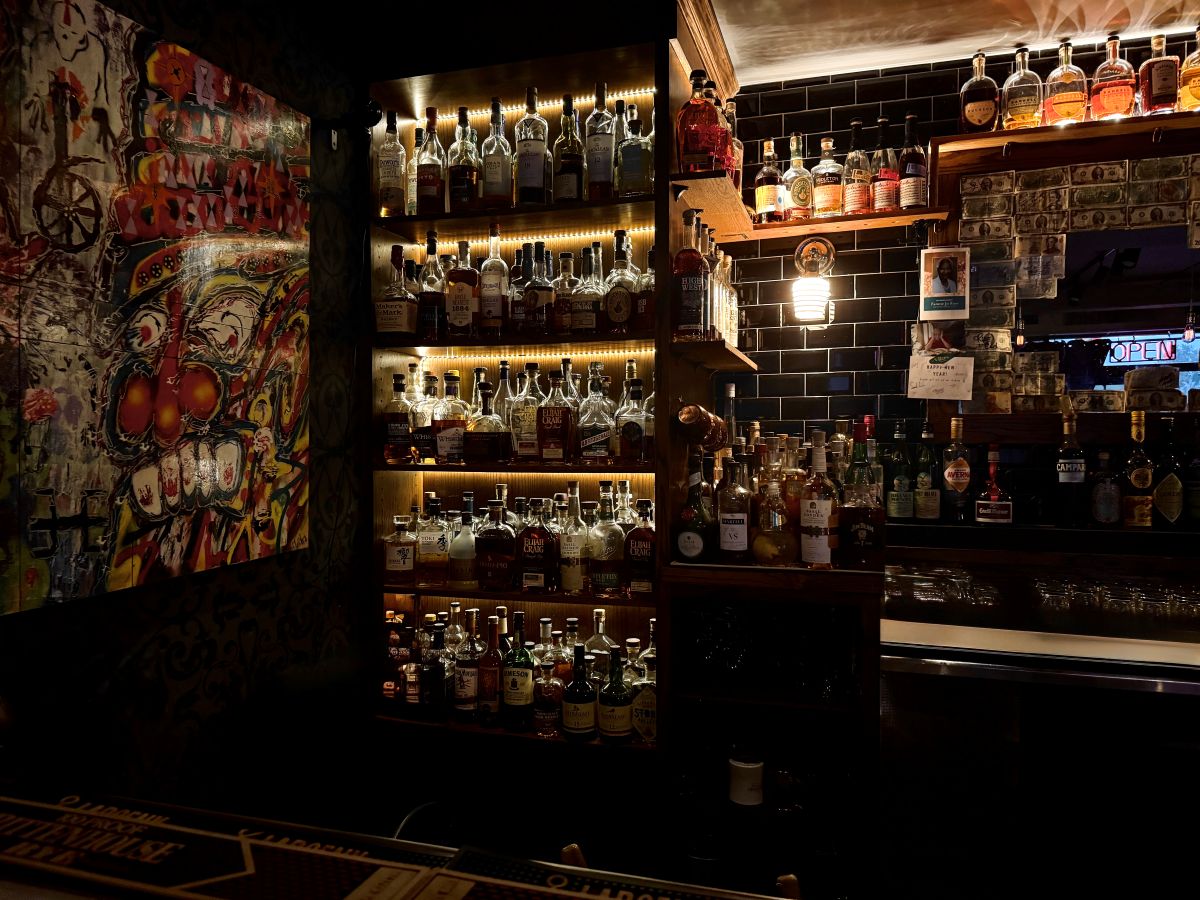
Inkwell is designed for reflection. It’s dark and intimate—moody yet romantic. Amber Edison bulbs cast a soft glow across the bar, creating a warmth that invites conversation. The bar itself is a showpiece: black subway tile walls with dark wood shelving lined with gently lit rows of bourbon and whiskey bottles. A mirrored backsplash is partly covered with dollar bills and mementos left by regulars. Along the walls hang portraits of literary greats—writers who might have found refuge in a place like this. Under the amber light, their faces take on a cinematic glow, as if one might glance over and find Hemingway or Fitzgerald sipping an Old Fashioned beside you.

Inkwell interior
Photo by Jennifer Corey
Inkwell’s literary aesthetic hits close to home. Schaeffer’s father, a graduate of the Iowa Writers’ Workshop, played a role in bringing the brothers to Omaha in the first place.
“He was a big reason why we even ended up here,” Schaeffer said. The theme’s nod to writers and creativity felt natural. “All the writers on the wall probably partook in their fair share of alcohol,” he added with a laugh. “It’s a common theme in literature—and in the production of literature.”
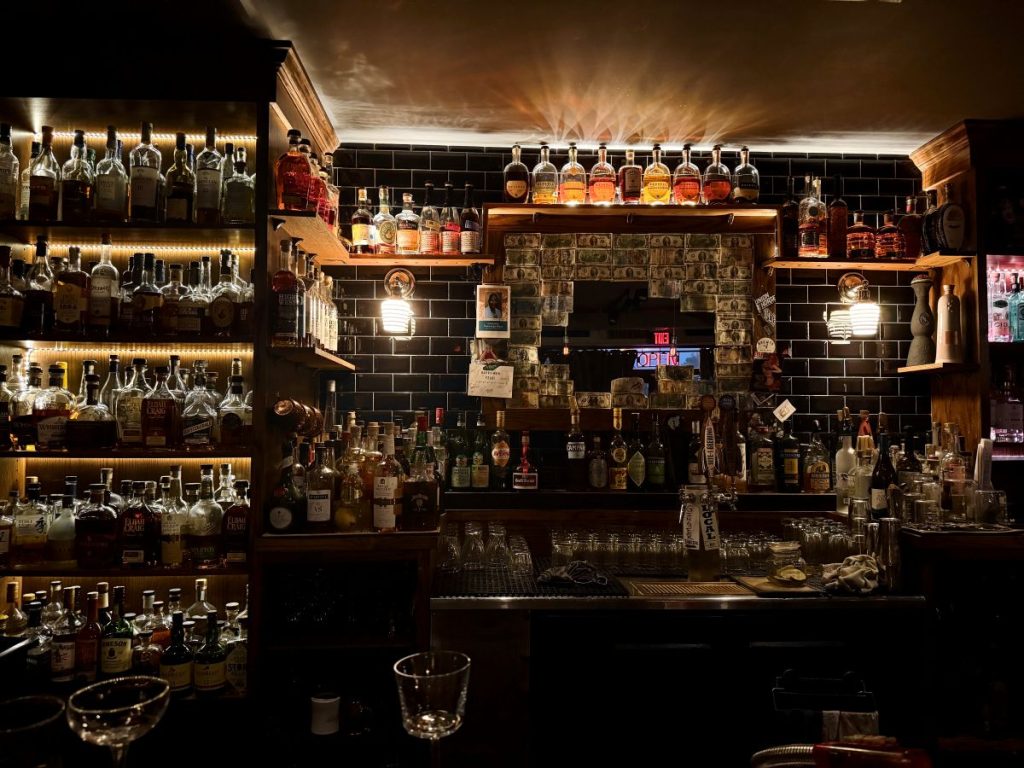
Inkwell bar
Photo by Jennifer Corey
Our tour of Inkwell’s menu was a thorough study of their cover-to-cover offerings. Jennifer started with a Tijuana Brass, and I had the old fashioned. For round two, Jennifer chose the Hemingway Daiquiri, and since the old fashioned was so good, I tried the Manhattan. Next, Jennifer ordered the “loose leaf,” and I had the espresso martini. In a decision that would later require us to have some sustenance at the neighboring Timber Wood Fire Bistro, we shared a Moscow mule.
After three rounds and a shared mule, we’d covered several chapters of Inkwell’s cocktail craft.
The bartender who served us on a very quiet Monday evening may have lacked refined service panache, but let’s get one thing perfectly clear: the man made some great cocktails.

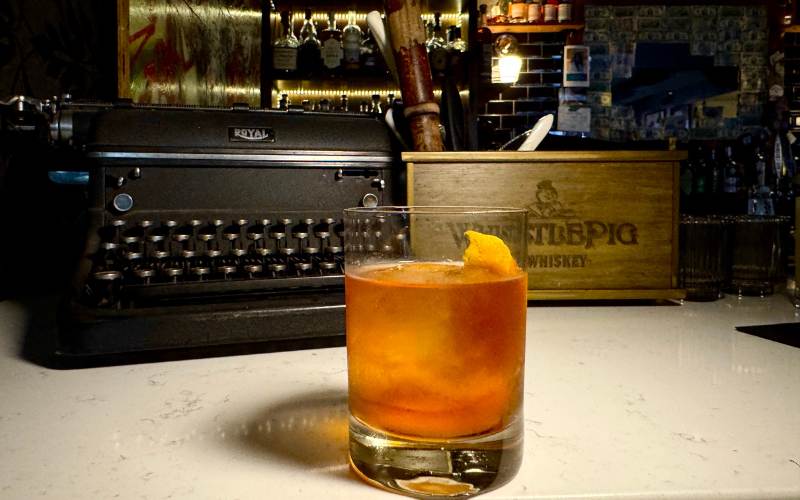
Old fashioned
Photo by Jennifer Corey
Inkwell’s house old fashioned uses Evan Williams, a sugar cube, Angostura bitters and a twist of citrus peel that sprays oils across the glass. It strikes a delicate balance of bitter and sweet, with a gentle wisp of orange and a warm bourbon finish.

Tijuana Brass
Photo by Jennifer Corey
Tijuana Brass is made with Illegal Mezcal Joven, agave syrup, lime and a cucumber espuma (a cucumber foam). It’s a gently smoky cocktail, thanks to the mezcal. The agave syrup lends light sweetness and a tequila-esque profile. The lime recalls a margarita, while the cucumber adds a refreshing finish.

Manhattan
Photo by Jennifer Corey
The Manhattan is made with Rittenhouse Rye, house-blended sweet vermouth and Angostura bitters. This is one of the best Manhattans I’ve had in a long time. It’s perfectly balanced, leaning toward bitterness without ignoring its sweetness. It’s luxurious and velvety, the house-blended vermouth adding a subtle herbaceous edge. A faint cherry note rounds it all out. This Manhattan does not disappoint.
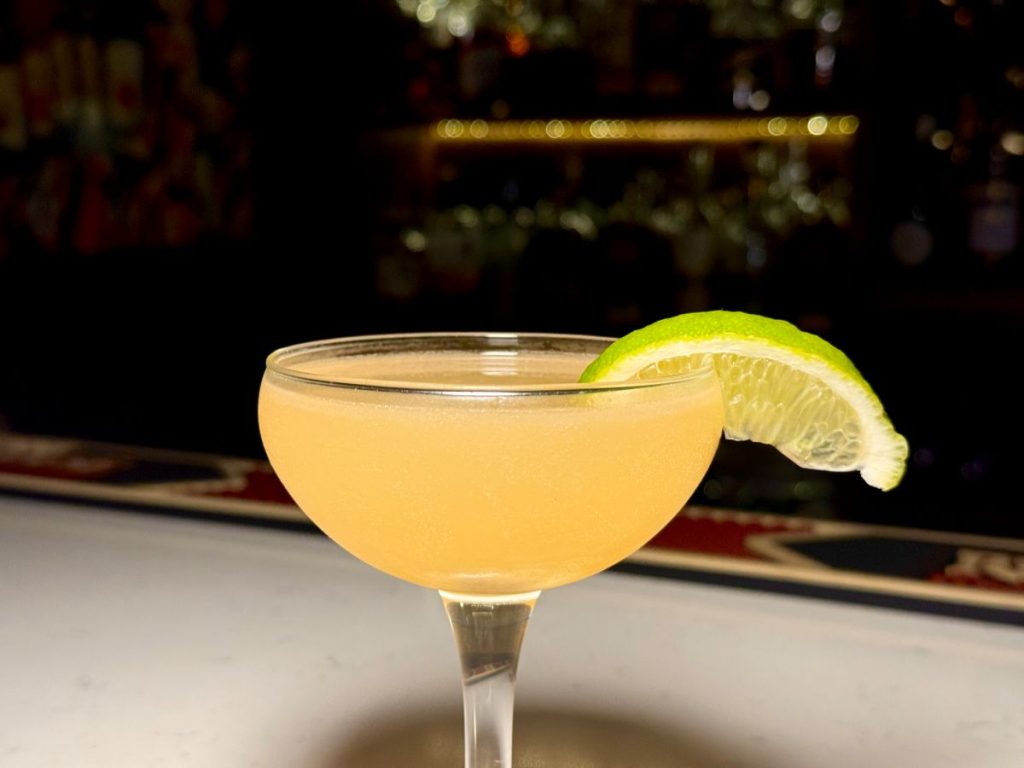
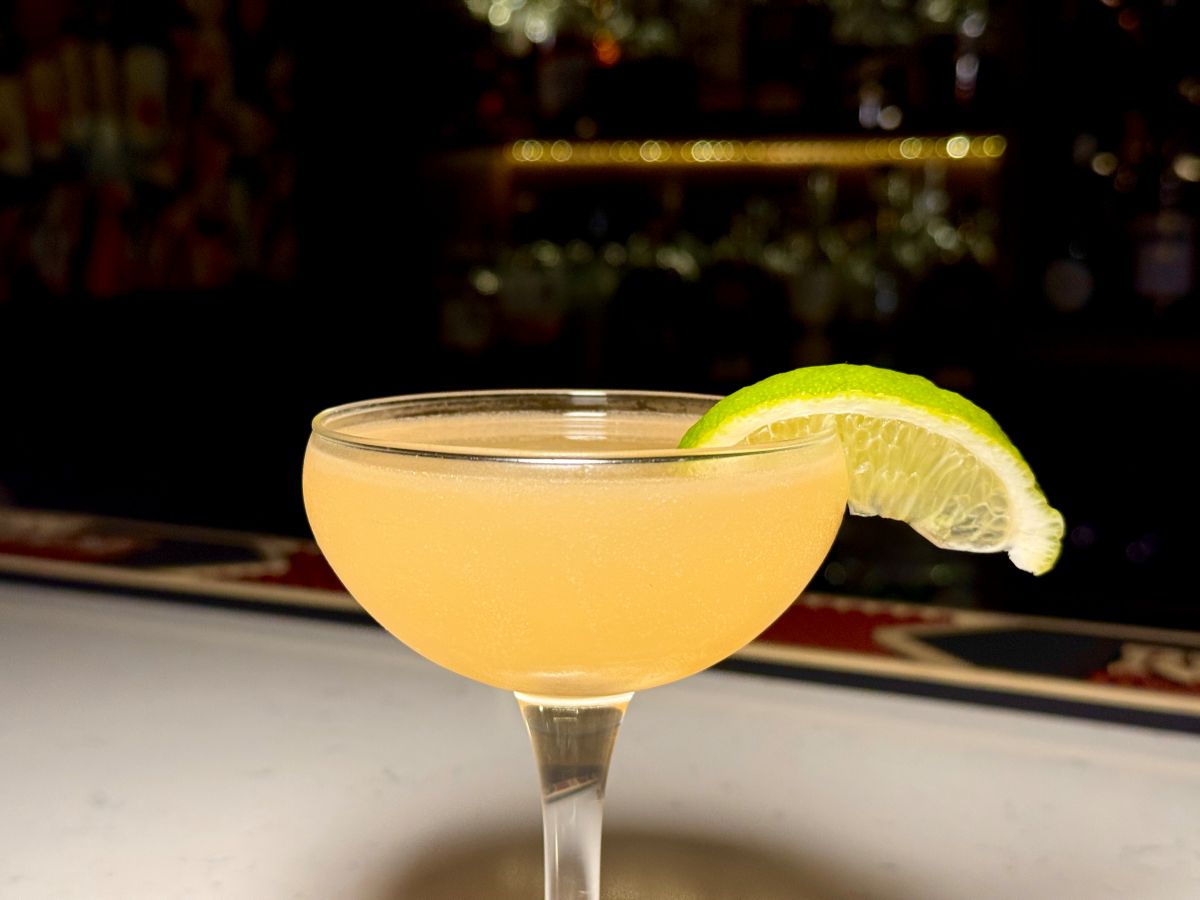
Hemingway Daiquiri
Photo by Jennifer Corey
The Hemingway Daiquiri is made with Bacardi Rum, Luxardo Maraschino, grapefruit juice and lime juice. There’s a lovely herbaceousness here from the substitution of grapefruit for the usual strawberry. The lime and maraschino add a citrusy tart finish. You’ll feel like you should be in a suit or cocktail dress when drinking this.

Espresso martini
Photo by Jennifer Corey
Inkwell’s espresso martini is made with strong coffee, simple syrup, vanilla vodka and espresso liqueur. Note, this is different from a similar drink, not an espresso martini. The coffee notes are muted—not as punchy as expected. It’s well-rounded, but I missed the bold kick of coffee. Still, the vanilla comes through, and it finishes creamy and rich. How much you enjoy this cocktail will depend on how strong you like your coffee.

Loose leaf
Photo by Jennifer Corey
The loose leaf consists of Thai tea-infused vodka, Thai tea and simple syrup with a heavy cream float. This is a creamy cocktail that is reminiscent of—believe it or not—a chocolate milkshake. Albeit, a dark chocolate milkshake. It’s slightly sweet, herbaceous and an experience unto itself. The darker notes are earthy, almost cocoa-like. It’s a cocktail of complexity and a must-try.
Espresso martini
Photo by Jennifer Corey
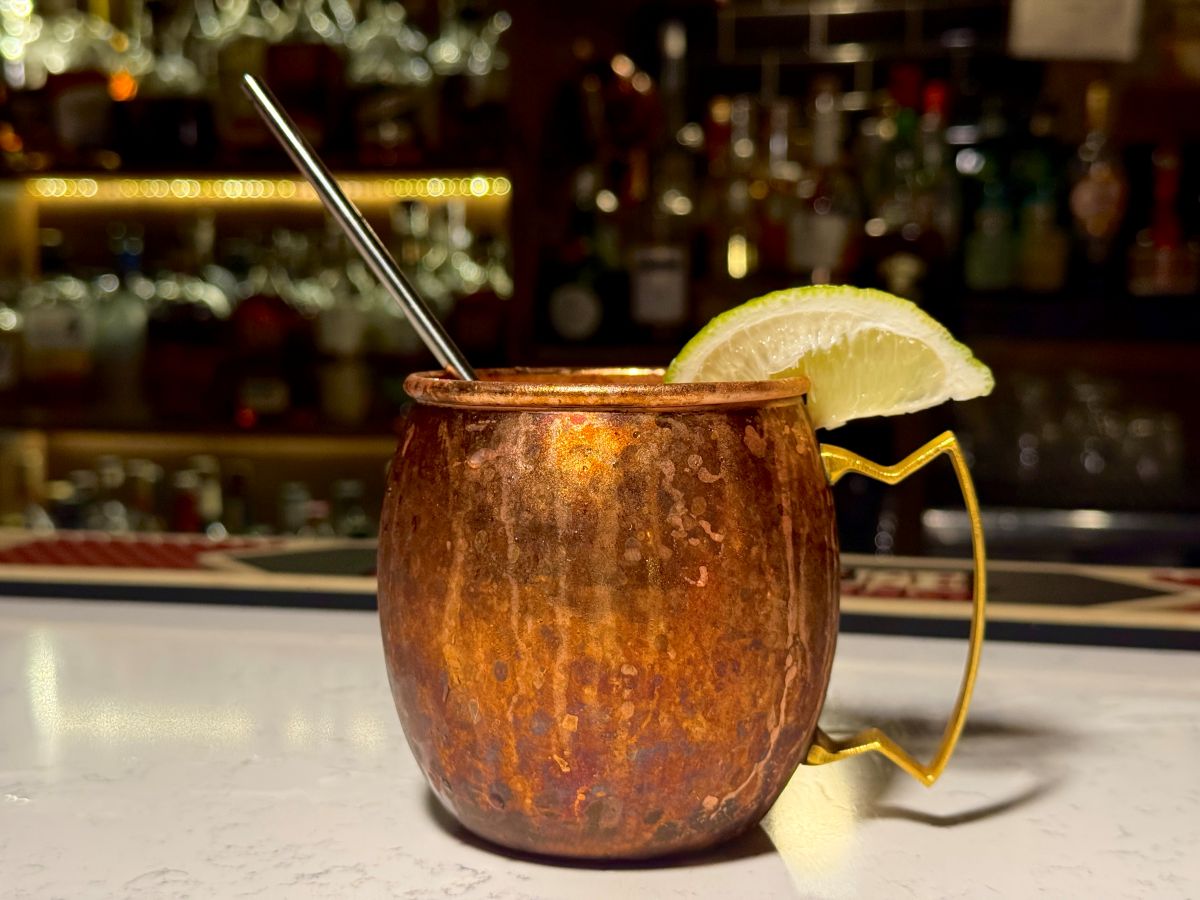
The Moscow mule is Tito’s vodka, house-made ginger beer and lime. Like the Manhattan, it is easily among the best Moscow mules in Omaha. The ginger beer makes all the difference. Its heat, balanced sweetness and lime punch deliver everything you want in a mule. It may have been the seventh drink we tried, but damn, it’s an excellent Moscow mule.
The reason this mule is excellent is that Inkwell makes its own ginger beer—a mix of syrup infused with jalapeño, cinnamon, nutmeg and vanilla, then ginger juice, citric acid and water, force-carbonated overnight. The result is lively and aromatic—sweet heat with a touch of warmth and restraint. Much like Inkwell itself.
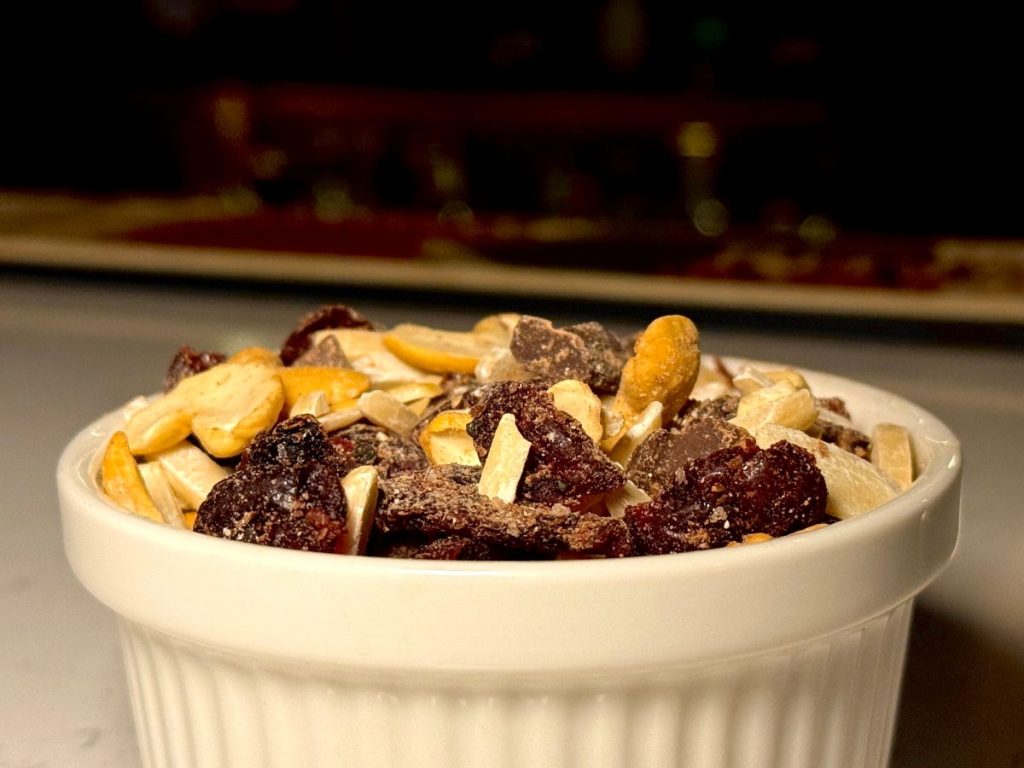
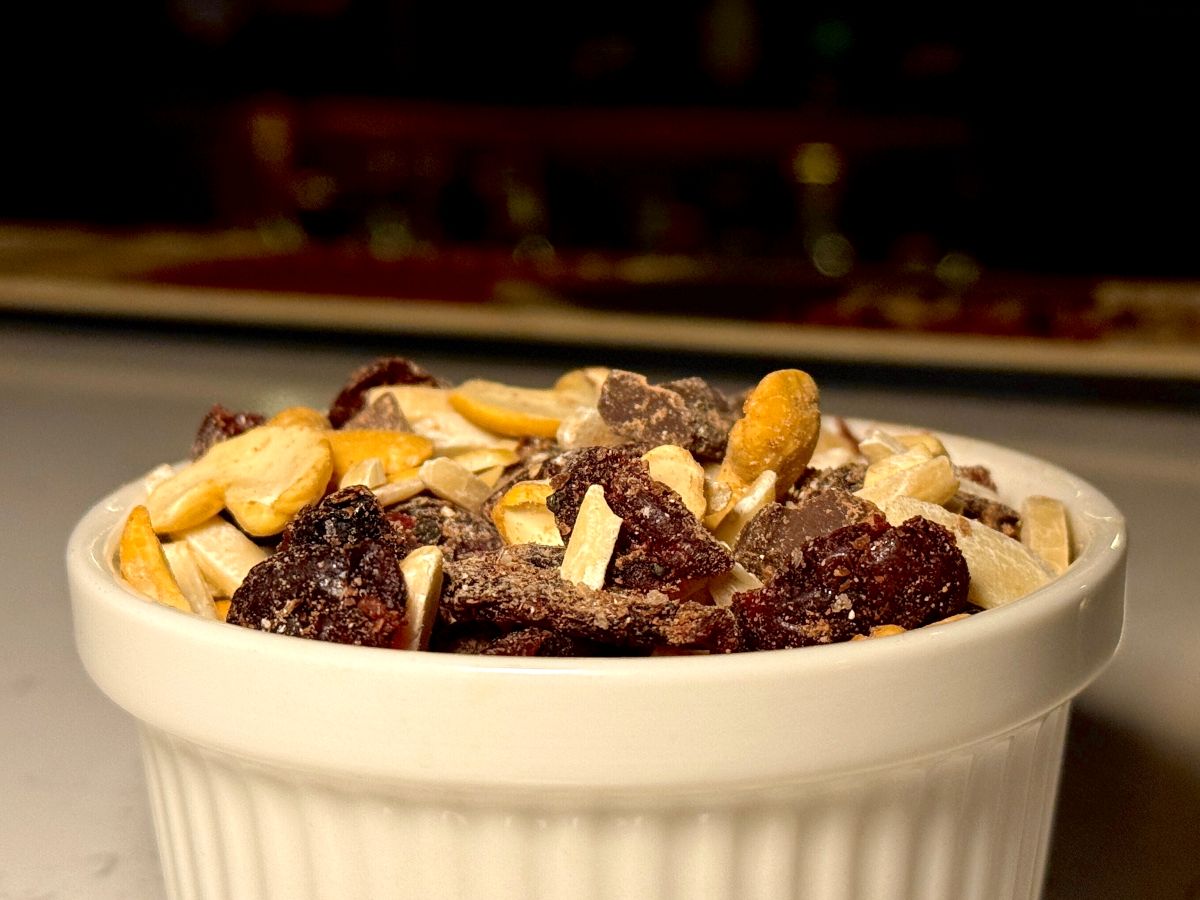
Bar mix
Photo by Jennifer Corey
You can grab a bag of chips for $1 or a bar mix for $3—marcona almonds, cashews, dark chocolate and dried cherries. It’s a fun little mix that pairs easily with just about anything behind the bar.
The success of Inkwell Omaha led to the opening of Inkwell Chicago in the city’s West Loop Fulton Market neighborhood, in partnership with Michael and Bill Barstow,owners of ACX Theaters.
Schaeffer splits his time between the two cities, visiting Chicago monthly while continuing to oversee cocktail programs for the Barstow group’s restaurants and theaters nationwide.

Inkwell portraits of writers
Photo by Jennifer Corey
Schaeffer isn’t in a rush to expand further, but he’s always looking. He’s hinted at the possibility of an Inkwell 2.0 in the Omaha area or perhaps a new venture down south.
“I’m certainly not going to force anything—it’s got to make sense,” Schaeffer said. “That’s what made Inkwell successful—it gave us a runway for bumps and learning curves.”
After eight years, Inkwell has written itself into Omaha’s story from its quiet corner of Countryside Village. It’s a place for conversation, reflection and inspiration. It’s a reminder that great bars tell a good story and that the craft cocktails are chapters in the book. While the names may change, the tone is the same—a measured, thoughtful pour that’s quietly confident. Just like the portraits of the writers that line Inkwell’s walls.