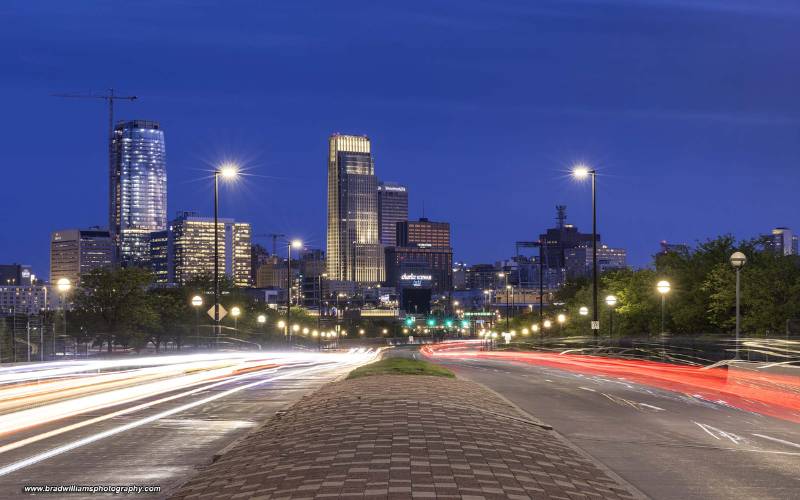
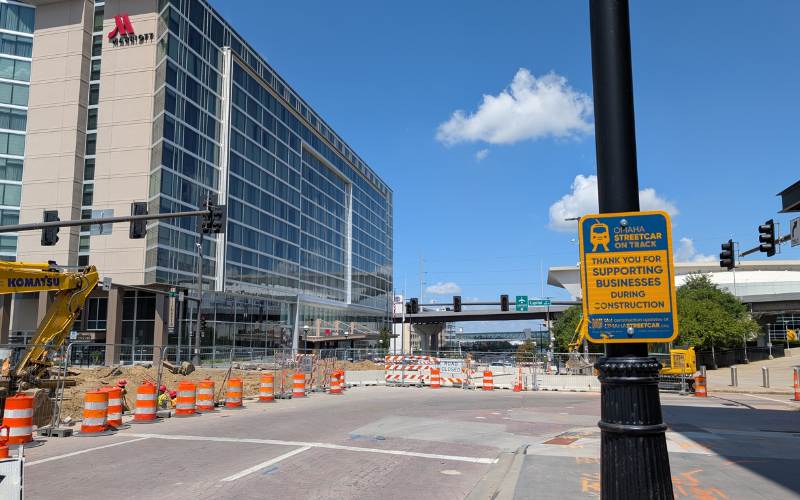
Omaha’s streetcar project is designed to connect key parts of the city and drive long-term economic growth, but as construction continues, business owners and developers say the short-term impacts remain significant.
Mike Moylan, president and CEO of Shamrock Development, has been involved with the project since its early stages and said its long-term vision is strong.
“I’ve been around the project since its inception and the plan that is in place now is exceptional, because we are connecting two of our biggest economic drivers in the metropolitan area from the med center down to downtown Omaha,” Moylan said.
He described the streetcar as more than a transit project, calling it a strategic investment intended to spur development along its route.
“This is a transportation corridor to spur economic development,” he said, comparing it to the growth seen along West Dodge Road west of 114th Street. “Look what’s happened along the corridor from 114th to Elkhorn. We have the nicest office buildings, the best retail, the best housing, and it’s all been done in a shorter time period because of this investment in a quality and permanent transportation corridor.”
Still, Moylan said the challenges of building that future are being felt in real time, particularly in a dense downtown environment.
“Blocks downtown are like miles out west,” he said. “Out west, if you like to be at Westroads, a mile away is good; 10 miles is not as convenient. Downtown, If you’re a block away, life is good. Ten blocks, not so much.”
Construction disruptions, he said, have been intensified by early planning approaches that did not fully account for the realities of a high-density urban core.
“From the inception of the design and the specifications, it was a very suburban approach,” Moylan said. “They would shut down a street and the sidewalks for many blocks, and down here you just can’t do that. So, it’s had a major impact.”
Moylan said city officials have been responsive as concerns have been raised, though adjustments have required ongoing coordination.
“When the first impact occurred, I reached out to the city, and they did respond,” he said. “They are listening and doing the best they can.”
Day-to-day operations remain a concern for businesses and tenants along the route. Moylan emphasized the importance of maintaining access wherever possible.
“Trying to keep two lanes open on Harney, Douglas and Farnam is imperative,” he said. “Also, if they need to close something for part of the day, reopening it at night and on weekends is really important.”
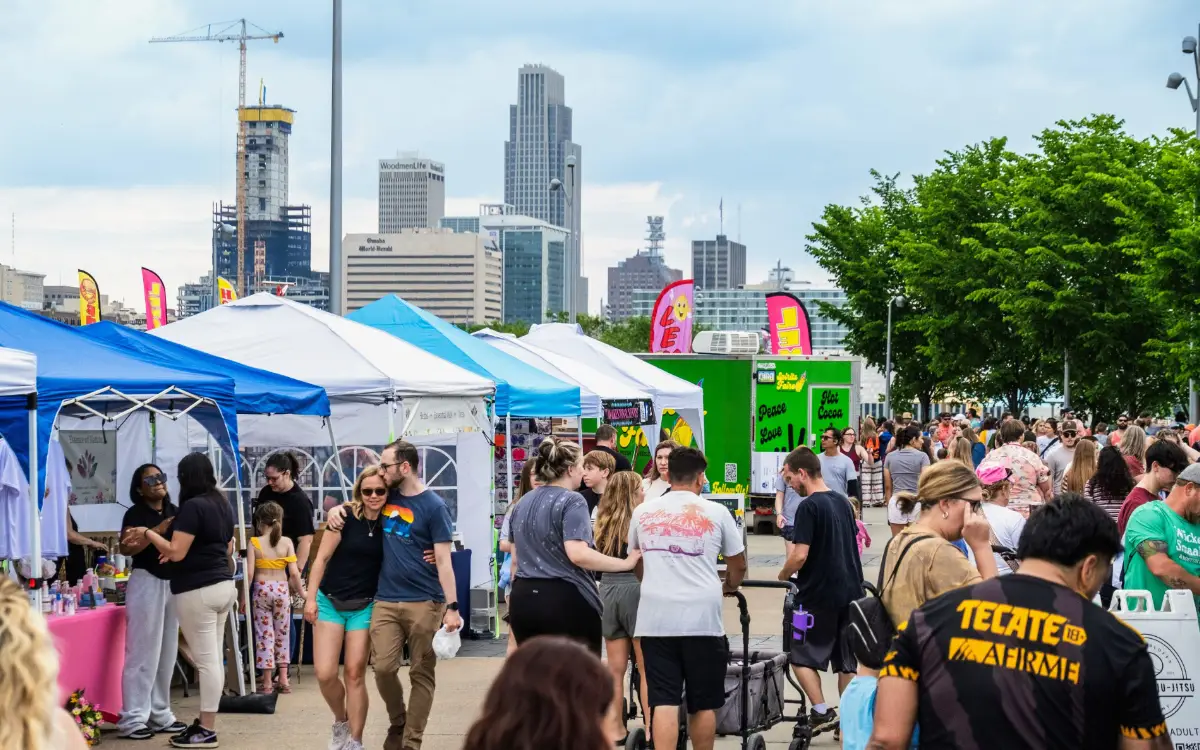
He noted that evenings and weekends are critical for many downtown businesses, particularly as attractions like the riverfront continue to draw visitors.
“There’s so much commerce and so many people coming down to enjoy downtown,” he said. “People need to understand they can get there and get home without a terrible impact.”
Moylan attended a meeting with the Streetcar Impact Alliance, a group formed to advocate for businesses affected by construction. He said the group has helped bring concerns forward in a coordinated way.
“The best thing is they’re getting a voice and clearly articulating their issues,” he said. “They need to stay strong and keep that communication in front of the city.”
While communication has improved, Moylan said there are still gaps that can affect daily operations, such as blocked parking or limited notice of closures.
“Advance notice needs to be much better,” he said. “Sometimes meters are bagged off and it’s up to us to say they need to be opened and they need to be opened now.”
One of the biggest concerns raised by business owners is the lack of direct financial support for those impacted during construction.
“The group is asking for financial support, and I do feel that was a drastic oversight that should have been addressed in the planning process,” Moylan said.
He said losing established businesses during construction would be a significant setback.
“If we lost more tenants because of this streetcar construction, it will be a shame, because they’re the ones that built the foundation for our community to want and need a streetcar,” he said.
Despite the challenges, Moylan remains confident in downtown Omaha’s long-term outlook.
“As a downtown community, it will survive and it will flourish with the investment in this transportation corridor,” he said.
For Moylan and his company, which has spent decades investing in downtown development, the current disruptions are part of a larger cycle of growth.
“For 30 years, Shamrock has been part of this renaissance of downtown,” he said. “There’s more to come once we get through this pain.”
He said continued progress will depend on strong communication and responsiveness between the city and the business community.
“The bottom line will be communication and reacting quickly,” Moylan said.